
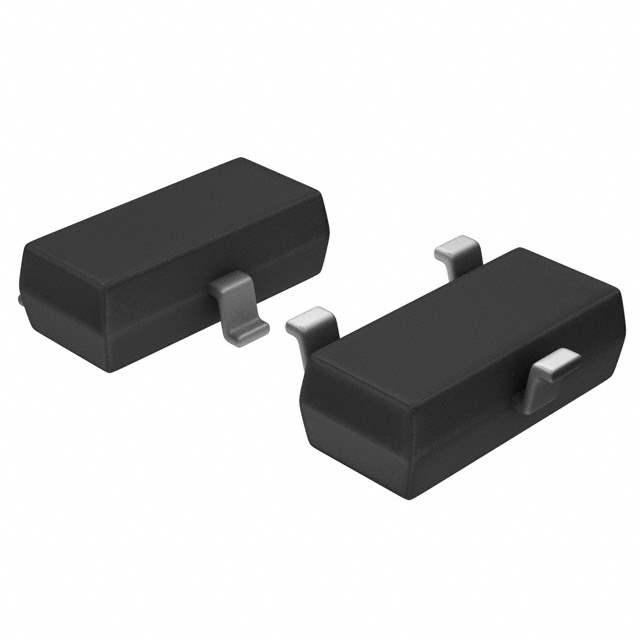
50V VCEO ceiling, 30mA collector limit, 200mW dissipation cap, SMT3 package
Quick Engineering Summary
| Field | Value |
|---|---|
| Manufacturer | Rohm Semiconductor |
| Category | Transistors (BJT) - Single, Pre - Biased |
| Package | SMT3 |
| Core function | TRANS PREBIAS PNP 50V SMT3 |
| Key electrical range | Collector Cut-off Current(Max): 500nA; Frequency - Transition: 250MHz; Maximum Current Collector: 30mA; Maximum Power Dissipation: 200mW |
| Reported stock | 5430 pcs reported — confirm on RFQ |
Can you still put DTA144WKAT146 on a new BOM?
Can this part go on a new BOM without creating a lifecycle problem later? Not comfortably. DTA144WKAT146 carries the kind of mixed message that weakens any fresh design-in case: Lifecycle Status says Active, while Status says Not For New Designs.
That conflict does not stop existing production. It does stop a clean argument for starting a new program with it. For sustaining work, the picture is steadier: 5430 pieces are listed, packaging is Reel - TR, the supply-and-demand flag is Balance, and it is EU RoHS compliant.
50V is useful, but 30mA and 200mW set the real boundary
50V is the headline figure. As the maximum collector-emitter breakdown voltage, it sets the rail-exposure ceiling and gives DTA144WKAT146 room in higher-voltage small-signal control paths than many low-voltage digital discretes, but that number alone does not buy current margin or thermal headroom once a real load is attached.
The more decisive limit is the 30mA maximum collector current. That ceiling keeps this pre-biased PNP in signal switching, pull-up, muting, and level-control work, and it shuts the door on any use that starts to treat it like a small power switch.
Then the 200mW maximum power dissipation tightens the boundary further. It is a cap, not an operating point, and alongside the listed Max Vce(sat) of 300mV @ 500μA, 10mA, it says the available dissipation budget is modest when the part is used as a saturated switch. You can judge the class of use from that, but not ambient headroom, because RθJC and the derating curve are not included here.
The resistor network matters just as much because this is not a plain transistor. R1 is 47k and R2 is 22k. Those values determine whether DTA144WKAT146 drops cleanly into a logic-bias function or pushes against the upstream drive scheme; if the circuit wants a different bias network, the convenience of the pre-biased device becomes the reason it no longer fits.
The weak point is missing detail, not the basic fit
The weak point is missing detail. The basic fit is still clear: DTA144WKAT146 is a small SMD pre-biased PNP in SMT3 for compact control circuitry, with the internal 47k and 22k network baked into the design intent.
It belongs in board-level bias and switching functions, not load driving.
So the next decision is whether the datasheet closes the open items
And that is where the open items become decisive. The listing gives no pinout, no package drawing, and no thermal resistance, even though package orientation and thermal path decide whether an SMT3 transistor is easy to place or awkward to reuse across layouts.
Two electrical gaps matter as well. Frequency - Transition is listed at 250MHz, but there is no capacitance data to show how the part behaves in the actual node being switched, and there is no fuller forward-drive or saturation behavior beyond 300mV @ 500μA, 10mA. In an existing design, those omissions are manageable. For a new one, they reinforce the same conclusion as the lifecycle conflict: keep DTA144WKAT146 in sustaining roles, not fresh design-ins.
View the Win-Source product page for DTA144WKAT146.
Key Takeaways for Engineers & Buyers
- Hold DTA144WKAT146 to existing builds; the status conflict lands on Not For New Designs.
- Check the load path against the 30mA collector ceiling and 200mW dissipation cap before release.
- Use the built-in 47k and 22k bias network intentionally; it fixes the drive behavior, not just the footprint.