
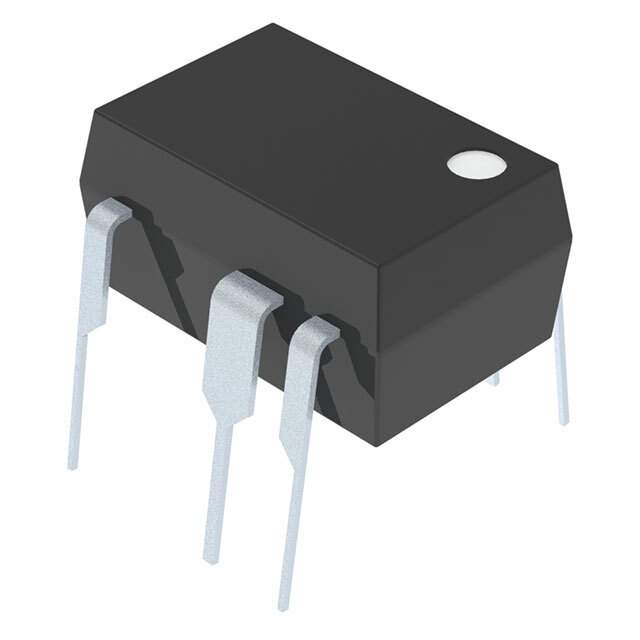
50 V, 500 mA, 200 mW, SST3 pre-biased PNP; the built-in 1 kOhms and 10 kOhms decide the fit.
Quick Engineering Summary
| Field | Value |
|---|---|
| Manufacturer | Rohm Semiconductor |
| Category | RF Transistors (BJT) |
| Package | Tape & Reel |
| Core function | TRANS PREBIAS PNP 50V 0. |
| Key electrical range | Current - Collector (Ic) (Max): 500 mA; Current - Collector Cutoff (Max): 500nA; DC Current Gain (hFE) (Min) @ Ic, Vce: 56 @ 50mA, 5V; Frequency - Transition: 200 MHz |
| Reported stock | 1 pcs reported — confirm on RFQ |
Can you design DTB113ZCT116 in now?
Can I release this into a new design now? Yes, if the built-in bias network is the one your circuit actually needs.
The lifecycle picture is straightforward. DTB113ZCT116 is Active, EU RoHS compliant, REACH is listed as unaffected, and MSL 1 (Unlimited) keeps handling simple once reels are on the floor. The real constraint is supply: listed stock is 1 while the standard package is 3,000. That makes it workable for approval builds and sustaining support, but a poor candidate for volume release until reel supply is lined up.
200 mW is the real ceiling here
200 mW is the number that sets the tone. The 500 mA collector rating and 50 V collector-emitter breakdown are ceilings too, but in a TO-236-3, SC-59, SOT-23-3 body, power is the first limit you feel.
The 300mV saturation figure is stated at 2.5mA and 50mA, so use it around that test point, not as a blanket promise.
The built-in resistors decide the circuit, not the package
And that is the point: the resistor network matters more than the package callout. DTB113ZCT116 is a PNP pre-biased transistor with R1 at 1 kOhms and R2 at 10 kOhms, so it fits small switching and interface stages where fixed bias behavior is the goal and you are willing to design around that exact ratio.
The minimum hFE of 56 at 50mA, 5V gives you a useful anchor. This part is characterized in a modest current region, not framed as a brute-force load switch. The 200 MHz transition frequency says it is not a slow transistor, but that number alone does not settle any RF decision because the listing does not give the surrounding small-signal conditions you would want for gain or matching work.
In practice, these numbers point to compact pre-biased control circuitry, level shifting, and simple switching where board area matters and external bias resistors are just extra parts.
What the listing still does not tell you
Wrong place for it: any design that needs to choose its own base resistor values, any stage that leans hard on the 500 mA ceiling, or any thermal corner where 200 mW leaves no room for error.
Better fit: compact bias-defined transistor stages. Still, the missing details are concrete and they matter before you lock DTB113ZCT116 into a board, because the headline numbers are usable only up to the point where package, thermal path, and switching behavior start deciding the outcome more than the nominal transistor ratings do.
The first gap is thermal data. There is no RθJC, no thermal resistance, and no derating curve here, so the 200 mW ceiling cannot be translated into an ambient limit from this page alone. The second gap is package detail: you get SST3 and TO-236-3, SC-59, SOT-23-3 naming, but no drawing or pinout here, so footprint confirmation still depends on the full datasheet.
The third gap is dynamic behavior beyond the headline 200 MHz transition frequency. There is no capacitance data and no switching waveform information, so you cannot judge edge speed, charge storage, or how cleanly it will behave in a real logic-driven node. The fourth gap is surge tolerance: no pulse or overload figure is listed, which matters if the collector sees startup spikes or inductive kick.
View the Win-Source product page for DTB113ZCT116.
Key Takeaways for Engineers & Buyers
- Check the 1 kOhms / 10 kOhms bias network against your drive source before freezing DTB113ZCT116.
- Keep DTB113ZCT116 off rails that can challenge the 50 V collector-emitter ceiling.
- Place a production buy early if DTB113ZCT116 is approved; listed stock is 1 and standard package is 3,000.