
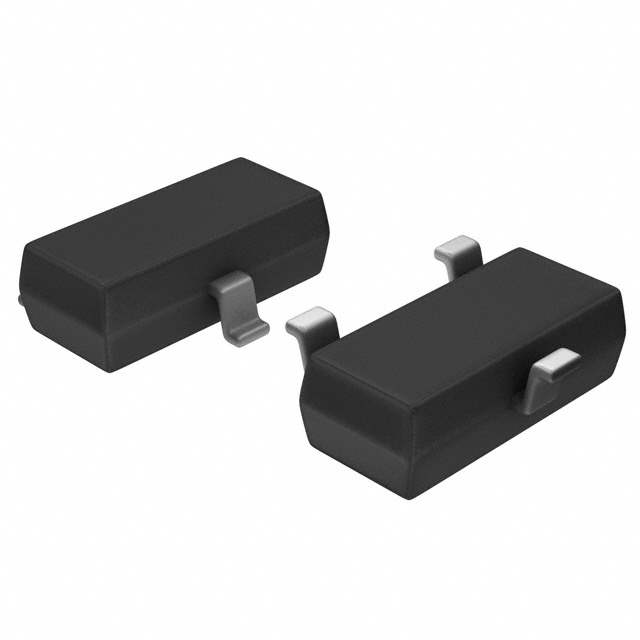
50V VCEO, 500mA collector ceiling, 200mW dissipation, SMT3 pre-biased PNP with 1k and 10k resistors
Quick Engineering Summary
| Field | Value |
|---|---|
| Manufacturer | Rohm Semiconductor |
| Category | Transistors (BJT) - Single, Pre - Biased |
| Package | SMT3 |
| Core function | TRANS PREBIAS PNP 50V 0. |
| Key electrical range | Collector Cut-off Current(Max): 500nA; Frequency - Transition: 200MHz; Maximum Current Collector: 500mA; Maximum Power Dissipation: 200mW |
| Reported stock | 30000 pcs reported — confirm on RFQ |
Use it for new builds, with one clear limit
Yes, for new builds.
An Active lifecycle status and EU RoHS compliance leave no obvious barrier to putting DTB113ZKT146 into a fresh BOM. The more useful point is the built-in bias network: 1k for R1 and 10k for R2 in SMT3. That settles the choice between one pre-biased PNP and a discrete transistor plus two external resistors, but it does not settle whether those resistor values match your drive source or turn-off behavior.
The real limit is thermal. A 500mA maximum collector current looks roomy until it sits beside the 200mW maximum power dissipation, and those are both ceilings; in most practical load conditions, the smaller number will decide whether DTB113ZKT146 fits.
The current rating is not the design center
And that is why the 500mA maximum collector current reads as a hard ceiling, not a normal operating target. The listing gives a 300mV maximum VCE(sat) at 2.5mA and 50mA, which is useful in exactly that stated condition and no farther. It shows the part can pull low with modest saturation voltage there, but it does not map behavior across the rest of the load range.
The 50V VCEO maximum is the other decision-maker. It tells you whether the collector-emitter rail belongs in scope at all for DTB113ZKT146, while saying nothing about transient tolerance, avalanche behavior, or inductive switching margin because none of that is listed. The 500nA collector cut-off current maximum is a helpful leakage ceiling for high-impedance biasing, but rail fit and dissipation come first.
200mW is the number that narrows the fit
200mW.
That ceiling keeps DTB113ZKT146 in small-signal switching and biasing work, not in jobs that expect sustained collector load with much voltage left across the device. Add the built-in 1k and 10k resistor network and the fit gets specific: logic-driven high-side or pull-up style PNP stages where board area matters more than resistor flexibility.
The 200MHz transition frequency is there, but it is not the main reason to choose this part. Without switching waveforms, capacitance, or storage-time detail, that single figure does not make DTB113ZKT146 a general fast-switch answer.
What the listing still does not answer
Wrong for final switching signoff.
What is still missing is concrete: pinout, package drawing, thermal resistance, and any switching-time or capacitance data. Those gaps decide footprint release, heat path, and edge behavior.
Buy it as a reel-managed running line, not a loose tactical fill
Packaging and handling are the constraint.
The numbers point to a part meant for feeder-ready assembly, not casual one-off use. DTB113ZKT146 is listed in Reel - TR with stock at 30000, so it fits a running line far better than hand-loaded exceptions or tiny service lots. If your build already consumes SOT-23-class discretes in volume, that is a straightforward match. If the need is bench rework, the reel format adds friction before the first board is even touched.
There is also a second quantity field showing 4699 elsewhere, so availability supports a planned build but does not justify loose scheduling. Reserve reels against the build that needs them, especially when line-side consumption is predictable and the packaging format already tells you how this device is expected to move through assembly.
The storage note matters too. Dry storage cabinet and humidity protection package are not electrical specs, but they still affect how smoothly DTB113ZKT146 moves from receiving to line side, particularly when reel-managed material control is part of the normal production flow rather than an afterthought.
View the Win-Source product page for DTB113ZKT146.
Key Takeaways for Engineers & Buyers
- Keep VCEO below the 50V ceiling; that number decides rail fit, not switching behavior.
- Budget around the 200mW dissipation limit before using the 500mA collector rating.
- Lock reel usage and line-side storage for DTB113ZKT146; stock is 30000 and packaging is Reel - TR.