
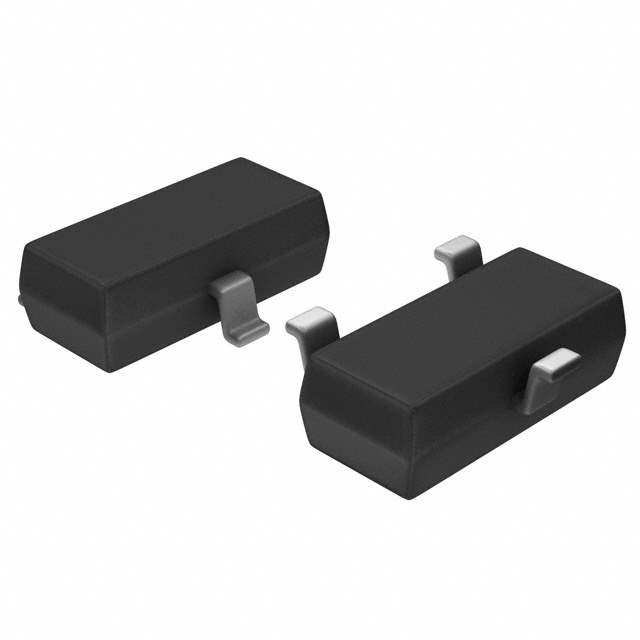
50V VCEO, 500mA collector ceiling, 200mW dissipation, SMT3 package, with fixed 2.2k and 10k bias resistors
Quick Engineering Summary
| Field | Value |
|---|---|
| Manufacturer | Rohm Semiconductor |
| Category | Transistors (BJT) - Single, Pre - Biased |
| Package | SMT3 |
| Core function | TRANS PREBIAS PNP 50V 0. |
| Key electrical range | Collector Cut-off Current(Max): 500nA; Frequency - Transition: 200MHz; Maximum Current Collector: 500mA; Maximum Power Dissipation: 200mW |
| Reported stock | 90000 pcs reported — confirm on RFQ |
Active, usable, and opinionated
Use it.
The case for DTB123YKT146 is straightforward: it is Active, EU RoHS compliant, and built for designs that already want a fixed input network instead of a transistor you plan to tune later. The built-in 2.2k base resistor and 10k emitter-base resistor settle that question early. If your bias network needs different values, this is the wrong device before current and voltage even enter the discussion.
Availability also supports the call. Reel - TR packaging and 90000 in stock fit a running line without creating a packaging exception, and the lifecycle status stays clean despite the separate Estimated EOL Date of 2028 in the specifications.
The 200mW limit matters before the 500mA headline
And that is where the fit gets narrower. The 500mA maximum collector current is a ceiling, not a comfortable operating point, because the same listing gives only 200mW maximum power dissipation in SMT3. Read together, those numbers say DTB123YKT146 can enter modest load-switching discussions, but only after the loss budget is checked with real discipline rather than assumed from the current headline alone.
The listed 300mV max VCE(sat) at 2.5mA and 50mA helps, but only at that stated corner. It shows saturation loss is held to that ceiling at 50mA collector current with 2.5mA base drive; it does not justify treating 300mV as a general operating drop across other drive conditions, and that distinction matters because thermal margin disappears quickly when a small package is asked to carry current for more than a brief event.
The 50V VCEO maximum collector-emitter breakdown voltage is just as decisive. It is the rail ceiling for DTB123YKT146. That settles basic rail fit for low-voltage and moderate-voltage use, while leaving surge behavior, inductive clamp behavior, and transient headroom unanswered because those limits are not listed here.
One quieter number is still useful. The 500nA maximum collector cut-off current keeps off-state leakage low at the stated limit, which makes the part more convincing in pull-up paths, housekeeping switches, and interface gating than in circuits where leakage drift would consume threshold margin.
The weak point is missing detail
The weak point is real. Pinout, package drawing, and thermal resistance are still needed before layout and heat flow are locked down, and there is no switching-time data, so the 200MHz transition frequency does not stand in for turn-on or turn-off behavior.
Fixed bias makes the fit narrower than the category suggests
The constraint is the resistor network. A pre-biased PNP in SMT3 with R1 at 2.2k and R2 at 10k fits compact load switching, level shifting, and logic-interface stages where board area matters and those bias values already match the control source.
That is why DTB123YKT146 works best when the simplification is the point. You get fewer externals, less placement overhead, and a known input network from the start. It does not belong in designs that need base-current tuning, tighter saturation-margin control, or closely characterized switching edges, because the resistor values are fixed and the listing does not provide the time-domain data that would close that gap. Buy it on reel and keep storage in a dry storage cabinet and humidity protection package; that matches the packaging and stock position already on hand.
View the Win-Source product page for DTB123YKT146.
Key Takeaways for Engineers & Buyers
- Keep collector-emitter stress below the 50V ceiling; that number decides rail fit, not switching margin.
- Budget heat against the 200mW maximum before using the 500mA collector rating in a sustained load path.
- Lock the drive network around the built-in 2.2k R1 and 10k R2; DTB123YKT146 is not a blank transistor.