
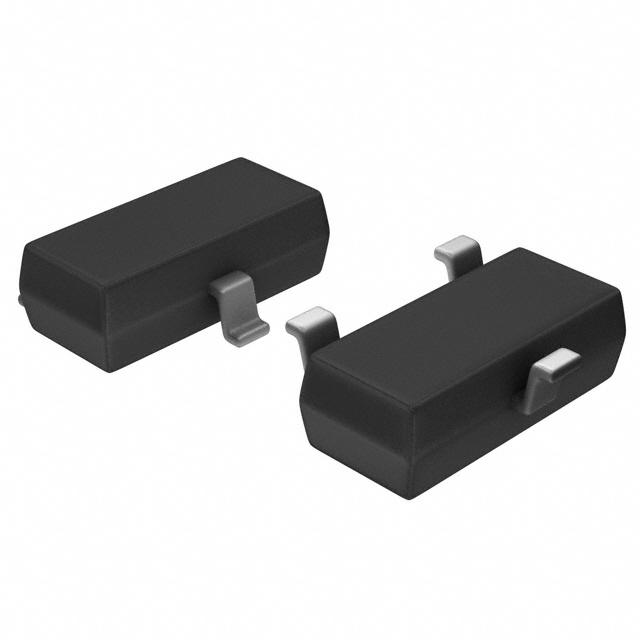
40V VCEO, 500mA collector ceiling, 200mW dissipation, SMT3 package; lifecycle is the bigger issue.
Quick Engineering Summary
| Field | Value |
|---|---|
| Manufacturer | Rohm Semiconductor |
| Category | Transistors (BJT) - Single, Pre - Biased |
| Package | SMT3 |
| Core function | TRANS PREBIAS PNP 40V 0. |
| Key electrical range | Collector Cut-off Current(Max): 500nA (ICBO); Frequency - Transition: 200MHz; Maximum Current Collector: 500mA; Maximum Power Dissipation: 200mW |
| Reported stock | 1 pcs reported — confirm on RFQ |
Can you still buy this for a new build?
Can you release a new build on this part? Not safely. DTB143TKT146 carries the kind of lifecycle conflict buyers try to avoid: Active in one field, Not For New Designs in another.
That does not make it obsolete. It does make it a weak anchor for a fresh BOM, especially when the same record also shows Limited supply and a stock quantity of 1.
For an existing production line, the answer changes. If DTB143TKT146 is already qualified in your assembly and the internal bias resistor is part of that behavior, keep it as a sustaining item and secure what you need around reel handling. EU RoHS is compliant; lifecycle is the real blocker.
The 200mW limit matters more than the 500mA headline
This is the real limit.
The easy mistake with DTB143TKT146 is to stop at the 500mA maximum collector current. That number is a ceiling, not evidence that the SMT3 body can carry that load comfortably in your ambient, on your copper, with your switching losses and your fault cases stacked on top of one another.
The other ceiling in the listing is 200mW maximum power dissipation, and that is the rating that keeps the current headline in check. Without a derating curve or thermal resistance, there is no clean way to judge how much ambient headroom remains once the transistor is asked to switch real current on a real board.
The 40V VCEO rating is just as firm. It rules out rails or transients above 40V. It does not settle survivability on a noisy 24V line, because the listing gives no transient or avalanche data.
The listed 300mV max VCE(sat) at 2.5mA and 50mA helps, but only at that test condition. It shows the device can pull down with modest saturation loss there; it says nothing about behavior near the 500mA collector ceiling. The built-in 4.7k base resistor sets the other boundary. It simplifies drive from a logic or bias source, but it also fixes the input network, so DTB143TKT146 fits circuits that want that resistor value and not ones that need to tune base drive externally.
Best fit is simple PNP switching, not edge-case power work
The constraint is integration, not raw gain. DTB143TKT146 is a pre-biased PNP in SMT3, with only R1 present at 4.7k, so it fits compact high-side or level-shift duties where the resistor saves placement and keeps the input network consistent from board to board.
The 100 minimum hFE at 50mA and 5V supports low-to-moderate current switching. The 200MHz transition frequency says it is not a slow transistor, but that number alone does not qualify it for fast switching edges in a converter or clamp path. With no switching waveforms, no capacitance figure, and no reverse-recovery style data because this is not that kind of device, DTB143TKT146 belongs in straightforward bias-and-switch jobs, not where dynamic behavior is the whole problem.
1 piece on hand changes the buying decision
1 piece is not a buffer. It is a signal.
Combined with Reel - TR packaging and Limited supply, DTB143TKT146 reads as a line-support purchase, not a part to release broadly and hope to fill later.
If you must keep DTB143TKT146 alive in production, buy against known demand and keep the reel requirement in mind for floor flow. If you are still at schematic stage, stop there and avoid creating new dependence on a part with this stock position and lifecycle conflict.
What the listing still doesn’t answer
And that leaves the practical gaps: pinout, package drawing, thermal resistance, and the derating curve. ECAD access is gated, but the bigger problem is simpler—the thermal and mechanical details needed for layout and ambient headroom are not here.
View the Win-Source product page for DTB143TKT146.
Key Takeaways for Engineers & Buyers
- Freeze DTB143TKT146 to existing builds only; lifecycle shows Active and Not For New Designs at the same time.
- Check rail and fault cases against the 40V VCEO ceiling before keeping DTB143TKT146 on a high-side switch node.
- Pull the full datasheet for pinout and thermal data before layout; the 200mW limit is listed without the curves that make it usable.