
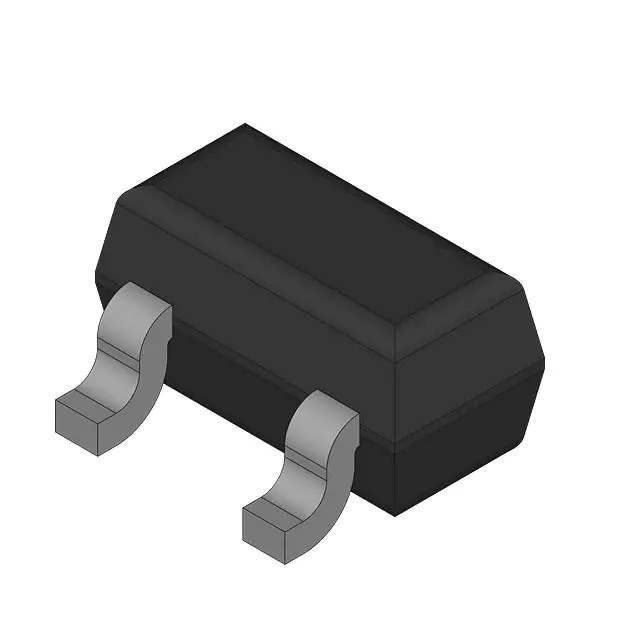
50 V, 100 mA, 150 mW, SOT-523: the power ceiling matters more than gain here
Quick Engineering Summary
| Field | Value |
|---|---|
| Manufacturer | ON Semiconductor |
| Category | Transistors (BJT) - Single |
| Package | Bulk |
| Core function | 100@1MA,5V 150MW 100MA 50V SOT-5 |
| Key electrical range | 100@1MA,5V 150MW 100MA 50V SOT-5 |
| Reported stock | 14273 pcs reported — confirm on RFQ |
The weak point is power, not availability
The weak point is the 150 mW maximum power rating. In a SOT-523 body, that is a small dissipation budget, and it rules out any design that expects the device to sit with meaningful voltage across it while carrying current.
Availability is the easier part. Active status appears without conflict, stock is listed at 14273, and MSL 1 (Unlimited) removes one handling headache.
That leaves DTC114TE as a reasonable new design-in candidate for low-power prebiased BJT duties, not just sustaining builds. EU RoHS is compliant. The fit is narrow: if your circuit uses the transistor as a tiny logic-level switch or bias element, the listing supports that direction; if you need thermal headroom, this package and power ceiling are the first reasons to walk away.
150 mW sets the budget before 100 mA does
The numbers create a thermal limit before they create a current one. DTC114TE carries a 100 mA maximum collector current, a 50 V maximum collector-emitter breakdown rating, and a 150 mW maximum power rating. Read them as ceilings. The 50 V number decides whether the rail is in bounds, but it does not say the device is comfortable switching that rail at any arbitrary load. The 100 mA number marks where absolute collector current stops; it does not grant thermal margin at that current.
Two smaller numbers sharpen the picture. VCE(sat) is listed at 300 mV at 1 mA and 10 mA, so the low-current switching case is at least anchored. hFE is given as 100 at 1 mA and 5 V, which places the gain claim at a light-load operating point rather than near the edge of the current limit. Get that distinction wrong and the field return won't be mysterious; it will be a hot, under-driven transistor in a package with very little room to forgive you.
And that leaves a short list of missing answers
And that leaves the concrete gaps. DTC114TE still needs pinout, package drawing, and thermal resistance data before layout and thermal review can close. The listing gives R1 at 10 kOhms but no R2 value, which is a real gap for a prebiased transistor.
SOT-523 tells you where DTC114TE belongs
100 mA sounds generous until it sits next to SOT-523 and 150 mW. That combination puts DTC114TE in dense, low-power board work: level shifting, small-signal switching, bias injection, and logic interfacing where the built-in base resistor helps and board area is tight.
The listed transition frequency of 250 MHz says it is not a plodding device. Still, that number alone does not make it an RF transistor choice, because the listing gives no capacitance or switching-time data.
The package and resistor detail narrow the use case further. This is a surface-mount prebiased NPN with R1 at 10 kOhms, so it fits where you want to save an external base resistor and keep placement count down. It does not belong in designs that need heavy saturation current, broad thermal cushion, or a carefully tuned turn-off path, because the listing does not provide the missing network and dynamic numbers needed to predict that behavior.
What would a buyer lock down first?
What packing form is actually going to arrive first? DTC114TE is listed as Bulk in one field and 3,000 pcs as the standard package, while the alternate row shows cut tape. That is not a lifecycle problem. It is a line-planning problem if feeders, incoming inspection flow, or kitting assumptions expect one presentation and receive another.
The practical move is to match DTC114TE to the exact packing form your build needs before release, then hold that form on the PO. Stock is listed at 14273, which supports near-term demand, but quantity is not the only buying decision that matters here. Assembly flow may want bulk handling or tape-based loading, and that choice needs to be settled early rather than after material is allocated.
REACH is marked affected, so if customer declarations travel with the shipment pack, clear that at the same time. Otherwise the order can stall for paperwork after the material side is already lined up.
View the Win-Source product page for DTC114TE.
Key Takeaways for Engineers & Buyers
- Treat 150 mW as the first ceiling; check whether the SOT-523 thermal path can carry your load case.
- Keep VCE below the listed 50 V maximum; that number closes rail compatibility, not switching behavior.
- Buy to the 3,000 pcs standard package if this is headed for volume builds.