
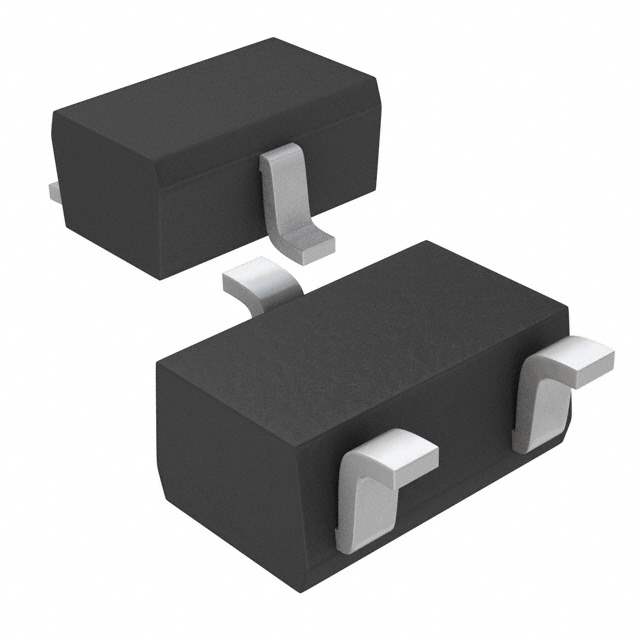
50V VCEO, 100mA collector ceiling, 200mW limit, UMT3 package, 100k base resistor
Quick Engineering Summary
| Field | Value |
|---|---|
| Manufacturer | Rohm Semiconductor |
| Category | Transistors (BJT) - Single, Pre - Biased |
| Package | UMT3 |
| Core function | TRANS PREBIAS NPN 50V 0. |
| Key electrical range | Collector Cut-off Current(Max): 500nA (ICBO); Frequency - Transition: 250MHz; Maximum Current Collector: 100mA; Maximum Power Dissipation: 200mW |
| Reported stock | 51000 pcs reported — confirm on RFQ |
The real limit here is heat, not headline voltage
The constraint here is thermal headroom. DTC115TUAT106 carries a 50V VCEO ceiling, but the numbers that shape the design more quickly are 200mW maximum power dissipation in UMT3 and 100mA maximum collector current. Those are ceilings, not operating targets, and they set the tone for where this pre-biased NPN belongs.
In practice, that points to compact switching or level-shift work where saving external parts matters more than squeezing current from a tiny package. The listed 300mV max VCE(sat) at 100µA and 1mA is useful as a low-current switching reference, but it does not answer loss at higher collector current or behavior across temperature, and the page does not give the thermal data that would settle that question. Small package, small margin.
The built-in 100k R1 narrows the fit just as much as the power limit does. This part works where that resistor value is the intended bias element in the circuit, not where base drive needs to be tuned externally for a different switching point or current profile.
For new design-in, the case is still solid. Active lifecycle, Reel - TR packaging, and 51000 in stock make DTC115TUAT106 a practical production choice when the circuit specifically wants a single-resistor pre-biased NPN rather than a general-purpose small-signal transistor.
50V is a ceiling, not your rail decision
50V is the decisive figure. It places DTC115TUAT106 in higher-voltage small-signal control nodes than many logic transistors, but it does not clear a 50V rail by itself because the listing gives no derating curve, no RθJC, and no switching waveform data.
The weak point is missing detail, not lifecycle
The weak point is the missing detail. This page does not give pinout, package drawing, thermal resistance, or the full internal resistor network detail beyond R1, and those gaps matter once placement, ambient headroom, and exact bias behavior move from concept to schematic and layout.
The strong point is easier to state: DTC115TUAT106 is clearly aimed at dense SMT boards that want an NPN - Pre-Biased device with R1 at 100k, modest collector current, and fewer external parts. It is a poor fit for designs that need adjustable base drive, more dissipation margin, or a fuller switching-speed picture.
So buy it for the line, but buy it for the exact use
So the purchasing constraint is specificity, not availability. Reel - TR and 51000 on hand support production intake, while the real risk is treating DTC115TUAT106 like any small NPN in SOT-323 once the built-in 100k resistor becomes part of the circuit.
Lock the BOM to the pre-biased function, not just the footprint and polarity. If the design intent matches that internal bias scheme, the Active status and balanced supply-demand picture make this an easy part to keep on a running line.
View the Win-Source product page for DTC115TUAT106.
Key Takeaways for Engineers & Buyers
- Keep VCEO below the 50V ceiling; it does not authorize a 50V working rail without margin from the full datasheet.
- Treat 100mA collector current and 200mW dissipation as linked limits in UMT3, not independent targets.
- Confirm the internal resistor network is only R1 at 100k before dropping DTC115TUAT106 into a logic-bias stage.