
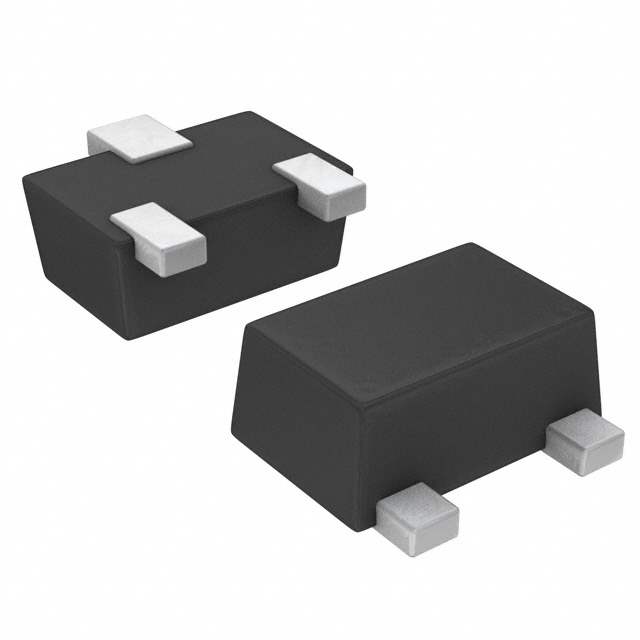
50V VCEO, 100mA collector ceiling, 150mW dissipation ceiling, VMT3 pre-biased NPN with 2.2k and 47k resistors
Quick Engineering Summary
| Field | Value |
|---|---|
| Manufacturer | Rohm Semiconductor |
| Category | Transistors (BJT) - Single, Pre - Biased |
| Package | VMT3 |
| Core function | TRANS PREBIAS NPN 50V 0. |
| Key electrical range | Collector Cut-off Current(Max): 500nA; Frequency - Transition: 250MHz; Maximum Current Collector: 100mA; Maximum Power Dissipation: 150mW |
| Reported stock | 176000 pcs reported — confirm on RFQ |
The real limit is power, not the 50V headline
The constraint is 150mW. That dissipation ceiling sets the job more than the 50V VCEO figure does, because it keeps DTC123JMT2L in small-signal switching and bias work even when the voltage rating looks roomy.
The rest of the numbers reinforce that boundary. A 100mA collector current ceiling is just that—a ceiling, not a promise that the device should live there in normal use. The 50V collector-emitter breakdown rating helps with rail compatibility on higher-voltage logic-side switching, but it says nothing about thermal headroom once saturation loss and on-time start to matter. Even the listed 300mV max VCE(sat) at 250µA and 5mA points in the same direction: the characterization is at low current, which is a pretty clear signal that this part belongs in control paths, pull-downs, and interface glue rather than anything expected to spend meaningful time near its current limit. In practice, voltage margin is decent, current capability is modest, and power dissipation is the wall you reach first.
The built-in resistor pair decides the fit
The weak point is inflexibility. Choosing a pre-biased transistor means choosing its internal network too, and here that means 2.2k for R1 and 47k for R2.
That fixed pair is also the appeal. In dense digital housekeeping, DTC123JMT2L drops external parts, gives you a known NPN pre-biased structure, and keeps the footprint small in VMT3. It stops fitting when base drive needs tuning, when turn-off behavior depends on resistor choice, or when the surrounding logic wants a different input current budget. The listed hFE minimum of 80 at 10mA and 5V supports the same read: this is a signal transistor with integrated biasing, not a general-purpose discrete NPN. Use it when those resistor values are part of the design, not when they are a compromise.
What the listing still doesn't answer
And that still leaves the blockers. DTC123JMT2L needs the pinout, package drawing, and thermal resistance before layout and heat flow are settled. The listing also omits any derating curve.
Buy it for running volume, not for guesswork
176000 is enough to matter. With Active lifecycle status and Reel - TR packaging, DTC123JMT2L looks like a practical buy for a running line and a reasonable choice for a fresh BOM when this exact bias network is the one you want.
Lock the reel format into the build plan and keep the storage note in receiving, because the part is called out for dry storage cabinet and humidity protection package handling. EU RoHS is compliant. Healthy stock does not erase the missing mechanical and thermal details; source it now if it fits, but get those absent datasheet items before release.
View the Win-Source product page for DTC123JMT2L.
Key Takeaways for Engineers & Buyers
- Treat 100mA collector current as a ceiling; check the actual load current against the 150mW package limit.
- Use DTC123JMT2L only where the built-in 2.2k R1 and 47k R2 match the drive network you want.
- Buy on Reel - TR if the line is committed; the listed stock is 176000.