
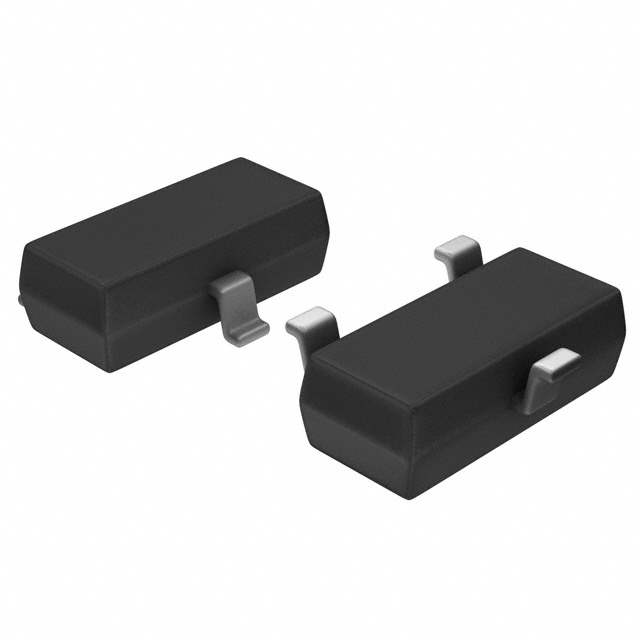
50V VCEO, 100mA collector ceiling, 200mW dissipation, SMT3 pre-biased NPN
Quick Engineering Summary
| Field | Value |
|---|---|
| Manufacturer | Rohm Semiconductor |
| Category | Transistors (BJT) - Single, Pre - Biased |
| Package | SMT3 |
| Core function | TRANS PREBIAS NPN 50V 0. |
| Key electrical range | Collector Cut-off Current(Max): 500nA (ICBO); Frequency - Transition: 250MHz; Maximum Current Collector: 100mA; Maximum Power Dissipation: 200mW |
| Reported stock | 260 pcs reported — confirm on RFQ |
Not for fresh programs, still usable on a running line
Wrong for a clean-sheet design. Fine for an existing build that already expects a pre-biased NPN with only R1 present at 2.2k and can live in SMT3.
The issue is lifecycle, not device function. DTC123TKAT146 is marked Active, but it is also marked Not For New Designs, and that closes the case for new design-in more than the Active flag reopens it. For sustaining production, the picture is better: stock is listed at 260, supply-and-demand is marked sufficient, and EU RoHS is compliant. Use DTC123TKAT146 where the schematic already wants this resistor-equipped device and the qualification burden is continuity, not a new platform launch.
What actually limits use first: rail, load, or heat?
What gets you first: voltage, current, or heat? Start with the rail.
The 50V VCEO figure is a collector-emitter ceiling, so it places DTC123TKAT146 in low-voltage switching and interface work. It says nothing about transient tolerance, because no surge or avalanche detail is listed.
Then put current and dissipation on the table together, because that pairing decides whether the package stays comfortable or becomes the constraint. The collector limit is 100mA, and maximum power dissipation is 200mW. Both are ceilings, not operating targets, and they do not answer the thermal question you actually need answered in layout review because no ambient derating or thermal resistance data is listed here to show how much headroom remains once the board and enclosure are real.
The listed VCE(sat) is 300mV at 250μA, 5mA. Useful, but only at that stated test condition. It points to low-drop switching at light current, not to behavior near the collector limit.
The built-in base resistor matters more than it first seems. R1 is 2.2k, with no R2 listed, so this is not a general small-signal NPN you can tune freely around the base network. It fits logic-drive and bias-simplification jobs where that resistor value is the point. If the design needs a different input current budget or a discharge path set by an internal R2, DTC123TKAT146 is the wrong transistor before voltage and heat even enter the discussion.
That package and resistor network narrow the fit fast
And that narrows the fit quickly. The natural home is compact board-level switching where saving one external resistor matters more than squeezing every option out of the base drive. The category, polarity, and description all line up with that: single NPN, pre-biased, surface-mount, SMT3.
The listed transition frequency is 250MHz, but without switching waveforms or capacitance data, that number alone does not make DTC123TKAT146 a high-speed edge-shaping choice.
Where it does not belong is just as clear. A 200mW ceiling rules out treating the device like a forgiving load switch, and the absence of an internal R2 means it is not the right drop-in for circuits that expect a two-resistor digital transistor network. The minimum hFE of 100 at 1mA, 5V is enough to show the part is intended for small-signal work, but that test point is not a promise about gain at other collector currents.
The buying constraint is lifecycle ambiguity, not packaging
The weak point is the mixed status. The stronger point is that the supply side is at least actionable: reel packaging is stated, stock is 260, and storage calls for a dry storage cabinet and humidity protection package.
So the buy decision is straightforward. If DTC123TKAT146 is already on a released BOM, secure the reel quantity needed for the next build window and open the lifecycle question with Rohm before extending it into another program phase. If this is for a new schematic, stop there. The Not For New Designs flag is enough to keep it out.
The missing data that still decides the review
The constraint is release data, not headline ratings. Pinout, package drawing, thermal resistance, and derating curve are not listed here, and those gaps decide footprint release and real ambient headroom.
View the Win-Source product page for DTC123TKAT146.
Key Takeaways for Engineers & Buyers
- Hold DTC123TKAT146 to rails that stay inside the 50V VCEO ceiling.
- Budget collector load against the 100mA limit and 200mW dissipation ceiling together.
- Buy on reel only if TR packaging suits the line; stock shown is 260.