
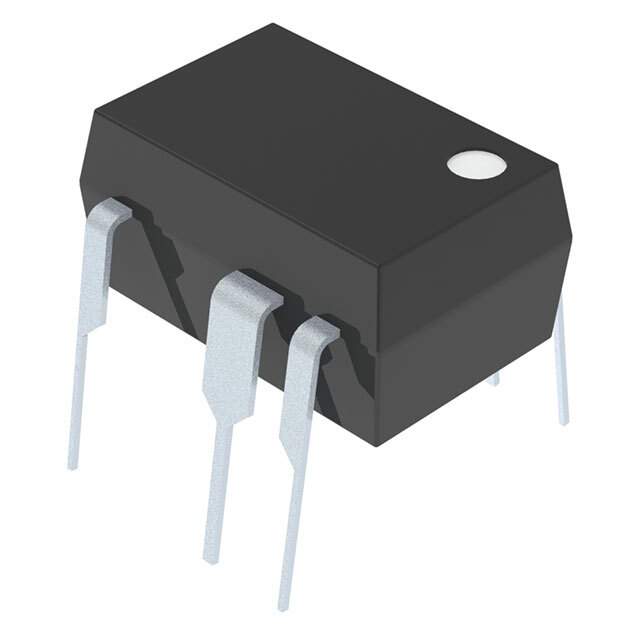
50 V, 100 mA, 200 mW pre-biased NPN in SST3 with 2.2 kOhms and 10 kOhms built in
Quick Engineering Summary
| Field | Value |
|---|---|
| Manufacturer | Rohm Semiconductor |
| Category | RF Transistors (BJT) |
| Package | Tape & Reel |
| Core function | TRANS PREBIAS NPN 50V 0. |
| Key electrical range | Current - Collector (Ic) (Max): 100 mA; Current - Collector Cutoff (Max): 500nA; DC Current Gain (hFE) (Min) @ Ic, Vce: 33 @ 10mA, 5V; Frequency - Transition: 250 MHz |
| Reported stock | 7120 pcs reported — confirm on RFQ |
The 200 mW ceiling matters more than the 100 mA headline
The constraint is power, not collector current. The 200 mW maximum closes decisions faster than the 100 mA headline, because that is the ceiling most likely to get hit first in an SST3 body when collector current is treated like a normal operating point instead of a limit.
The other hard rail is the 50 V collector-emitter breakdown maximum. That decides whether the device can sit on higher-voltage logic or small-signal rails at all, but it does not say how much margin remains under switching stress. The listed 300mV maximum at 500µA and 10mA helps in one narrow spot: low-current saturation loss. It does not extend to heavier collector current, because no saturation figure is listed there.
Good for new work, if the resistor values are the point
Yes, with conditions.
This part makes sense in new designs when the fixed bias network is the reason to use it. The built-in 2.2 kOhms base resistor and 10 kOhms emitter-base resistor are the real feature, since they set drive behavior before hFE enters the conversation. If those values match the logic source and pull-down behavior you need, the part is easy to justify. If they do not, the package convenience will not rescue it.
The 33 minimum hFE at 10mA and 5V is enough to place it correctly. It is not a high-drive switch from this listing alone. Set beside the 100 mA collector ceiling and 200 mW maximum, it belongs in small-signal switching and biasing work, not in loads that lean on current headroom.
The weak spot is missing dynamic data
The weak point comes first: the listing stops before the dynamic behavior starts. The useful part is that it still places the device in the right class of circuit.
A 250 MHz transition frequency says the transistor itself is not inherently slow, but that number does not settle a switching decision for a pre-biased device. The missing items are more decisive here: no input capacitance, no switching times, no thermal resistance, and no package drawing or pinout. Those gaps determine edge rate, drive loading, ambient headroom, and whether the footprint lands cleanly on the board the first time.
Wrong for high-drive switching, right for compact bias control
Wrong for high-drive switching.
Do not choose this device for circuits that need freedom to tune base drive, for loads that push toward the 100 mA collector ceiling, or for layouts where thermal margin depends on package resistance data. The fixed 2.2 kOhms and 10 kOhms network is the whole proposition, and the thermal detail is not listed.
Where it fits is compact board-level control around modest collector current, especially when the alternative is a small transistor plus two resistors taking up similar board area. The SMD mounting and TO-236-3, SC-59, SOT-23-3 case keep it in standard small-outline assembly flow. MSL 1 (Unlimited) removes one handling concern in production.
There is also a practical purchasing angle. Stock is listed at 7120, with a standard package of 3,000 and tape and reel packaging, so it reads like a reel-fed production line item rather than a bench-quantity part. One more point matters: the category says RF Transistors (BJT), but the electrical story is the pre-biased NPN structure. That built-in resistor pair should drive selection, not the category label.
View the Win-Source product page for DTC123YCAT116.
Key Takeaways for Engineers & Buyers
- Keep VCE below the 50 V ceiling; that number does not settle switching speed or thermal headroom.
- Budget dissipation against the 200 mW maximum before using the 100 mA collector limit as a target.
- Buy in 3,000-piece reels or plan a split, with 7120 pieces currently listed.