
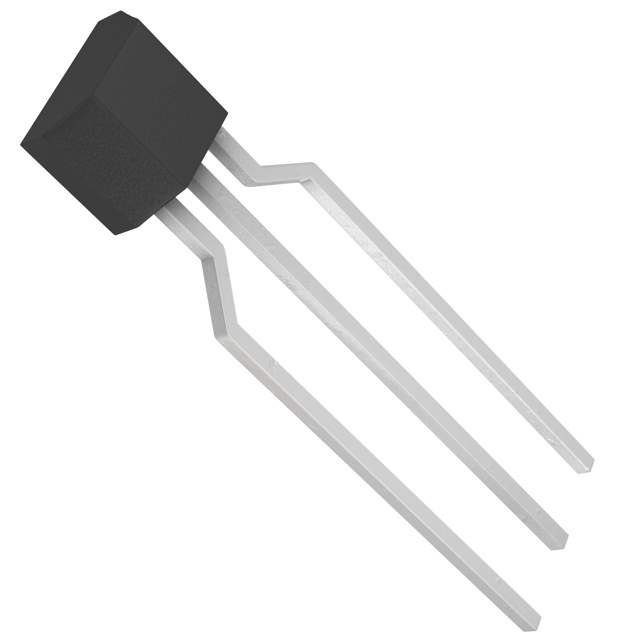
50V VCEO, 30mA collector ceiling, 300mW dissipation, SPT through-hole pre-biased NPN
Quick Engineering Summary
| Field | Value |
|---|---|
| Manufacturer | Rohm Semiconductor |
| Category | Transistors (BJT) - Single, Pre - Biased |
| Package | SPT |
| Core function | TRANS PREBIAS NPN 50V 0. |
| Key electrical range | Collector Cut-off Current(Max): 500nA; Frequency - Transition: 250MHz; Maximum Current Collector: 30mA; Maximum Power Dissipation: 300mW |
| Reported stock | 9570 pcs reported — confirm on RFQ |
Can you still buy DTC124ESATP with confidence?
If you need it for an existing line, yes. If this is for a new design, no. DTC124ESATP is marked EOL in both lifecycle fields, so the decision is already made: don't start a fresh program on it.
Listed stock at 9570 gives you a way to cover near-term builds while you line up a migration. The packaging callout is AMMO PACKAGE, with through-hole mounting and SPT package data, which makes this a sustaining buy for line maintenance rather than a flexible fit across every assembly flow. EU RoHS compliance removes one routine compliance objection, but it doesn't change the lifecycle stop sign.
The 50V and 30mA numbers are ceilings, not comfort
And that's the point. The 50V VCEO is a collector-emitter breakdown ceiling, so it places the transistor on modest-voltage control nodes and nothing more; it says nothing about transient tolerance, avalanche behavior, or switching margin because those details are not listed.
The 30mA maximum collector current is another hard ceiling, and for DTC124ESATP it rules out relay, lamp, or other heavier loads before package style even matters. Put that beside the 300mW maximum power dissipation and the listed 300mV max VCE(sat) at 500µA, 10mA, and the intended use comes into focus: light-current switching where saturation loss stays controlled at the stated test point, not a part to run near its current limit and hope the thermal picture works out.
The weak point is missing detail
The gaps are real. No pinout, package drawing, or thermal resistance is listed here, and for DTC124ESATP those omissions decide board fit, lead form, and how much of the 300mW ceiling is actually usable in your enclosure.
Best fit is simple bias-saving control stages
Use it narrowly.
DTC124ESATP is wrong for loads that need collector-current headroom, wrong for layouts that need a surface-mount footprint, and wrong anywhere the internal 22k and 22k values fight the drive impedance you wanted to choose yourself.
Where it does fit is straightforward. This is a single NPN pre-biased transistor with 22k R1 and 22k R2 already built in, so it belongs in simple control stages where saving two external resistors matters and where a predictable input network from channel to channel is useful. Small-signal interfaces, pull-down duties, and other low-current switching around a through-hole assembly are the natural targets, especially when the gain reference of 56 at 5mA, 5V lines up with the current you actually need.
View the Win-Source product page for DTC124ESATP.
Key Takeaways for Engineers & Buyers
- Block DTC124ESATP from new BOM releases; lifecycle is EOL.
- Match the drive network to the built-in 22k R1 and 22k R2 before using DTC124ESATP.
- Hold collector load below the 30mA ceiling and check the 300mW dissipation limit in the final enclosure.