
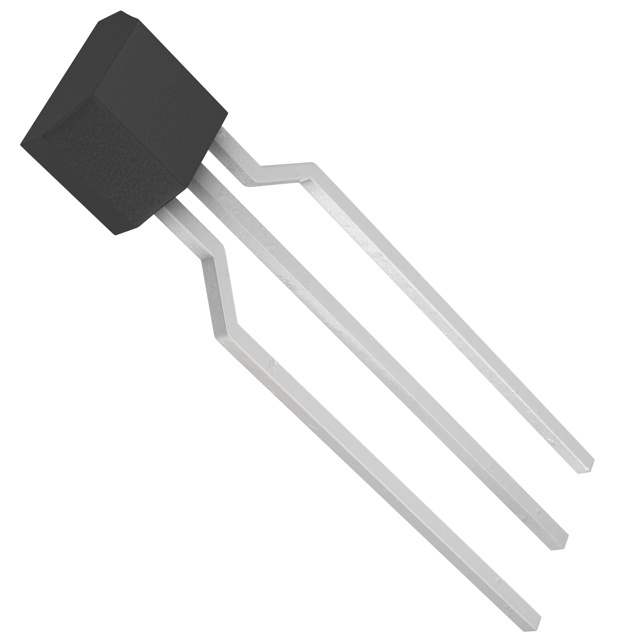
50V VCEO ceiling, 100mA collector ceiling, 300mW dissipation limit, through-hole SPT package
Quick Engineering Summary
| Field | Value |
|---|---|
| Manufacturer | Rohm Semiconductor |
| Category | Transistors (BJT) - Single, Pre - Biased |
| Package | SPT |
| Core function | TRANS PREBIAS NPN 50V 0. |
| Key electrical range | Collector Cut-off Current(Max): 500nA; Frequency - Transition: 250MHz; Maximum Current Collector: 100mA; Maximum Power Dissipation: 300mW |
| Reported stock | 7200 pcs reported — confirm on RFQ |
Still usable, but only to keep a line running
And that is the whole call on DTC143XSATP: the electrical limits are serviceable for a small pre-biased NPN, but the lifecycle status ends the discussion for fresh work. Both lifecycle fields say EOL, with no conflict, so this is not a case where one stale status can be argued away.
For an existing production build, it can still make sense because stock is listed at 7200 and the package is through-hole SPT in AMMO PACKAGE form, which may matter more than elegance when the board and insertion flow are already fixed. Keep the buy narrow. It is EU RoHS compliant, but that does not offset the EOL call.
The 100mA number is not your comfort zone
Treat it as a limit.
The 100mA maximum collector current is a ceiling, not a working target, and the 300mW maximum power dissipation is the other ceiling that closes in at the same time. Those two numbers decide whether DTC143XSATP belongs in light switching and biasing jobs or gets ruled out before layout starts. If your load current sits near that collector limit, the dissipation budget becomes the first thing to watch, not the fact that the transistor can withstand 50V collector-emitter on paper.
The 50V VCEO ceiling helps with rail margin and with simple high-side referenced pull-down or low-current interface work, but it does not say how comfortably DTC143XSATP will live there under real thermal conditions. The listed 300mV VCE(sat) at 500µA, 10mA gives one switching point, not a full conduction picture, so it helps only when your use case is close to that test condition. The 500nA collector cut-off current max is low enough to keep leakage from dominating a high-impedance node, one of the few places this part still earns its keep.
4.7k and 10k decide the interface
4.7k on R1 and 10k on R2 set the fit. DTC143XSATP is not a blank small-signal NPN; it is a pre-biased device, so those internal resistors decide whether your logic source and turn-off behavior line up or fight the circuit.
What would close the remaining review
What does a buyer need to know first? Whether the missing datasheet details are tolerable for the job. For DTC143XSATP, the gaps that matter are thermal resistance, pinout confirmation, package drawing, and any derating curve. Without those, you cannot turn the 300mW ceiling into an ambient decision or lock the footprint with confidence.
There is also no switching-time data here. The 250MHz transition frequency is not a substitute for rise, fall, or storage behavior in a real saturated switch.
View the Win-Source product page for DTC143XSATP.
Key Takeaways for Engineers & Buyers
- Block DTC143XSATP from new BOMs; lifecycle is EOL.
- Match the built-in bias network to your drive: R1 is 4.7k and R2 is 10k.
- Reserve stock only for existing production; listed quantity is 7200 and supply is Limited.