
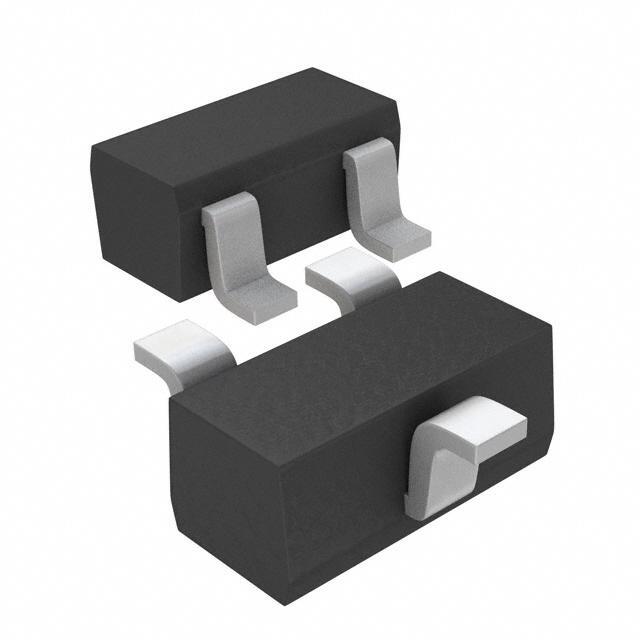
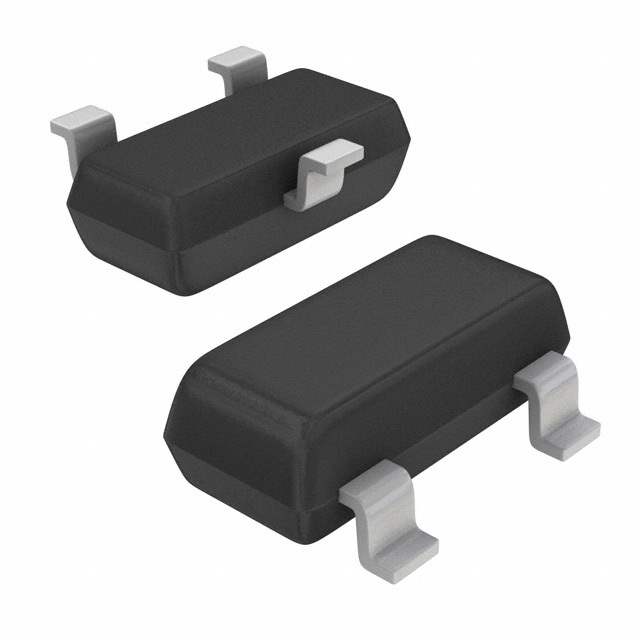
50V VCEO ceiling, 100mA collector limit, 150mW dissipation, EMT3 package, built-in 4.7k and 47k resistors
Quick Engineering Summary
| Field | Value |
|---|---|
| Manufacturer | Rohm Semiconductor |
| Category | Transistors (BJT) - Single, Pre - Biased |
| Package | EMT3 |
| Core function | TRANS PREBIAS NPN 50V 0. |
| Key electrical range | Collector Cut-off Current(Max): 500nA; Frequency - Transition: 250MHz; Maximum Current Collector: 100mA; Maximum Power Dissipation: 150mW |
| Reported stock | 90000 pcs reported — confirm on RFQ |
Can you put DTC143ZETL on a new BOM?
Can I use it in a new design? Yes. DTC143ZETL is Active, EU RoHS compliant, and stocked at 90000, so the commercial side supports a new BOM when you need a pre-biased NPN in EMT3.
150mW is the limit that bites first
150mW is the number that decides the fit first. The 50V VCEO rating is a ceiling too, but it does not turn this into a high-energy switch; the 100mA collector current ceiling and the small EMT3 body keep it in signal-level work.
The listed 300mV max VCE(sat) at 250μA and 5mA is useful only at that condition. It shows the device can pull low cleanly in a light-load switching role, not that it will hold the same drop near the 100mA ceiling. The 500nA collector cut-off current max also helps when off-state leakage matters, especially on high-impedance nodes.
The weak point is missing detail, not lifecycle
The weak point is the thin electrical picture. The strong point is that the part definition is clear: DTC143ZETL is a pre-biased NPN with 4.7k on R1 and 47k on R2.
That fixed resistor pair is the real fit call. It suits simple logic interfacing, level shifting, and small signal switching where saving external parts matters and the built-in bias values work as-is. It is the wrong choice where base drive must be tuned or where current is already pushing toward the 100mA ceiling.
The 80 hFE minimum at 10mA and 5V points the same way. This is a modest-current switching transistor with integrated biasing, not a general-purpose BJT you shape around the circuit.
90000 on hand helps, but the datasheet still owes you basics
90000 on hand matters because parts like this disappear into a lot of quiet housekeeping functions, and a line stop over a pre-biased switch is still a line stop. Packaging is Reel - TR, so DTC143ZETL lines up with automated assembly rather than bench builds or hand-loaded service stock.
What is missing is more important than the stock count. There is no pinout, no package drawing, and no thermal resistance figure, so layout orientation and ambient headroom do not close from this page alone. There is also no saturation curve beyond the single 300mV @ 250μA, 5mA point, leaving no view of how quickly dissipation rises as current climbs toward the 100mA ceiling.
Frequency - Transition is listed at 250MHz, but without the surrounding curves it doesn't fill in the switching picture. If DTC143ZETL is headed into a fast edge path, pull the full datasheet before committing the footprint.
View the Win-Source product page for DTC143ZETL.
Key Takeaways for Engineers & Buyers
- Keep collector current below the 100mA ceiling; DTC143ZETL is not a load driver.
- Budget around the 150mW dissipation limit before using the 50V collector-emitter ceiling.
- Confirm pinout and package drawing for EMT3 before layout release.