
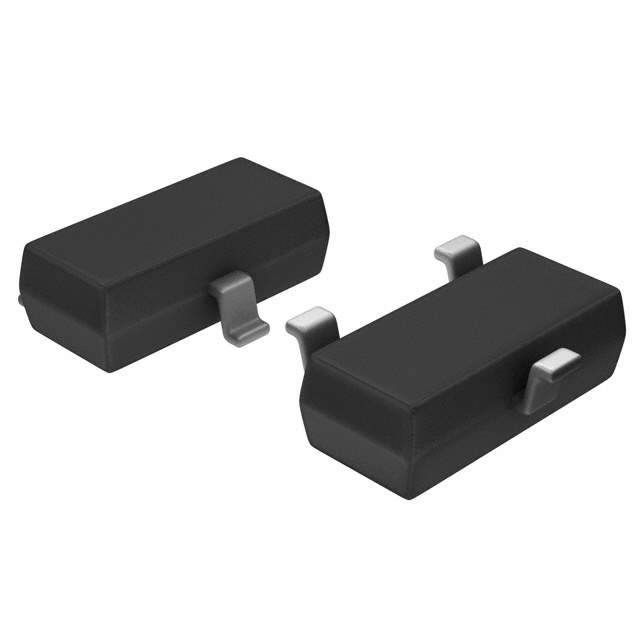
50 V, 100 mA, 200 mW in SST3, with built-in 47 kOhms and 47 kOhms for low-power switching
Quick Engineering Summary
| Field | Value |
|---|---|
| Manufacturer | Rohm Semiconductor |
| Category | Transistors (BJT) - Single, Pre - Biased |
| Package | SST3 |
| Core function | TRANS PREBIAS NPN 50V 0. |
| Key electrical range | Supply and Demand Status: Balance |
| Reported stock | 3000 pcs reported — confirm on RFQ |
Not for power switching; useful for small logic-level drive
This is the wrong part for power switching. DTC144ECAT116 is a pre-biased NPN in SST3 with a 100 mA collector-current maximum and 200 mW power maximum, so there is little current headroom and not much thermal slack.
It fits better in the small jobs around a design: signal inversion, enable lines, level shifting on low-power rails, and simple load switching where the built-in resistor network is the reason to use the part in the first place. The listing gives R1 at 47 kOhms and R2 at 47 kOhms, so one design choice is already made for you, and that is the real appeal here.
That same convenience narrows the fit. If the circuit depends on choosing different resistor values to tune base drive, DTC144ECAT116 is already the wrong electrical shape before the 100 mA and 200 mW ceilings even become the limiting factors, and that matters more than package size when you are deciding whether the part belongs in a new design.
New design-in is still a reasonable call. Active lifecycle, low stated risk, EU RoHS compliance, MSL 1, and a balanced supply-demand flag all support it. The caution is operational: stock is 3000 and estimated production lead time is 19 Weeks, so it is easy enough to approve for a BOM but not a part to leave for a late buy.
50 V is the rail ceiling that sets the first yes-or-no
50 V is the decisive number. It is the collector-emitter breakdown maximum, so it sets the first pass-fail check for any rail this transistor will see.
The next ceiling is 100 mA collector current. That rules out treating DTC144ECAT116 like a general-purpose small switch with much surge margin. The listing also gives a 300 mV Vce saturation maximum at 500 µA and 10 mA, which is useful as a low-current switching point but not as a broad map of conduction behavior. Around 10 mA, that number helps. Far above it, this page stops answering the important questions.
Then there is 200 mW maximum power. The thermal picture is still incomplete, because the listing does not include a derating curve or thermal resistance, so you cannot turn that 200 mW ceiling into ambient headroom from this page alone.
The weak point is missing thermal detail, not availability
The weak point is the thin thermal detail. The commercial picture is cleaner: Active status, 3000 in stock, Reel - TR packaging, and high popularity all make DTC144ECAT116 easier to keep on a running line than many niche discretes.
Buy it like a reel-managed part, not a bench-quantity convenience item. Quantity per package is 3000, and the listed 19 Weeks lead time can stall a build if this becomes a last-minute line item. The open-market fake threat is listed at 91 pct., a sourcing warning rather than an electrical one, so keep DTC144ECAT116 on authorized channels and avoid spot buys when supply gets tight.
View the Win-Source product page for DTC144ECAT116.
Three missing items still decide the final sign-off
Three items still matter. Pinout and package drawing are needed in front of layout, and thermal resistance plus the power derating curve are still missing from this page. Resistor tolerance for the 47 kOhms and 47 kOhms network also remains open.
View the Win-Source product page for DTC144ECAT116.
Key Takeaways for Engineers & Buyers
- Treat 50 V and 100 mA as ceilings; size the switched node and load so DTC144ECAT116 stays below both limits.
- Plan around reel handling early: package is Reel - TR, quantity per package is 3000, and lead time is 19 Weeks.
- Pull the full datasheet for resistor tolerance, pinout, and thermal data before freezing the DTC144ECAT116 footprint.