
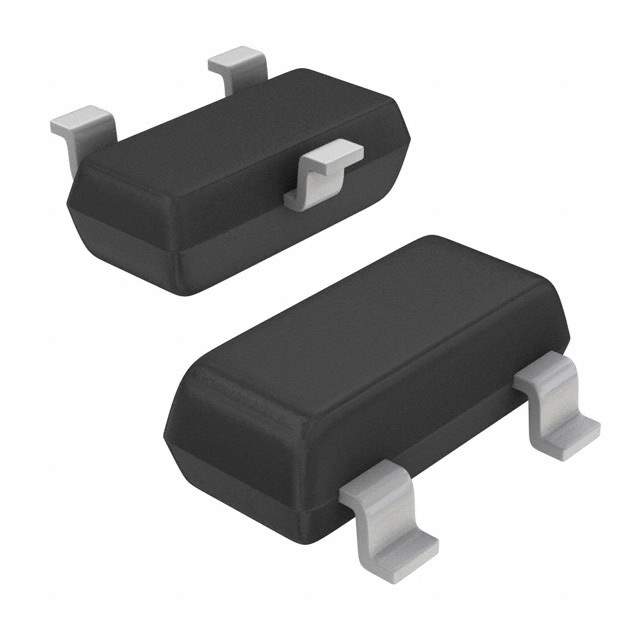
50V VCEO ceiling, 30mA collector limit, 150mW dissipation ceiling, EMT3 package
Quick Engineering Summary
| Field | Value |
|---|---|
| Manufacturer | Rohm Semiconductor |
| Category | Transistors (BJT) - Single, Pre - Biased |
| Package | EMT3 |
| Core function | TRANS PREBIAS NPN 50V EMT3 |
| Key electrical range | Collector Cut-off Current(Max): 500nA; Frequency - Transition: 250MHz; Maximum Current Collector: 30mA; Maximum Power Dissipation: 150mW |
| Reported stock | 12000 pcs reported — confirm on RFQ |
Still, the lifecycle conflict decides the verdict
And that conflict is enough to keep DTC144WETL out of a fresh design. One field says Active, another says Not For New Designs, so the safe call is sustaining use only. EU RoHS is compliant, but it does not settle the lifecycle question.
Can you buy it for a running line?
Can you get enough parts to keep a line moving? Yes, if the need is immediate and specific. Listed stock is 12000 and packaging is Reel - TR, so it fits SMT production better than bench builds or loose-piece service stock.
Status is the real constraint. Buy for existing production, then freeze the use case around the current bias network and package. Don't let an Active flag pull a new release into motion when the same record also says Not For New Designs.
The fixed resistors are the real design commitment
The weak point comes first: this is not a general small-signal NPN you can tune later with external base parts. The upside is just as clear in the right circuit. With 47k on R1 and 22k on R2 already built in, it fits compact switching and interface work where that bias network is exactly the one you wanted.
The EMT3 footprint helps when board area is tight, but it also closes off circuits that need base-drive adjustment, different pull-down behavior, or a transistor you can reuse across several logic thresholds. This is a pre-biased NPN with a narrow, useful lane.
50V does not make it a power switch
50V is the collector-emitter breakdown ceiling, and that answers only one question: whether the transistor can block that rail. It does not say the part can sit there comfortably under load, because the other ceilings arrive first. Collector current tops out at 30mA, and maximum power dissipation is 150mW.
Those numbers stop the usual overreach. A high-side or low-side signal switch on a modest load is plausible, but a relay driver, lamp switch, or anything that leans on current headroom is out. The listed 300mV at 500µA, 10mA is a saturation ceiling at that test point, useful for estimating voltage loss in a logic-level switching path, not a promise of low drop across the whole current range.
The missing thermal and connection details still matter
The constraint is closure: the numbers are enough to sort fit from misfit, but not enough to finish layout and stress decisions with confidence.
There is no pinout here, no package drawing, and no thermal resistance figure. For a 150mW ceiling in EMT3, that missing thermal path data is what tells you how much ambient headroom the board really has, especially when the package is small and the dissipation budget is already tight.
There is also no derating curve, so the temperature story stops before the useful part. The 500nA collector cut-off current ceiling helps when off-state leakage matters, the 56 @ 5mA, 5V gain figure is only a stated condition, and even the 250MHz transition frequency is secondary to the built-in resistor network and small dissipation budget.
One more omission matters. There is no junction temperature limit in the listing. Without that ceiling, you can place DTC144WETL in the right class of circuit, but you can't close the thermal argument from this page alone.
View the Win-Source product page for DTC144WETL.
Key Takeaways for Engineers & Buyers
- Do not start a new platform on DTC144WETL; the status conflict lands on Not For New Designs.
- Keep collector load below the 30mA ceiling and budget against the 150mW dissipation limit.
- Check the fixed bias network against 47k R1 and 22k R2 before dropping DTC144WETL into a logic stage.