
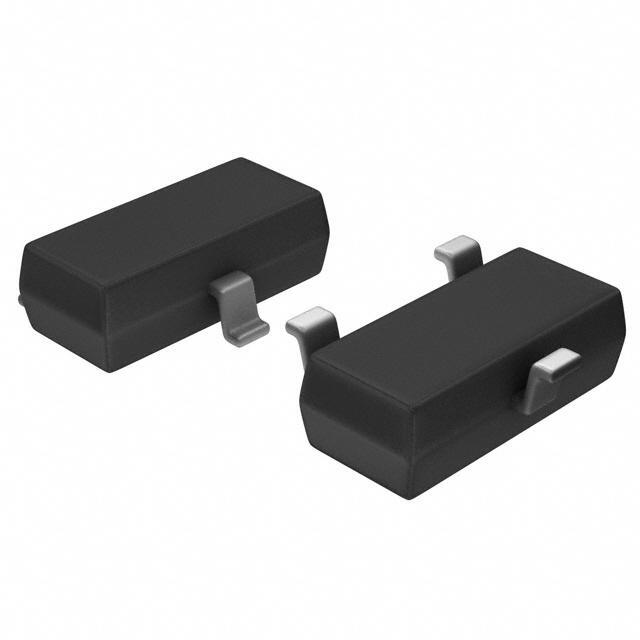
50V VCEO, 30mA collector ceiling, 200mW dissipation, SMT3 package, built-in 47k and 22k resistors
Quick Engineering Summary
| Field | Value |
|---|---|
| Manufacturer | Rohm Semiconductor |
| Category | Transistors (BJT) - Single, Pre - Biased |
| Package | SMT3 |
| Core function | TRANS PREBIAS NPN 50V SMT3 |
| Key electrical range | Collector Cut-off Current(Max): 500nA; Frequency - Transition: 250MHz; Maximum Current Collector: 30mA; Maximum Power Dissipation: 200mW |
| Reported stock | 55550 pcs reported — confirm on RFQ |
The lifecycle conflict is the real constraint
The constraint is not electrical first. DTC144WKAT146 is marked Active, but it also carries Not For New Designs, and that split is enough to rule it out for a clean-sheet design.
For an existing production line, the picture is more workable. Stock is listed at 55550, packaging is Reel - TR, and supply-demand is marked Balance, so it can keep moving through SMT without special handling. EU RoHS is compliant. Use it where the resistor network already fits, and keep new programs off it.
And the electrical ceilings are modest
And the numbers do not widen the case: 50V VCEO, 30mA maximum collector current, and 200mW maximum power dissipation. Small envelope.
The resistor pair decides whether it saves you parts
The weak point comes first: flexibility is limited. DTC144WKAT146 is pre-biased, so the built-in 47k base resistor and 22k emitter-base resistor are fixed parts of the circuit.
That fixed network is also the reason to use it. When the logic drive and bias scheme already want those values, one device can replace a transistor plus two resistors in an SMT3 footprint. When they do not, the 56 minimum hFE at 5mA, 5V and the 300mV maximum VCE(sat) at 500µA, 10mA do not solve the mismatch; they only describe behavior at those test points. The 500nA collector cut-off current ceiling helps in low-leakage gating, but ft at 250MHz still does not answer real switching speed.
Wrong for load driving, useful for compact bias-and-switch jobs
Wrong for load driving. The 30mA collector limit is a ceiling, the 200mW rating is a ceiling, and the fixed 47k and 22k resistors lock in one specific input structure.
If the design needs heavier collector current, different base impedance, or room to tune turn-on behavior, this is the wrong starting point. That matters more here because the package line points to SMT3 while also naming TO-236-3, SC-59, and SOT-23-3, so even a seemingly simple drop-in needs careful library control before layout is released.
Where it does fit is compact board-level switching, where BOM count and placement efficiency matter more than transistor-level tuning. It belongs in dense control sections, enable lines, and simple level or pull-down functions where 50V VCEO gives rail headroom and the actual collector current stays below the listed maximum.
The supply picture supports that sustaining role, not a new launch. Listed stock is enough to support a running line today, but with Active and Not For New Designs appearing together, availability is a reason to cover existing production rather than justify a fresh release around DTC144WKAT146.
200mW is not enough information on its own
200mW is the headline figure, but it is not the deciding one by itself. Without thermal resistance, that dissipation ceiling does not tell you ambient headroom.
Other missing items are just as concrete. There is no pinout or package drawing here, even though the package naming spans SMT3 and SOT-23-3 family terms. There is no switching-time data, and no capacitance figure.
Those gaps matter. They are what determine heat, layout correctness, and edge behavior.
View the Win-Source product page for DTC144WKAT146.
Key Takeaways for Engineers & Buyers
- Freeze DTC144WKAT146 to existing builds only; lifecycle shows Not For New Designs against Active.
- Check the load against the 30mA collector ceiling and 200mW dissipation ceiling before release.
- Confirm the built-in 47k R1 and 22k R2 match the drive network; those values are fixed.