
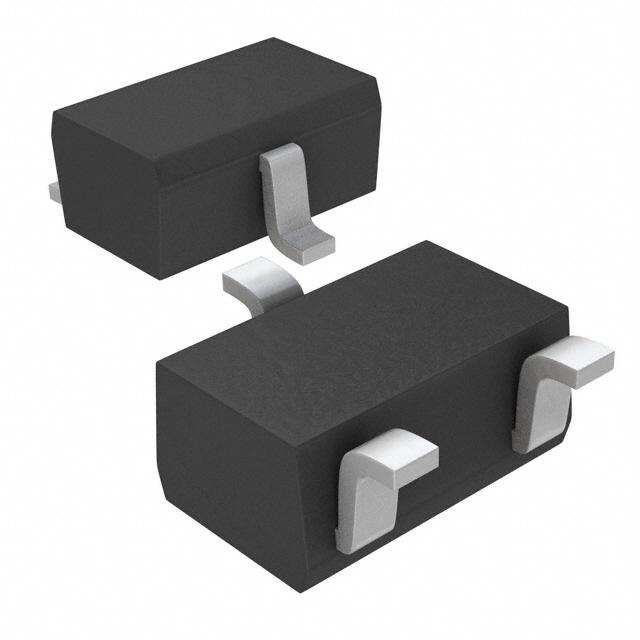
15V VCEO, 600mA collector ceiling, 200mW dissipation, UMT3 package: for running lines only
Quick Engineering Summary
| Field | Value |
|---|---|
| Manufacturer | Rohm Semiconductor |
| Category | Transistors (BJT) - Single, Pre - Biased |
| Package | UMT3 |
| Core function | TRANS PREBIAS NPN 15V 0. |
| Key electrical range | Collector Cut-off Current(Max): 500nA (ICBO); Frequency - Transition: 200MHz; Maximum Current Collector: 600mA; Maximum Power Dissipation: 200mW |
| Reported stock | 256900 pcs reported — confirm on RFQ |
Wrong for new platforms, acceptable for a bridge build
Wrong for new platforms. DTC314TUT106 is EOL, so keep it to existing production that already needs this pre-biased NPN in UMT3. EU RoHS compliance is present, but it doesn't drive the decision.
The rail limit is tight
It is tight.
The 15V VCEO rating is a ceiling, not a working rail target, so DTC314TUT106 belongs on low-voltage collector nodes only. If normal rail or transient exposure leans on that limit, this listing leaves little room for comfort. The 600mA maximum collector current is also a ceiling, but the 200mW maximum power dissipation is the number that keeps you from reading 600mA as a general-purpose load-switch claim.
The 80mV max VCE(sat) at 2.5mA and 50mA is useful at that stated condition. It shows clean pull-down behavior in small-signal switching around that test point, but it says nothing about saturation loss near the 600mA ceiling.
The package and built-in resistor narrow the fit
The constraint is integration. This is a single NPN pre-biased transistor with only R1 listed, at 10k, in UMT3 and SMD form. That points to compact logic-level drive and board-space-sensitive housekeeping functions where the built-in base resistor is the reason to choose it.
It is not a part for open-ended bias tuning, because the resistor network is much of the point and the listing gives only that 10k R1 value. The 100 minimum hFE at 50mA and 5V supports moderate-current switching at the stated condition, and the 200MHz transition frequency says the transistor itself is not slow. Still, neither number changes the 15V and 200mW ceilings. DTC314TUT106 fits dense low-voltage control paths better than anything that expects broad rail tolerance or generous thermal headroom.
Weak documentation, but enough stock for a controlled run
The weak point is documentation depth. The stronger point is supply: DTC314TUT106 shows 256900 in stock quantity, reel packaging, and sufficient supply/demand status, so a running line can likely secure material without making market availability the main risk.
Buy only against a dated consumption plan. EOL shifts the job from sourcing convenience to exit management, and the listed 48 pct. fake threat in the open market makes that a practical concern once authorized stock thins out. Keep purchases on reel if your line already handles TR, and don't spread DTC314TUT106 into any new assembly where a second qualification would outlive the part.
What the listing still doesn't answer
What would a buyer ask first? How much margin is actually left once this goes on a real board?
The 200mW dissipation limit is listed, but the thermal picture stops there. There is no thermal resistance figure, no derating curve, and no junction temperature limit, so the listing does not show how much ambient headroom DTC314TUT106 really has on a small board in UMT3. That missing detail matters more here because the electrical ceilings are already modest, and a compact footprint can move from comfortable to constrained quickly when heat has nowhere to go.
The switching picture is thin too. There is no switching-time data, no capacitance data, and no fuller saturation behavior beyond 80mV at 2.5mA and 50mA, so you can't tell from this listing alone how the device behaves as conditions move away from that single test point. The package naming is present through UMT3 and SC-70, SOT-323 in the row detail, yet the pinout and mechanical drawing are still absent here. Those are the concrete gaps that keep a real design check open on DTC314TUT106, even when the lifecycle call has already narrowed its role to sustaining use.
View the Win-Source product page for DTC314TUT106.
Key Takeaways for Engineers & Buyers
- Block new BOM releases on DTC314TUT106; lifecycle is EOL.
- Check every collector rail against the 15V VCEO ceiling before any last-time build.
- Review board heat around the 200mW limit; the listing gives no thermal resistance.