
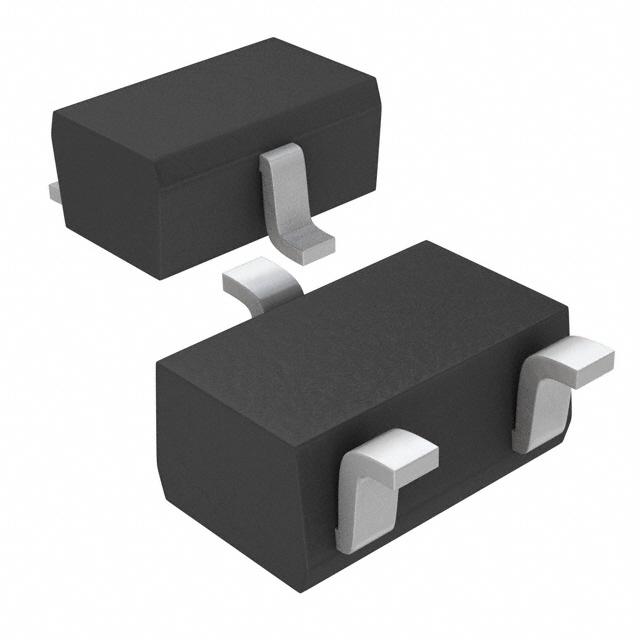
15V VCEO ceiling, 600mA collector limit, 200mW dissipation cap, UMT3 package, EOL status
Quick Engineering Summary
| Field | Value |
|---|---|
| Manufacturer | Rohm Semiconductor |
| Category | Transistors (BJT) - Single, Pre - Biased |
| Package | UMT3 |
| Core function | TRANS PREBIAS NPN 15V 0. |
| Key electrical range | Collector Cut-off Current(Max): 500nA (ICBO); Frequency - Transition: 200MHz; Maximum Current Collector: 600mA; Maximum Power Dissipation: 200mW |
| Reported stock | 42000 pcs reported — confirm on RFQ |
Can you still buy DTC323TUT106 with confidence?
Can you still buy it with confidence? Only if the job is sustaining an existing production line.
DTC323TUT106 is marked EOL in both lifecycle fields, and that alone takes it out of new design-in before the electrical limits even enter the discussion. The near-term exception is availability: 42000 pieces are listed in stock on reel, which can cover a known sustaining build when the line already qualifies this exact device and demand is visible far enough ahead to lock in what you need.
The sourcing risk is still high. EOL means remaining availability, not a stable forward supply picture, so the practical move is to buy for the builds you can actually see and put a migration path in motion now instead of treating DTC323TUT106 as an open-ended line item. EU RoHS is compliant, so there is no separate compliance issue stacked on top of the lifecycle problem.
15V is the rail limit that decides this part
15V is the decisive number here.
VCEO is a ceiling, so this part belongs only on low-voltage collector nodes where normal operation, startup, and fault conditions stay below that limit. The other hard ceiling is 200mW maximum power dissipation, and that number keeps the 600mA maximum collector current in context because current by itself does not tell you whether the device can survive a given switching condition.
The listed 80mV maximum VCE(sat) at 2.5mA and 50mA is useful, but only at that test point, and it supports low-loss saturated switching around that condition rather than across every base-drive and collector-current combination. The 500nA ICBO maximum is also a ceiling, not a bias point. It matters when the off-state node is high impedance and leakage can shift a threshold, but it says nothing about dynamic switching behavior.
The package is tiny, and the use case is narrow
The weak point comes first: it is EOL.
The upside is narrower but real. The integrated 2.2k base resistor removes one external resistor, and the UMT3 body suits dense SMT layouts, so the part is easy to place when the job is compact low-voltage switching. That fits logic-level switching, level translation, or simple load control where an NPN pre-biased transistor is wanted and the collector node stays comfortably inside the 15V ceiling.
The listed hFE minimum of 100 at 50mA and 5V gives one anchored operating condition for gain, not a promise across the full current range. The 200MHz transition frequency says the transistor itself is not unusually slow, but this listing still does not provide enough switching detail to make it a timing-critical choice.
What the listing still does not tell you
Wrong for a final release decision on switching detail. Right for a quick screen on fit and lifecycle.
What is still missing is concrete: pinout, package drawing, thermal resistance, and switching-time data. For a pre-biased transistor, turn-on and turn-off behavior matter because the integrated resistor affects how hard the base can be driven in practice. The listing also does not show an IFSM-style surge limit equivalent for transient abuse or a derating curve that ties the 200mW ceiling to ambient conditions.
View the Win-Source product page for DTC323TUT106.
Key Takeaways for Engineers & Buyers
- Block new BOM releases on DTC323TUT106; lifecycle is EOL.
- Check the switched node against the 15V VCEO ceiling before approving any reuse.
- Reserve reel demand early if this stays on a running line; listed stock is 42000 in TR packaging.