
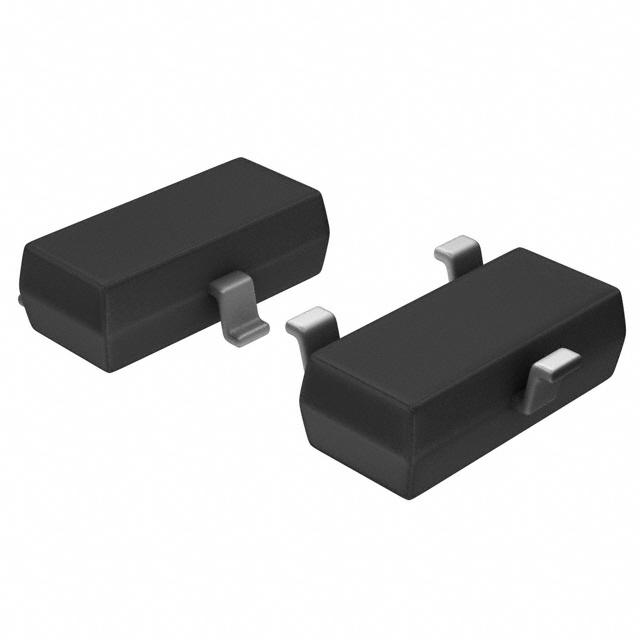
20V VCEO ceiling, 600mA collector limit, 200mW dissipation ceiling, SMT3 pre-biased NPN
Quick Engineering Summary
| Field | Value |
|---|---|
| Manufacturer | Rohm Semiconductor |
| Category | Transistors (BJT) - Single, Pre - Biased |
| Package | SMT3 |
| Core function | TRANS PREBIAS NPN 20V 0. |
| Key electrical range | Collector Cut-off Current(Max): 500nA (ICBO); Frequency - Transition: 150MHz; Maximum Current Collector: 600mA; Maximum Power Dissipation: 200mW |
| Reported stock | 32840 pcs reported — confirm on RFQ |
Can you start a new build on DTC614TKT146?
Can I still design this in? Yes—if the draw is the built-in 10k base resistor, not raw power handling. It is Active, stocked at 32840, and listed as EU RoHS compliant.
The limits are plain: 20V VCEO, 600mA collector current, and 200mW dissipation are ceilings.
The weak point is 200mW, not 600mA
The weak point comes first. The 200mW maximum power dissipation is the number that should slow you down, because the 600mA maximum collector current looks roomy until you remember how little thermal margin a small SMT3 body leaves once the switching node starts making heat.
The better news is at the stated test point: saturation is 150mV @ 2.5mA, 50mA. That supports low-loss switching there, and the 500nA ICBO ceiling keeps off-state leakage from turning into the surprise term in a high-impedance bias network. None of that changes the voltage story. Twenty volts is still the breakdown ceiling.
Good for resistor-biased switching, not for open-ended loads
Good fit here.
This is a single NPN pre-biased transistor with only R1 present, listed at 10k. That is useful when the point is to drop an external base resistor and keep the drive side sparse on an SMT line. The listed hFE minimum of 820 @ 50mA, 5V shows the device is meant to switch or amplify with very light drive current at that condition, but that test point does not expand the 20V collector-emitter limit or relax the 200mW ceiling.
Use it where the internal resistor is the real advantage. Keep it off rails that crowd 20V and away from load cases that ask the package to absorb sustained dissipation without a published derating curve.
Buy the reel, but don’t skip the missing details
Wrong for blind signoff. The listing does not include the pinout, package drawing, thermal resistance, or derating curve, and those are the details that decide whether it drops into an existing SOT-23-3 footprint and how much ambient headroom the 200mW ceiling actually leaves.
Right for production planning after that. Packaging is Reel - TR, mounting is SMD, and stock is 32840, so it lines up with automated assembly rather than bench-only handling. Lock the footprint and orientation from the full datasheet before release, then buy to the reel format already listed. One electrical gap still matters: there is no IFSM-style surge analogue to lean on here, and no transient thermal data either, so DTC614TKT146 should not be picked for pulse abuse on the strength of the collector current number alone.
View the Win-Source product page for DTC614TKT146.
Key Takeaways for Engineers & Buyers
- Keep VCEO below the 20V ceiling; this part does not close higher-voltage collector rails.
- Treat 200mW as the thermal budget limiter before the 600mA collector rating.
- Buy on reel - TR if DTC614TKT146 is going onto automated SMT lines.