
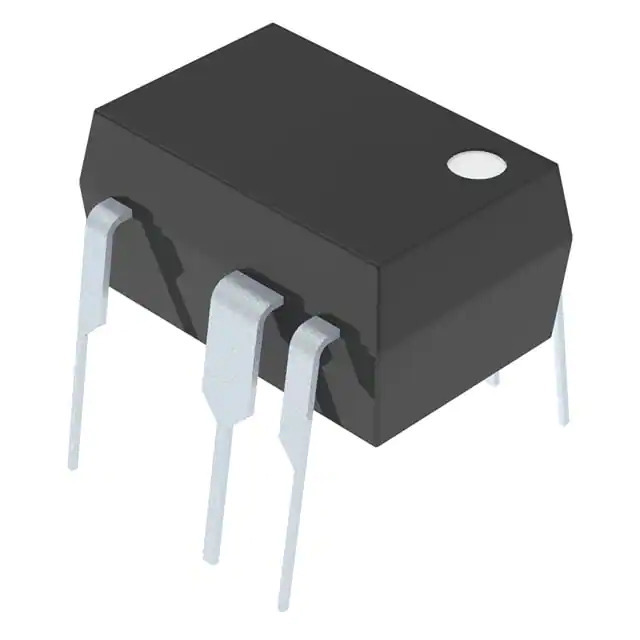
50 V, 500 mA, and 200 mW ceilings define where this pre-biased NPN fits
Quick Engineering Summary
| Field | Value |
|---|---|
| Manufacturer | Rohm Semiconductor |
| Category | Transistors (BJT) - Single, Pre - Biased |
| Package | Tape & Reel |
| Core function | TRANS PREBIAS NPN 50V 0. |
| Key electrical range | Current - Collector (Ic) (Max): 500 mA; Current - Collector Cutoff (Max): 500nA; DC Current Gain (hFE) (Min) @ Ic, Vce: 56 @ 50mA, 5V; Frequency - Transition: 200 MHz |
| Reported stock | 95 pcs reported — confirm on RFQ |
50 V is the first gate, not the whole answer
50 V decides whether this transistor belongs on the schematic at all. It is the collector-emitter breakdown ceiling, and if your node can force more than 50 V across it, stop there.
The rest of the listing sets the other hard limits. Collector current tops out at 500 mA, and power tops out at 200 mW, so those numbers do not support high voltage and high current at the same time in a tiny SST3 body. The built-in bias network is fixed at 10 kOhms for R1 and 10 kOhms for R2, which makes the part a better fit for logic-drive housekeeping and small switching jobs than for circuits that need base-drive tuning.
Good for new work
Yes, for new work. The lifecycle signals agree: DTD114ECT116 is Active, with no status conflict to explain away.
That matters more than the 200 MHz transition frequency because lifecycle uncertainty can stall a release faster than a missing bit of gain. The package story is also clear. This is a surface-mount, pre-biased NPN in TO-236-3, SC-59, SOT-23-3 with supplier package SST3, so it belongs in compact control paths where the internal 10 kOhms and 10 kOhms resistor pair is exactly what you wanted, not where base-network values are part of the tuning loop. EU RoHS compliant, REACH Unaffected, and MSL 1 (Unlimited) keep assembly simple.
The weak spot is missing detail
Missing detail is the problem. The headline limits are not.
DTD114ECT116 still needs the pinout or drawing, thermal resistance, and any derating curve before layout and ambient headroom are settled with confidence.
95 pieces is the buying constraint, not compliance
95 pieces changes the buying conversation. The part itself is straightforward: DTD114ECT116 is Active, shipped in Tape & Reel, and easy to handle with MSL 1 (Unlimited). What is not straightforward is treating a shown quantity of 95 as evidence of comfortable supply for anything beyond bench work or a small build.
The electrical listing is enough to screen fit, but not enough to relax purchasing discipline. A 300mV Vce saturation maximum at 2.5mA and 50mA shows the transistor can pull down modest load current without giving up much headroom in that stated condition, while the minimum hFE of 56 at 50mA and 5V shows gain is characterized at a real operating point instead of being left blank. The 500nA collector cutoff maximum also helps on leakage-sensitive nodes.
Still, those points do not answer switching behavior or thermal rise. For existing production, secure the quantity you need early and treat the stock figure as a snapshot, not a supply plan. Buy it where the fixed resistor network and the SST3 footprint already match the design.
View the Win-Source product page for DTD114ECT116.
Key Takeaways for Engineers & Buyers
- Keep VCE below the 50 V breakdown ceiling; that number does not buy transient margin by itself.
- Budget dissipation against the 200 mW maximum before using the 500 mA collector rating.
- Match the drive network to the built-in 10 kOhms R1 and 10 kOhms R2.