
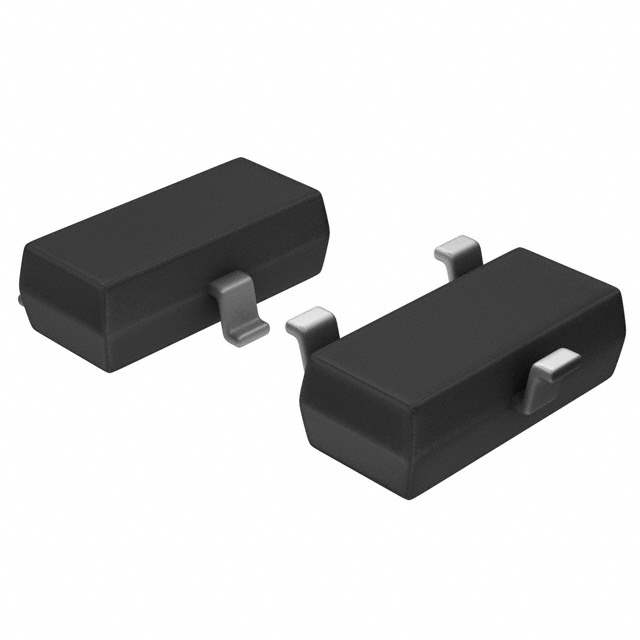
50V VCEO ceiling, 500mA collector limit, 200mW dissipation cap in an SMT3 pre-biased NPN
Quick Engineering Summary
| Field | Value |
|---|---|
| Manufacturer | Rohm Semiconductor |
| Category | Transistors (BJT) - Single, Pre - Biased |
| Package | SMT3 |
| Core function | TRANS PREBIAS NPN 50V 0. |
| Key electrical range | Collector Cut-off Current(Max): 500nA; Frequency - Transition: 200MHz; Maximum Current Collector: 500mA; Maximum Power Dissipation: 200mW |
| Reported stock | 300000 pcs reported — confirm on RFQ |
Can you put DTD123YKT146 into a new build?
Can you put this into a new build today? Yes, with clear limits. Active status, EU RoHS compliance, and 300000 in stock make DTD123YKT146 a credible choice for a running line, especially when reel packaging already matches the build flow.
The real decision point is the device type. DTD123YKT146 is a pre-biased NPN with R1 at 2.2k and R2 at 10k in SMT3, so the resistor network is not a convenience feature you can ignore; it locks in the bias approach from the start and makes sense only where that exact arrangement belongs in the circuit.
That is why the part works best in a small-signal switch stage that benefits from fewer externals, while the 50V VCEO ceiling and 500mA collector-current ceiling keep it viable only until thermal behavior, pulse stress, and package details become the deciding factors in review.
200mW is the number that narrows the use case
200mW is the ceiling that defines the part more than anything else.
The listing also shows a 500mA maximum collector current and a 50V maximum collector-emitter breakdown voltage, but those are ceilings too, not a sign that DTD123YKT146 can operate anywhere near both at once for real power switching duty. The listed max VCE(sat) of 300mV at 2.5mA and 50mA is still useful because it shows the part is characterized in a low-base-drive switching condition, while the max collector cut-off current of 500nA matters when off-state leakage affects a pull-up network or battery path.
It can switch modest loads cleanly. The power cap is what narrows the use case.
And the buy call is straightforward
So the practical constraint is packaging, not lifecycle. Reel - TR makes DTD123YKT146 easy to place on a BOM if your line wants taped SMT3 parts; if you need another packing option, this entry does not offer one.
Wrong for tunable drive stages, right for fixed-bias switching
Wrong first: DTD123YKT146 does not belong in a tunable drive stage, because the internal 2.2k and 10k resistors are both the reason to choose it and the reason to avoid it when base-network freedom still matters. It is also the wrong place to get ambitious with dissipation. The 200mW ceiling says no.
It fits dense board-level switching where removing two external resistors matters more than extracting every bit of gain or saturation performance. The listed hFE minimum of 56 at 50mA and 5V, plus 200MHz transition frequency, shows the device is not sluggish, but neither number replaces the missing curves that would show how it behaves away from that test point.
The missing datasheet items are the real review blockers
50V is not the blocker.
The missing items are thermal resistance, derating curve, pinout confirmation, and package drawing. For DTD123YKT146, those details decide ambient headroom, land pattern confidence, and whether the 200mW limit is comfortable or tight in your board stack.
View the Win-Source product page for DTD123YKT146.
Key Takeaways for Engineers & Buyers
- Keep VCEO below the 50V ceiling; that number does not buy transient headroom by itself.
- Budget around the 200mW dissipation cap before using the full 500mA collector rating.
- Buy on reel if DTD123YKT146 fits the line; stock is 300000 and packaging is TR.