
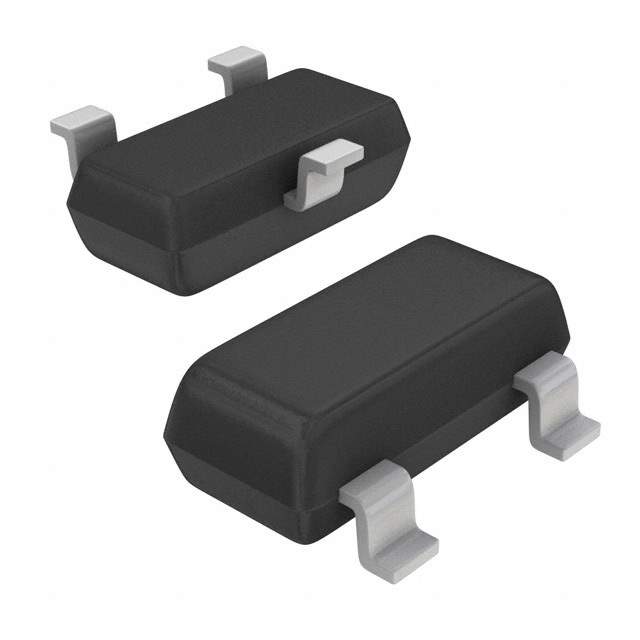
12V VCEO ceiling, 500mA collector ceiling, 150mW limit, EMT3 package with built-in 1 kOhms and 10 kOhms
Quick Engineering Summary
| Field | Value |
|---|---|
| Manufacturer | Rohm Semiconductor |
| Category | Transistors (BJT) - Single, Pre - Biased |
| Package | SC-75, SOT-416 |
| Core function | TRANS PREBIAS NPN 12V 0. |
| Key electrical range | Current - Collector (Ic) (Maximum): 500mA; Current - Collector Cutoff (Maximum): 500nA; DC Current Gain (hFE) (Min) at Ic, Vce: 140 at 100mA, 2V; Frequency - Transition: 260MHz |
| Reported stock | 27000 pcs reported — confirm on RFQ |
The 12V and 150mW ceilings decide this part fast
The constraint is simple: 12V collector-emitter breakdown and 150mW dissipation. Those two numbers put this device in low-voltage switching and bias networks, not in spots where rail excursions or sustained power can climb past either ceiling.
The 500mA collector rating is a ceiling too, not a casual operating target. The listing gives a 300mV VCE(sat) maximum at 5mA and 100mA, so it can pull low with modest base drive at that test point, but that still leaves higher-current behavior open. The built-in 1 kOhms base resistor and 10 kOhms emitter-base resistor are the convenience here, trimming external parts when the logic drive and bias scheme already line up with those values.
Can you keep DTD513ZETL on a running line?
Can you keep it moving through production? Yes. Active status, 27000 in stock, Reel packaging, and a 3,000 manufacturer pack all point to a part that fits continuous SMT assembly instead of hand-load service.
That matters because this is a specialized transistor, not a generic drop-in. A pre-biased NPN saves time only when the embedded resistor network is the one the circuit actually needs, and if the drive stage wants different input current or different turn-off behavior, the convenience vanishes while the fixed bias values stay. The supply-and-demand status is Balance, which supports normal replenishment rather than a scramble buy, and MSL 1 (Unlimited) removes a common floor-life nuisance from receiving and kitting.
Use it when reel-fed SMT and fixed bias values are both advantages. If the resistor pair is wrong, move on early and use a plain transistor with external resistors instead.
It fits small low-voltage switch nodes
It fits.
DTD513ZETL is an SMD single pre-biased NPN in SC-75, SOT-416 with supplier package EMT3, so it belongs in dense board-level control, level shifting, and simple load switching where board area matters more than transistor flexibility.
The minimum hFE of 140 at 100mA and 2V helps at that operating point, but it does not describe the whole load range. The 260MHz transition frequency shows it is not a sluggish device, yet that number alone does not settle switching performance because the listing does not include switching times or capacitances, the details that would decide edge behavior in a real waveform. Keep it in compact low-voltage logic-adjacent jobs, and keep it out of higher-voltage rails or designs that need resistor values other than 1 kOhms and 10 kOhms.
27000 pieces help, but the datasheet gaps still matter
27000 pieces help. They remove the immediate sourcing question, and EU RoHS is already covered.
What still limits a tighter signoff is missing package and switching detail. The listing does not include a pinout, package drawing, thermal resistance, or switching times. For DTD513ZETL, those omissions affect layout orientation, ambient headroom, and whether the transistor's speed is actually usable in the edge-rate budget.
View the Win-Source product page for DTD513ZETL.
Key Takeaways for Engineers & Buyers
- Keep DTD513ZETL off rails that can exceed 12V at the collector-emitter terminals.
- Budget dissipation against the 150mW ceiling before using DTD513ZETL near its 500mA collector limit.
- Buy in reel-friendly builds; stock is 27000 and factory pack is 3,000.