
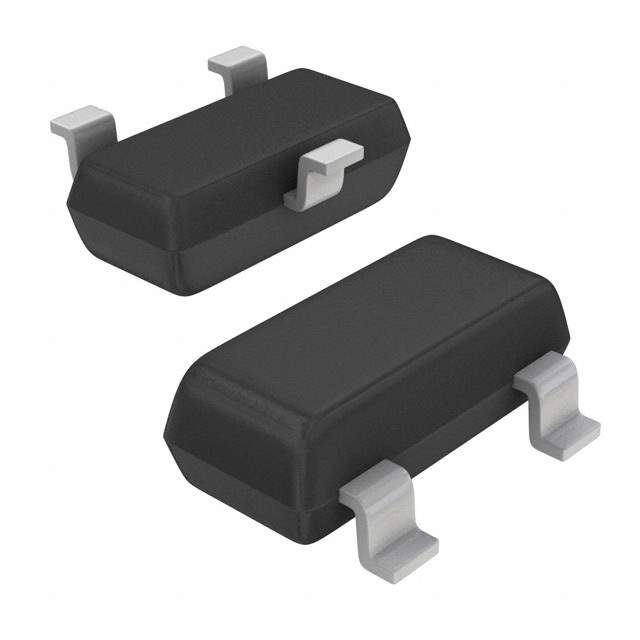
Pre-biased NPN in EMT3 with 12V VCEO, 500mA collector ceiling, and 150mW dissipation limit
Quick Engineering Summary
| Field | Value |
|---|---|
| Manufacturer | Rohm Semiconductor |
| Category | Transistors (BJT) - Single, Pre - Biased |
| Package | EMT3 |
| Core function | TRANS PREBIAS NPN 12V 0. |
| Key electrical range | Collector Cut-off Current(Max): 500nA; Frequency - Transition: 260MHz; Maximum Current Collector: 500mA; Maximum Power Dissipation: 150mW |
| Reported stock | 35310 pcs reported — confirm on RFQ |
Not for high-voltage or high-power switching
Wrong for rails above 12V and wrong for jobs that expect a small transistor package to shed real heat. Better fit comes in compact low-voltage switching where a pre-biased NPN in EMT3 saves external resistors and already matches the circuit.
The call is simple: new design-in is reasonable. Lifecycle is Active with no conflict, and EU RoHS is listed. Fit decides it. The 12V VCEO is a ceiling, so any node that can overshoot past 12V is out, and the 150mW maximum power dissipation ceiling keeps the 500mA collector rating from sounding more generous than a real board will allow.
The current rating is not the first limit
Start with power.
The listing gives 500mA maximum collector current, 150mW maximum power dissipation, and 300mV max VCE(sat) at 5mA and 100mA. They answer different questions. The 500mA figure is a ceiling, not a comfort zone, while the 150mW ceiling is the one that ends the discussion early if the transistor spends meaningful time in saturation or linear transition. And the 300mV saturation figure is only tied to 5mA and 100mA test points, so it helps with low-side switching loss around that condition but does not settle behavior at the full 500mA ceiling.
One more number matters. Collector cut-off current is 500nA max, which keeps leakage from becoming the surprise in low-current logic gating. The listed 260MHz transition frequency is real, but unless edge-rate budget is already tight, the voltage and dissipation ceilings matter more here.
4.7k and 47k decide the drive style
4.7k for R1 and 47k for R2 are the point of the part. If those built-in values suit the drive network, DTD543ZETL saves parts in an EMT3 stage. If they do not, the convenience disappears fast.
Buy it for running lines, but close the real gaps first
And that is where the buying case firms up. Stock quantity is 35310, packaging is Reel - TR, and supply-demand status is Balance, so DTD543ZETL is a sensible choice for a running line or a fresh build that already wants taped SMT feed.
The open items are concrete, and they matter. The listing does not give a pinout, which is immediate risk with a pre-biased transistor because the internal resistor network only helps when the pads land on the right nodes. It also does not give a package drawing, so footprint confirmation still depends on the full package detail rather than the EMT3 name alone.
Thermal detail is also thin. There is a 150mW maximum power dissipation number, but no thermal resistance and no derating curve, so ambient headroom is still unresolved. Switching detail is thin too: no switching-time data is listed here, and that matters more than the 260MHz headline when storage time or edge cleanup affects timing.
View the Win-Source product page for DTD543ZETL.
Key Takeaways for Engineers & Buyers
- Keep DTD543ZETL off rails that can exceed 12V VCEO, even on transients.
- Budget around the 150mW dissipation ceiling before using the 500mA collector rating.
- Match the drive network to the built-in 4.7k R1 and 47k R2, not to a bare BJT assumption.