
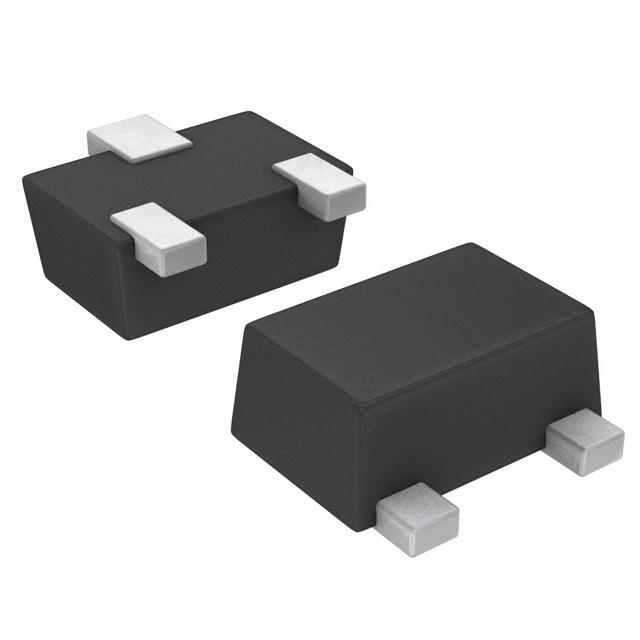
30V VCEO, 200mA collector ceiling, 150mW dissipation ceiling, VMT3 package
Quick Engineering Summary
| Field | Value |
|---|---|
| Manufacturer | Rohm Semiconductor |
| Category | Transistors (BJT) - Single, Pre - Biased |
| Package | VMT3 |
| Core function | TRANS PREBIAS NPN 30V 0. |
| Key electrical range | Collector Cut-off Current(Max): 500nA; Frequency - Transition: 260MHz; Maximum Current Collector: 200mA; Maximum Power Dissipation: 150mW |
| Reported stock | 9000 pcs reported — confirm on RFQ |
The safe call is sustaining only
And that lifecycle conflict is the first thing to trust. DTD723YMT2L is marked Active, but it is also marked Not For New Designs, so the practical call is straightforward: keep it in existing production and leave new platforms alone.
The rest of the listing supports that cautious read instead of undoing it. It is EU RoHS compliant, stocked at 9000, and packed on Reel - TR, enough to support a running SMT line, but none of that clears the mixed lifecycle signal. Availability now and approval for a new BOM are different decisions.
Not for high current or loose thermal budgets
Wrong for high current switching and weak thermal headroom. The 200mA maximum collector current and 150mW maximum power dissipation are ceilings, with the tiny VMT3 body keeping the thermal budget tight.
It fits small-signal biasing and compact SMT control nodes better.
Can you still buy it for a running line?
Can I keep the line moving? In the near term, probably yes. Stock is listed at 9000, supply and demand is Balance, and the package is Reel - TR, so DTD723YMT2L matches normal pick-and-place flow rather than manual replenishment.
Buy it like a sustaining part. Cover the existing build, then stop short of spreading DTD723YMT2L into new assemblies just because inventory is present now.
The built-in resistor network is the real fit question
2.2k on R1 and 10k on R2 decide whether this part is convenient or a mismatch. DTD723YMT2L is a pre-biased NPN, not a generic small NPN you tune later, so those fixed resistor values set the drive conditions before layout is finished.
That matters more than the 260MHz transition frequency in most real uses. If your logic source, pull-down behavior, and intended collector current already line up with a 2.2k base resistor and 10k emitter-base resistor, DTD723YMT2L can remove two external parts and keep placement tight in VMT3. If those values are wrong, the convenience disappears fast because the bias network is the device, and no amount of wishful interpretation turns a fixed resistor ratio into an adjustable one.
The other limits just frame the edges. The 30V VCEO figure is a collector-emitter breakdown ceiling, so it rules out rails that crowd that limit but does not establish comfortable operating margin on its own. The 300mV max VCE(sat) at 2.5mA, 50mA is useful because it ties one conduction point to one drive point; it shows DTD723YMT2L can pull low in that stated condition, but it does not describe saturation behavior across the rest of the load range. The 500nA collector cut-off current is a leakage ceiling, relevant when off-state drift matters, but it will not rescue a design that needed a different resistor ratio.
The missing details are the ones that close the review
Some details are missing.
The listing does not give a pinout, package drawing, or thermal resistance. For DTD723YMT2L, thermal resistance is what turns the 150mW ceiling into an ambient decision, while the pinout and drawing decide whether VMT3 drops cleanly into the footprint you already own.
View the Win-Source product page for DTD723YMT2L.
Key Takeaways for Engineers & Buyers
- Hold DTD723YMT2L to rails with clear margin below the 30V VCEO ceiling.
- Check load current against the 200mA collector ceiling and the 150mW dissipation ceiling together.
- Freeze reel demand early; stock is 9000 and the lifecycle call is not for new designs.