
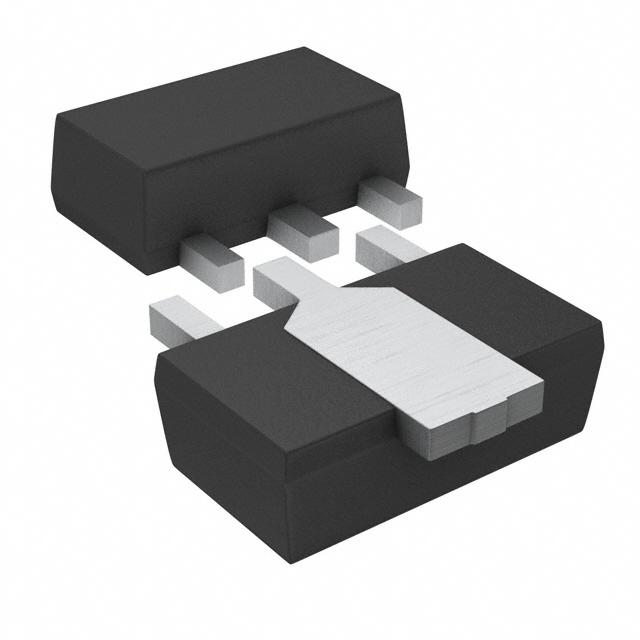
60V VCEO ceiling, 1A collector limit, 1.5W dissipation cap, MPT3 package, pre-biased NPN
Quick Engineering Summary
| Field | Value |
|---|---|
| Manufacturer | Rohm Semiconductor |
| Category | Transistors (BJT) - Single, Pre - Biased |
| Package | MPT3 |
| Core function | TRANS PREBIAS NPN 60V 1A MPT3 |
| Key electrical range | Collector Cut-off Current(Max): 500nA; Frequency - Transition: 80MHz; Maximum Current Collector: 1A; Maximum Power Dissipation: 1.5W |
| Reported stock | 6600 pcs reported — confirm on RFQ |
60V and 1A make the case for new design-in
60V sets the boundary first. It answers the rail-voltage question for low-to-moderate voltage switching, while leaving transient behavior open because the listing gives a VCEO ceiling and nothing on avalanche or surge handling.
For a design that wants a pre-biased NPN and wants to skip external bias resistors, DTDG23YPT100 fits cleanly. The 1A maximum collector current is a ceiling, not a working point, and the 1.5W maximum power dissipation is the other limit that keeps current, voltage, and heat tied together. Active lifecycle with no stated conflict helps. EU RoHS is compliant. The caution is supply: stock is 6600, while supply and demand status is Limited.
Wrong for high-voltage margin; useful for compact biased switching
High-voltage margin is not what this part buys you. With a 60V VCEO maximum collector-emitter breakdown voltage, DTDG23YPT100 belongs in designs that stay comfortably below that ceiling, and the listing says nothing about overshoot tolerance, unclamped inductive events, or repetitive stress.
What it does offer is compact switching with built-in biasing. It is a single, pre-biased BJT with NPN polarity, and the internal resistor values are 2.2k for R1 and 22k for R2. Those values are not a side detail; they define the bias network you are committing to, so this is a poor fit when base-drive tuning is part of the job.
The conduction numbers need the same discipline. Max Vce(sat) is 400mV @ 5mA, 500mA, which gives one dissipation checkpoint at a stated drive and load condition. Set that beside the 1.5W maximum power dissipation and the message is clear: this package has a thermal budget, not freedom to run near every limit at once, especially when current, saturation loss, and board heat spreading all stack on each other in a dense SMT layout. Typical gain is listed as 300 @ 500mA, 2V, useful for reading intended operating region, but it does not relax the saturation or power ceilings.
That leaves the fit fairly specific. DTDG23YPT100 works for dense SMT switching paths where the built-in resistor network is the feature. It is not the part to start with when the design needs wide bias adjustability or extra collector-emitter headroom.
The datasheet gaps are real
The gaps matter.
This listing does not give thermal resistance, pinout detail, package drawing, or any derating curve. Those omissions directly affect ambient headroom, land pattern confidence, and whether the MPT3 body can carry the heat your board stackup creates.
Can you keep a line running on it?
Can you get enough of it in the package you build with? Probably, but Active does not mean easy supply. DTDG23YPT100 shows 6600 in stock, packaging is Reel - TR, quantity per package is 1k pcs, and supply and demand status is Limited.
So buy to the reel and match those multiples to the build plan instead of leaving coverage to late spot buys. The package and mounting side is straightforward for SMT flow: MPT3 and SMD (SMT). Supply is the constraint most likely to stop the line.
View the Win-Source product page for DTDG23YPT100.
Key Takeaways for Engineers & Buyers
- Keep VCE below the 60V breakdown ceiling; that number does not buy surge margin by itself.
- Budget heat from the 400mV @ 5mA, 500mA saturation condition against the 1.5W package limit.
- Buy on reel: packaging is TR with 1k pcs per package, and supply is marked Limited.