
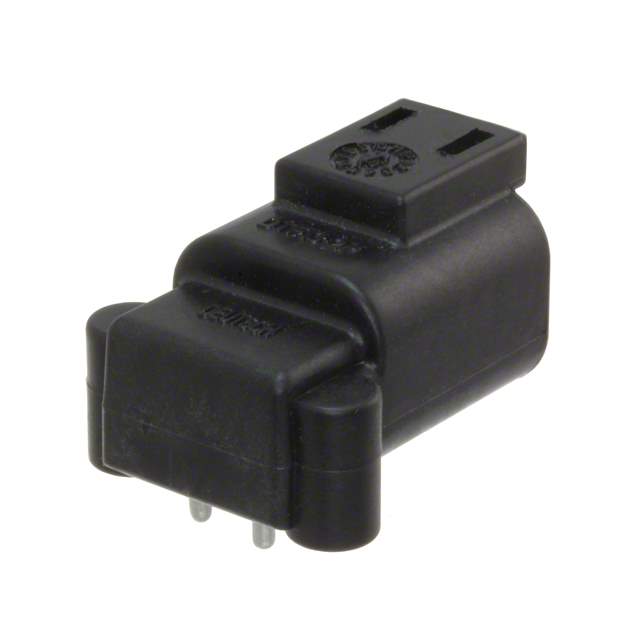
2 positions, 5.46mm pitch, right-angle through-hole, -55°C to 125°C; fit is clear, electrical limits are not.
Quick Engineering Summary
| Field | Value |
|---|---|
| Manufacturer | TE Connectivity |
| Category | Rectangular Connectors |
| Package | Bulk |
| Core function | CONN HEADER R/A 2POS 5. |
| Key electrical range | Temperature Range - Operating: -55°C ~ 125°C |
| Reported stock | 1 pcs reported — confirm on RFQ |
The weak point is supply, not lifecycle
Supply is the problem first. The listing shows 1 in stock and a standard package of 1.
The better news is that DTF13-2P is marked Active with no lifecycle conflict, so it still fits new design-in work if your build plan can live with a very thin supply line. EU RoHS status is listed as compliant, while REACH is marked affected, so compliance alone does not block use but material disclosure may still come up. For a running line, don’t count on spot availability here; reserve the part only when the build quantity matches what is actually on hand or another approved channel is already in place.
What actually decides whether you can use it?
Does it fit the board and harness you already have? That’s the first real question, and here the answer is mostly yes for a narrow class of interconnects.
DTF13-2P is a 2-position, 1-row header on 0.215" (5.46mm) pitch, through-hole and right angle, with board-to-cable/wire style and a shrouded 4-wall body. That combination points the mechanical use case pretty quickly: side-entry or board-edge placement where mating guidance and retention matter more than density.
The 0.760" (19.30mm) insulation height and 0.120" (3.05mm) post length matter to stack-up, enclosure clearance, and how much soldered post extends below the body. The latch holder pushes the same direction. It suggests a connector intended to stay mated in vibration-prone service, which fits the Automotive application field, but that field is not a qualification statement by itself.
Where the page stops helping is the electrical side. No rated current appears here, and no rated voltage appears either, so DTF13-2P cannot be signed off for power distribution or insulation spacing decisions from this page alone. That gap matters more than the tin finish or the copper alloy contact callout, because current heating and voltage withstand are what separate a harmless signal header from a field-return generator.
125°C helps, but it doesn’t answer load
-55°C to 125°C is the operating range. That clears the first environmental screen for underhood-adjacent or outdoor equipment where ambient swing rules parts out early, and it tells you DTF13-2P is not limited to room-temperature enclosures.
Still, temperature range is not a load rating. Tin on both mating and post surfaces, plus copper alloy contacts, is a familiar material system, yet without a current ceiling or voltage ceiling you still do not know how hard DTF13-2P can be run before contact heating, insulation stress, or creepage assumptions become the real limit.
The missing items are the ones that finish the decision
And that is where the page stops being enough. The listing does not give rated current, rated voltage, contact resistance, insulation resistance, or a drawing with hole pattern and body dimensions beyond pitch, post length, and insulation height.
Those are decision-making items, not extras. They determine whether DTF13-2P is a low-level signal header, a modest power interconnect, or simply the wrong connector for the job. Pinout is trivial at 2 positions, but the PCB layout still needs the actual mechanical drawing.
View the Win-Source product page for DTF13-2P.
Key Takeaways for Engineers & Buyers
- Lock the footprint to 0.215" (5.46mm) pitch and right-angle through-hole before releasing the PCB.
- Treat -55°C to 125°C as the operating envelope; don’t assume cabin-only use from the Automotive tag.
- Secure parts early if DTF13-2P is needed now; listed stock is 1 and package is Bulk.