
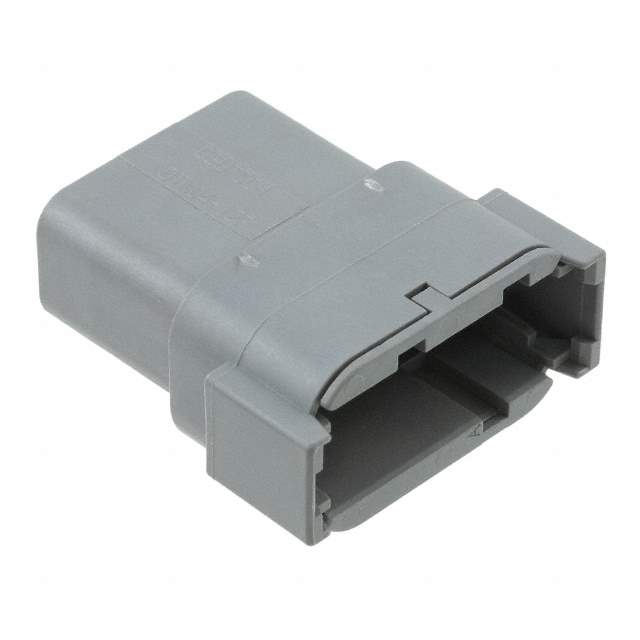
12 positions, 2 rows, free-hanging crimp receptacle housing, IP68/IP6K9K, -55°C to 125°C
Quick Engineering Summary
| Field | Value |
|---|---|
| Manufacturer | TE Connectivity |
| Category | Rectangular Connectors |
| Package | 1 |
| Core function | CONN RCPT HSG 12POS |
| Key electrical range | Not listed for this part |
| Reported stock | 360 pcs reported — confirm on RFQ |
Good for new harness work
Yes, it fits.
For new design-in, the case is straightforward. The part is listed Active with low lifecycle risk, and the real decision point is not lifecycle but form: a free-hanging 12-position receptacle housing with crimp termination and no contacts included. That immediately frames the job, because the housing belongs in harness architecture, not in any design that expects board retention, panel mounting, or an all-in-one connector solution.
The rest of the fit is just as clear. Twelve positions across 2 rows set circuit count and connector envelope at the harness level. IP68 and IP6K9K sealing, paired with a -55°C to 125°C operating temperature range, make it a credible choice for exposed cable runs where washdown, spray, dust, and temperature swing are normal service conditions rather than occasional abuse. In a dry internal enclosure, that same sealing hardware and crimp assembly effort adds work without adding much value.
One practical issue comes first on the build side: contacts are not included. Miss that on the BOM and the line stops even when the housings are in stock. EU RoHS is compliant, and MSL 1 (Unlimited) removes a storage concern.
The weak point is what's missing from the housing
The weak point comes first: it is only the receptacle housing. The strong point is that the mechanical intent is still unusually clear from the details that are present.
IP68 and IP6K9K are the deciding features if the harness will be exposed. If water ingress risk or high-pressure cleaning is not part of the job, those ratings do not justify the added sealing and crimp work on their own. The -55°C to 125°C operating temperature range answers another fit question cleanly, because it supports cold-start and hot-soak environments that rule out lighter-duty housings. Then the 12 positions and 2 rows define the packaging tradeoff: moderate circuit density in an in-line rectangular form, with a commitment to the matching half, contacts, and latch-holder retention scheme that go with this housing family.
That also defines where it does not belong
And that matters just as much. This housing does not belong on a PCB, because the mounting is free hanging in-line and the termination is crimp. It also does not solve a panel interface by itself; nothing here points to flange mount, bulkhead retention, or integrated contacts.
The supply-side constraint is simpler. Stock is listed at 360 pieces, packaging is bulk, and the standard package is 1. That works for service builds, pilot lots, and staggered harness releases, but if demand is lumpy, reserve DTM04-12PA against the build that needs it.
The real review blocker is absent mating detail
The constraint is missing mating and contact detail.
The listing gives enough information to place the housing in a harness architecture, but not enough to freeze the interconnect. The concrete gaps are the housing drawing, the pin or cavity layout, the compatible contact range, and the mating connector details. Without those, wire-size selection, sealing stack-up, and harness packaging around DTM04-12PA stay open. Color, latch holder, and receptacle form help identify the housing; they do not keep a loom from colliding with its bracket.
View the Win-Source product page for DTM04-12PA.
Key Takeaways for Engineers & Buyers
- Add contacts to the BOM; DTM04-12PA ships as a housing only.
- Use DTM04-12PA where IP68 or IP6K9K sealing is a real requirement, not a nice-to-have.
- Reserve stock early if 360 pieces does not cover your next build.