
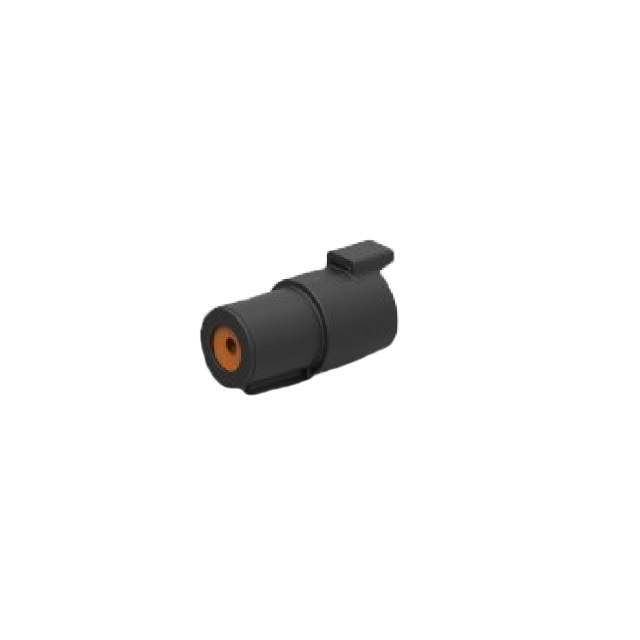
8 positions, free-hanging plug housing, IP68/IP6K9K, -55°C to 150°C operating range
Quick Engineering Summary
| Field | Value |
|---|---|
| Manufacturer | TE Connectivity |
| Category | Rectangular Connector Housings |
| Package | Bulk |
| Core function | CONN PLUG HSG 8POS |
| Key electrical range | Supply and Demand Status: Shortage; Temperature Range - Operating: -55°C ~ 150°C |
| Reported stock | 852 pcs reported — confirm on RFQ |
852 pieces doesn't cancel the shortage flag
852 pieces can cover samples and the start of a build. It still doesn't settle continuity, because the line is marked Shortage. Active status keeps DTM06-08SA-EE04 in play for new design-in, but the on-hand count doesn't remove the buy risk.
The fit is environmental first, not electrical
That framing matters here because this is only a housing. The call is about mechanical fit and sealing, not contact current or voltage, which aren't listed.
Eight positions and two rows answer the basic mating-pattern question fast and rule it out anywhere the cavity count or row format differs. Free Hanging (In-Line) puts it in a cable-to-cable or cable-end connection rather than on a board. Plug, female socket, and crimp narrow it further: this housing is for crimped socket contacts in a plug body with latch lock retention, so it fits field-assembled or harness-shop terminations rather than soldered assemblies.
The real reason to consider DTM06-08SA-EE04 is the environmental envelope. IP68 and IP6K9K, paired with a -55°C to 150°C operating range, point to washdown, splash, dust, and high-temperature harness zones where an unsealed generic housing would become the failure point long before the circuit does. For harsh cable runs, it fits. Inside a dry enclosure, those protections may be more than the job needs.
The weak spot is missing mating detail
The weak point comes first: key mating details are missing. Even so, the listed envelope is clear enough to place DTM06-08SA-EE04 in the right design class.
Pitch and row spacing are blank, and those dimensions decide whether the housing actually fits the harness geometry and mating half under consideration. The drawing and cavity layout are also absent, which leaves keying, latch orientation, and package envelope unresolved before panel clearances or bundle routing are released. Pinout or cavity numbering detail is another concrete gap, because an 8-position, 2-row shell is not self-documenting once it reaches production. Contact compatibility is still open too; beyond “Female Socket” and “Crimp,” the listing does not show the supported contact range, so wire selection and crimp tooling remain undecided.
That leaves a clean split. The environmental and mounting callouts are strong enough to support harsh inline harness use, while the missing dimensional and contact-system details keep this page from closing the last fit checks for a released assembly.
-55°C to 150°C is the real boundary
-55°C to 150°C is the decisive limit. It sets the ceiling for where DTM06-08SA-EE04 belongs around heat, cold soak, and outdoor exposure, and it says nothing about current handling because no contact rating is listed here.
IP68 and IP6K9K are limits too, not decoration. They support use where ingress drives field failures, but they don't complete the sealing stack on their own because the listing does not show the mating half, seal system detail, or assembly drawing. Bulk packaging is the other practical boundary: useful for harness production, less convenient when piece-level control is the goal.
View the Win-Source product page for DTM06-08SA-EE04.
Key Takeaways for Engineers & Buyers
- Reserve DTM06-08SA-EE04 early if the 852-piece stock is meant to cover a running build.
- Match DTM06-08SA-EE04 only to crimped female socket terminations in an 8-position, 2-row layout.
- Use DTM06-08SA-EE04 where IP68 or IP6K9K and -55°C to 150°C are actual enclosure requirements.