
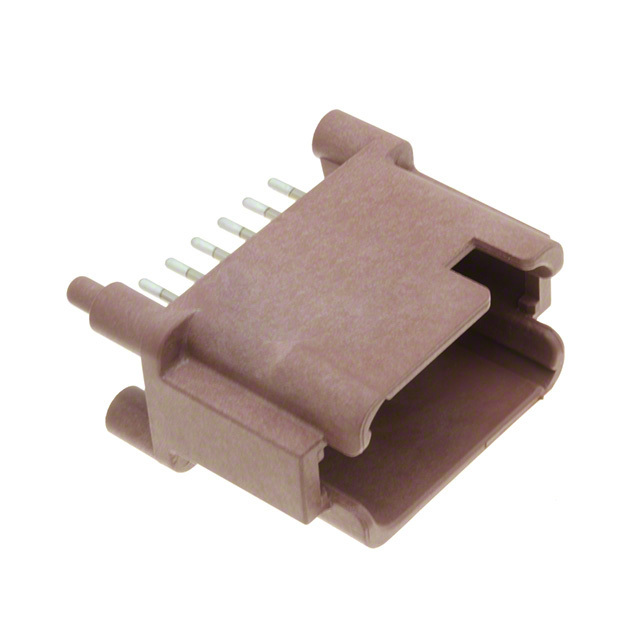
12 positions, free-hanging plug, crimp female socket housing, IP68/IP6K9K, -55°C to 125°C
Quick Engineering Summary
| Field | Value |
|---|---|
| Manufacturer | TE Connectivity |
| Category | Rectangular Connector Housings |
| Package | Bulk |
| Core function | CONN PLUG HSG 12POS |
| Key electrical range | Supply and Demand Status: Shortage; Temperature Range - Operating: -55°C ~ 125°C |
| Reported stock | 492 pcs reported — confirm on RFQ |
Not for board I/O; right for sealed inline harnesses
This is the wrong part for anything that needs a board footprint, a panel cutout, or a finished connector with contacts already loaded. It is a rectangular connector housing only: a free-hanging in-line plug with crimp termination and female socket contacts. That puts it in cable-to-cable harness work, where loom routing and serviceability matter more than board density.
The mechanical fit is the real reason to use it. With 12 positions in 2 rows, it gives you a moderate circuit count without pushing into a larger shell than many sealed branch harnesses want, and the IP68 and IP6K9K ratings place it in environments where water ingress and washdown are real concerns rather than occasional nuisances. The latch lock matters as well, because if vibration or handling can back out a loose mate, that fastening style helps address it.
Lifecycle is not the problem. DTM06-12SC is Active, and EU RoHS compliance is clear, so new design-in is a reasonable call for sealed inline cable interconnects. The constraint is supply.
The buy call is simple: shortage changes the timing
And that is the whole commercial issue. DTM06-12SC shows shortage, with 492 listed in bulk, so lock demand early for any running line or pilot build that cannot absorb a connector slip.
-55°C to 125°C sets the environment, not the whole design
-55°C to 125°C is the decisive range here because it settles the ambient question for the housing while leaving the electrical one open. If the harness has to survive cold start, underbody splash, or hot enclosure air, DTM06-12SC stays in scope. It does not answer contact current, voltage withstand, or temperature rise at load, because those figures are not shown.
The other limits are mechanical and environmental. IP68 and IP6K9K are ceilings on ingress performance, not a blanket pass for every cable build; sealing holds only when the full connector system, wire seals, and assembly process line up. Twelve positions and 2 rows set packaging and routing density, while free-hanging in-line rules out uses that depend on board retention or chassis mounting. Fit it in the loom.
The missing pieces are the ones that close the harness review
The weak point is documentation depth, not the basic part identity. What stops a connector release here is concrete: the housing drawing, the pin or cavity layout, and the mating-part detail that confirms what this plug housing is meant to pair with.
Contact size and wire-range detail matter too, because crimp plus female socket tells you the assembly method but not the conductor window the harness shop has to hit. Without those items, you can place DTM06-12SC on a BOM and make the sourcing call, but you cannot finish the harness definition from this page alone.
View the Win-Source product page for DTM06-12SC.
Key Takeaways for Engineers & Buyers
- Reserve DTM06-12SC early if the build needs 12 positions; the listing shows shortage with 492 on hand.
- Keep DTM06-12SC in sealed inline cable joints, not board interfaces; it is a free-hanging plug housing with latch lock.
- Match the harness environment to -55°C to 125°C and the IP68/IP6K9K sealing claim before freezing the connector choice.