
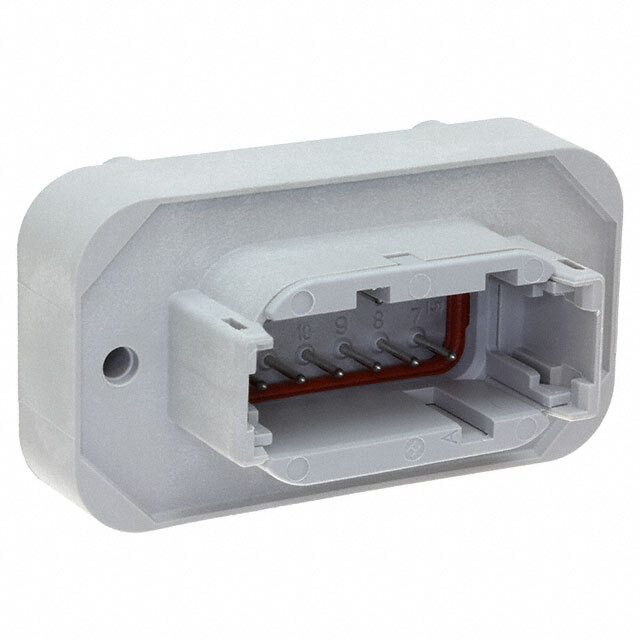
2 positions, free-hanging plug, IP68/IP6K9K, -55°C to 150°C operating range
Quick Engineering Summary
| Field | Value |
|---|---|
| Manufacturer | TE Connectivity |
| Category | Rectangular Connector Housings |
| Package | Bulk |
| Core function | CONN PLUG HSG 2POS |
| Key electrical range | Supply and Demand Status: Shortage; Temperature Range - Operating: -55°C ~ 150°C |
| Reported stock | 1360 pcs reported — confirm on RFQ |
Not for board I/O; built for sealed inline harnesses
Not for board mounting. It is a free-hanging, in-line plug housing with crimp termination, female sockets, latch lock, and IP68/IP6K9K sealing, so it fits cable-to-cable harness work where the connector body has to handle dirt wash and water ingress.
The weak point is supply, not lifecycle
Shortage is the problem. Active lifecycle and 1360 units on hand are the better news, but they do not cancel the supply-demand warning already attached to DTMH06-2SB.
That matters more than the color or the bulk package. For a new program, it remains a valid design-in because the lifecycle status is clean and the signals do not conflict; for a running line, pull demand forward and secure the quantity you need instead of assuming listed stock will hold. EU RoHS is compliant and does not complicate that decision.
-55°C to 150°C is the figure that decides the fit
-55°C to 150°C is the deciding range. It sets the ceiling and floor for where DTMH06-2SB belongs, and it quickly separates this housing from ordinary indoor interconnects that fall out of consideration once cold start and hot soak are both on the table.
The other specs that carry real weight are the sealing ratings and the contact architecture. IP68 and IP6K9K point to wet, dirty service and high-pressure wash exposure, but those outcomes still depend on the full mated connector stack rather than this housing by itself. The 2-position, 1-row layout keeps the use case narrow in a useful way: simple inline power or signal pairs, not a dense multiway interface trying to cover every job.
Crimp termination with female socket contacts fixes the assembly method and the mating expectation. Get that wrong and the failure mode is ordinary but costly: harness rework, retention trouble, or a sealed connector that stops being meaningfully sealed after the wrong contact system is forced into place.
What is still missing before release?
What does a buyer need first? More mating detail.
The missing items are the mating part information, the housing drawing, the cavity and keying details, and the wire or contact size compatibility. Those omissions decide whether the latch mates with the intended half, whether the harness package fits the space claim, and whether the chosen crimp contacts belong in this shell at all.
View the Win-Source product page for DTMH06-2SB.
Key Takeaways for Engineers & Buyers
- Reserve DTMH06-2SB early if the 1360 stock figure matters; the line is flagged Shortage.
- Use DTMH06-2SB where IP68 or IP6K9K is a real enclosure requirement, not just a preference.
- Match the harness to crimped female sockets and latch-lock retention before releasing the BOM.