
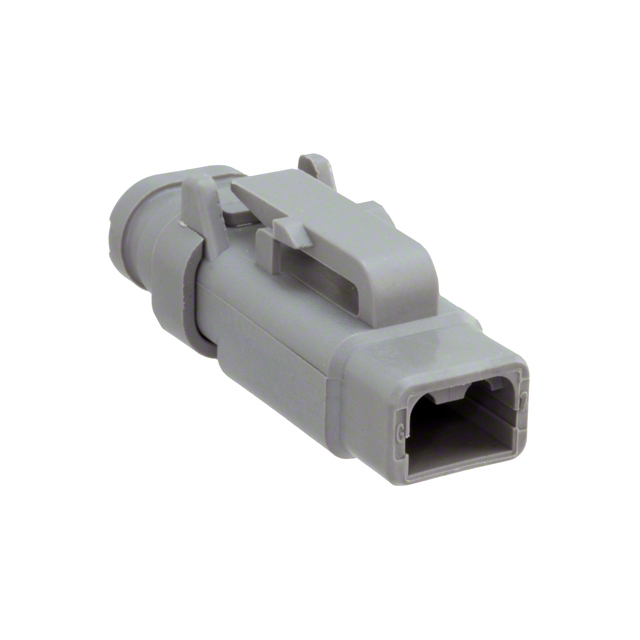
2 positions, free-hanging inline housing, IP68/IP6K9K, -55°C to 125°C operating range
Quick Engineering Summary
| Field | Value |
|---|---|
| Manufacturer | TE Connectivity |
| Category | Rectangular Connector Housings |
| Package | Bulk |
| Core function | CONN RCPT HSG 2POS |
| Key electrical range | Supply and Demand Status: Shortage; Temperature Range - Operating: -55°C ~ 125°C |
| Reported stock | 69 pcs reported — confirm on RFQ |
Use it for new builds, but buy it like a constrained item
Good for new design-in.
Active status with no conflict clears the lifecycle question fast, so the real call shifts to fit: whether the harness needs a free-hanging in-line receptacle housing with 2 positions in 1 row, crimp termination, a latch holder, and sealing features called out as IP68, IP6K9K, and reduced wire seals. That set of facts points to cable-to-cable or cable-end interconnects that need to stay sealed in dirt and washdown exposure, not a board edge or panel feedthrough.
The -55°C to 125°C operating range sets a harsh-environment ceiling for ambient service across cold start and hot underhood conditions, while leaving key electrical and durability limits unanswered. Contact heating, current path limits, and mating durability are not shown here. EU RoHS compliance removes a routine compliance objection, but supply is the practical issue: shortage status alongside 69 listed in stock means DTP04-2P-C015 belongs in new designs only when buys are tied to actual build demand, not left to last-minute allocation.
Shortage is the weak point; the package is not
Shortage is the weak point, while bulk packaging is just a handling detail. With 69 listed in stock, DTP04-2P-C015 should be tied to near-term demand rather than treated as a deep buffer for an open-ended build.
The constraint is environmental fit, not circuit performance
The constraint is environmental fit. IP68 and IP6K9K are the claims that justify this housing, and they push it toward exposed harness runs, service loops, and inline connections that see spray or washdown. The free-hanging mounting type reinforces that direction.
This is not for board-mounted interconnect, and nothing here points to fine-pitch packaging or high-position-count consolidation. The 2-position count matters too. It keeps DTP04-2P-C015 in simple power, sensor, or actuator links where only two circuits need sealing; once a harness branch grows past two conductors, the housing starts forcing extra connectors instead of simplifying the branch.
Wrong for current budgeting; right for sealed harness architecture
Wrong for current budgeting. Right for choosing a sealed inline housing footprint in a two-circuit harness.
The missing items are concrete: no contact current rating, no voltage rating, no mating-cycle figure, and no pinout detail. For DTP04-2P-C015, those gaps decide whether the housing only fits the harness concept or actually supports the intended load and service life.
View the Win-Source product page for DTP04-2P-C015.
Key Takeaways for Engineers & Buyers
- Match the harness to 2 positions and 1 row before releasing DTP04-2P-C015.
- Reserve stock early; shortage status against 69 on hand can stall a running line.
- Use DTP04-2P-C015 only where IP68 or IP6K9K sealing is actually required.