
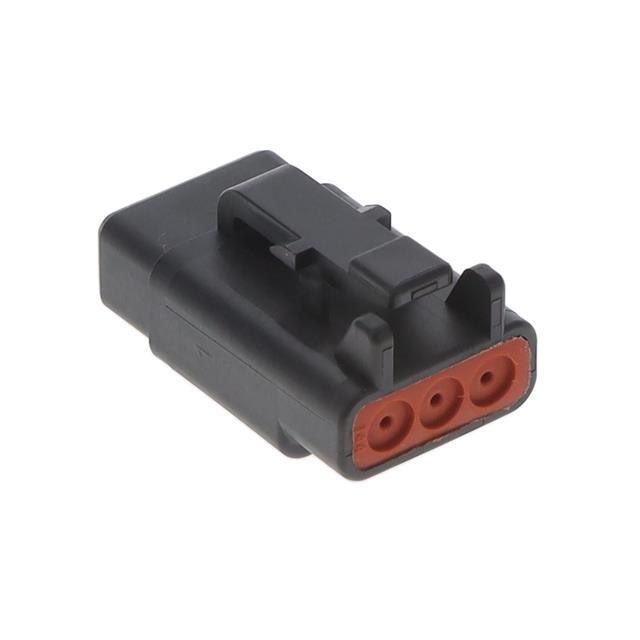
4 positions, free-hanging crimp receptacle housing, IP68/IP6K9K, -55°C to 125°C operating range
Quick Engineering Summary
| Field | Value |
|---|---|
| Manufacturer | TE Connectivity |
| Category | Rectangular Connector Housings |
| Package | Bulk |
| Core function | CONN RCPT HSG 4POS |
| Key electrical range | Supply and Demand Status: Shortage; Temperature Range - Operating: -55°C ~ 125°C |
| Reported stock | 197 pcs reported — confirm on RFQ |
Good for new builds, but buy it like a constrained part
Use it.
Active status with no lifecycle conflict removes the usual objection to a new harness release. The issue is supply: shortage is called out, and available quantity is 197, so production planning needs to treat it as constrained rather than routine.
At the part level, this is a rectangular connector housing rather than a finished connector system. The format is a 4-position receptacle with crimp termination, male pin contact style, and a latch holder, which closes the mechanical choice at the harness level. EU RoHS is listed, and nothing here points to a compliance conflict.
125°C matters more than the sealing claim
125°C is the listed operating ceiling, with -55°C at the low end. That range places it in equipment that sees real outdoor or underhood temperature swing, but this listing does not give current capacity, contact heating, or mating durability.
The weak point is missing detail, not the housing format
The listing is thin. The housing callout is still clear enough to place it in the right assembly.
What is here points to free-hanging, in-line cable-to-cable or cable-end use, with crimped contacts and a latch holder rather than board mounting or panel hardware.
IP68 and IP6K9K push it toward sealed cable assemblies exposed to washdown, dust, or splash. Pair that with polyamide (PA66), nylon 6/6, glass-filled insulation material and the -55°C to 125°C operating range, and the part reads as a harsh-environment harness enclosure choice, not a general indoor signal shell. What remains open is the full connector stack: contact part numbers, wire range, seal system details, and mating half specifics are not included here.
Wrong for board interfaces; right for sealed in-line harnesses
Wrong for anything that needs a PCB footprint, fixed panel geometry, or a one-piece connector callout. Right for a sealed harness branch where the housing itself is the item being sourced and the rest of the connector system is already defined elsewhere.
The fit decision is rigid. Four positions and 2 rows set the circuit packaging, so a loom that needs more ways, fewer ways, or a single-row cavity arrangement needs a different shell. The receptacle format with male pin contact style also fixes which side of the interconnect this housing occupies, and that choice has to line up with the intended mating half or the harness will not mate as intended.
Packaging matters too. Bulk packaging fits line-side kitting and harness shops better than pick-and-place or automated board assembly, which lines up with the free-hanging mounting style. With shortage already flagged and only 197 units listed as available, this is the kind of housing to allocate to builds that already require the exact format instead of letting it spread casually across new demand.
The real review blocker is the missing connector-system detail
The constraint is definition, not classification.
This housing is easy to place by family, environment, and form factor, but the release package is incomplete without the manufacturer drawing. The missing items are concrete: cavity layout or dimensional drawing, mating connector reference, compatible contact range, and any wire-size support tied to the crimp system. Until those are in hand, you can choose the housing family and environment class, but you cannot finish the harness definition.
View the Win-Source product page for DTP04-4P-E003.
Key Takeaways for Engineers & Buyers
- Reserve stock early; shortage status against 197 units can stall a build.
- Match the harness to a 4-position, 2-row free-hanging crimp housing before release.
- Pull the full TE drawing for cavity layout and mating details; this listing stops at housing-level facts.