
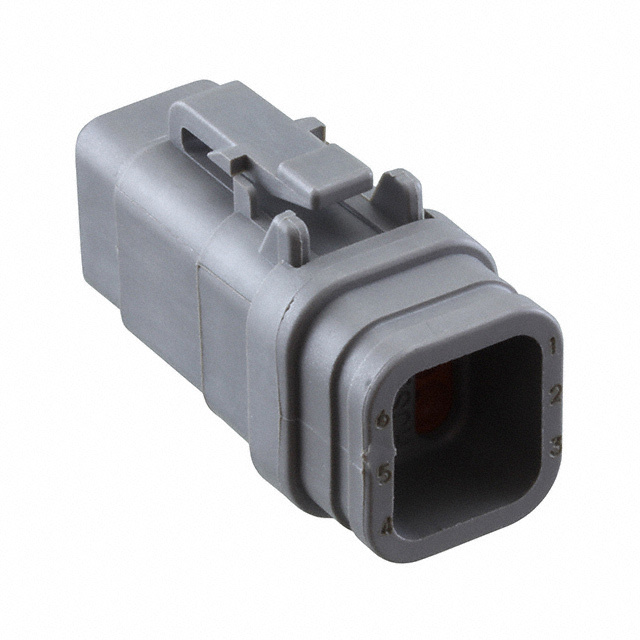
2 positions, free-hanging plug, crimp female socket, -55°C to 125°C, IP68/IP6K9K
Quick Engineering Summary
| Field | Value |
|---|---|
| Manufacturer | TE Connectivity |
| Category | Rectangular Connector Housings |
| Package | Bulk |
| Core function | CONN PLUG HSG 2POS |
| Key electrical range | Supply and Demand Status: Shortage; Temperature Range - Operating: -55°C ~ 125°C |
| Reported stock | 1 pcs reported — confirm on RFQ |
Use it to sustain a sealed 2-way harness, not start one
Sustaining only.
Use DTP06-2S-E003 when the harness is already fixed around a 2-position plug housing, crimp female sockets, and a free-hanging in-line body with latch lock retention. The listed operating range reaches from -55°C to 125°C, and the IP68 and IP6K9K callouts fit the same harsh-environment cable-run use. Lifecycle confidence is the problem: status is Unknown rather than Active, and the supply picture is tighter still because listed stock is 1 and status is Shortage. Keep it on an existing line if the mating side is already qualified; don't start a fresh platform around it on this evidence. EU RoHS is compliant.
The hard limit here is position count
Position count is the constraint. Two positions and 1 row lock the harness topology early.
It belongs in the cable, not on the board.
The weak point is supply, not sealing
Supply is the weak point, not sealing. Unknown lifecycle is manageable on its own; stock quantity 1 and supply status Shortage are the harder signal.
If this housing is already on a released assembly, pull demand forward and lock the exact build requirement now. Bulk packaging suits line-side harness work, but it does nothing when availability is this thin.
Where does this housing actually fit?
Where does it actually fit first? In sealed cable-to-cable or cable-to-device interconnects where the connector body hangs in the loom and retention comes from a latch lock, not panel hardware or a PCB footprint.
The female socket and crimp termination point to harness assembly with the right contacts and tooling rather than a soldered module interface. The -55°C to 125°C operating range keeps it in play across cold-start and under-hood style temperature swings, while IP68 and IP6K9K indicate the housing is aimed at immersion and high-pressure wash exposure. Mating force, contact system current, and cavity compatibility still remain open, so this is a housing decision first.
-55°C to 125°C is useful, but the missing drawing decides release
125°C is the ceiling that helps place it.
The listed range is enough to place DTP06-2S-E003 in a sealed two-way harness, but not enough to freeze the design. The biggest gap is the mating-part definition. Without the matching connector information, you cannot close stack-up, retention, or sealing confidence at the assembly level.
Close behind that is the cavity and overall housing drawing, because free-hanging parts live or die on package space, clip access, and bend relief around the rear of the connector. Contact compatibility is also absent. The housing is specified for crimp female sockets, yet there is no contact part information here to tie wire range, insulation support, or current path back to the shell.
There is also no pinout or cavity identification detail. On a 2-position connector that can still let a mirrored harness build escape into production and return from the field. Those are the gaps that matter for DTP06-2S-E003.
View the Win-Source product page for DTP06-2S-E003.
Key Takeaways for Engineers & Buyers
- Hold DTP06-2S-E003 for builds that need 2 positions and free-hanging crimp termination.
- Do not release a new program against stock of 1 with supply marked Shortage.
- Get the mating-part and cavity drawing before freezing the harness.