
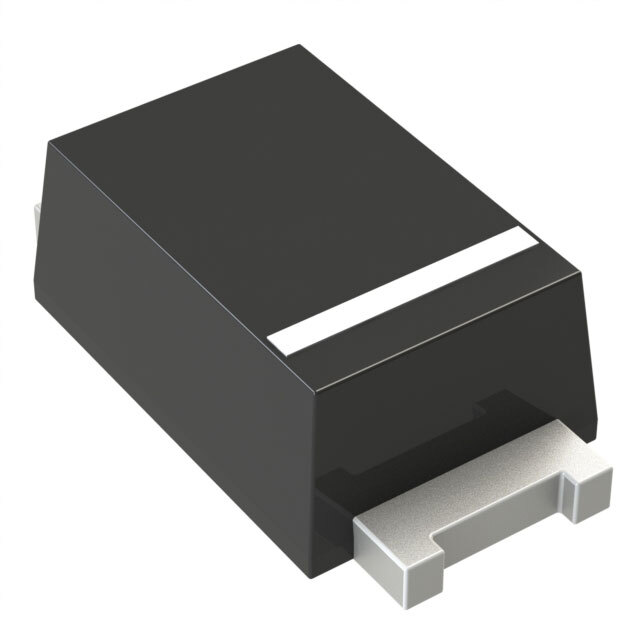
22V standoff, 35.5V max clamp, 400W peak pulse, 11.3A pulse current, SOD-123F, -55°C to 150°C
Quick Engineering Summary
| Field | Value |
|---|---|
| Manufacturer | Diodes Incorporated |
| Category | TVS - Diodes |
| Package | SOD-123F |
| Core function | TVS DIODE 22VWM 35. |
| Key electrical range | Current - Peak Pulse (10/1000μs): 11.3A (8/20μs); Operating Temperature: -55°C ~ 150°C (TJ); Power - Peak Pulse: 400W; Power Line Protection: No |
| Reported stock | 90000 pcs reported — confirm on RFQ |
Can you design DTVS22SP4UR-7 into a new board?
Can this go into a new design? Yes, with one caveat. The part status is Active, while a separate lifecycle field says Unknown, so the listing carries an internal mismatch rather than a clear market warning.
For planning, treat it as a valid new design-in candidate and note the conflict in the AVL. Beyond that, the listing reads like a standard board-level TVS choice: single unidirectional channel, surface-mount SOD-123F package, and EU RoHS compliance. What it does not give you is the full surge-waveform picture for your exact line.
Not for mains or wide-overvoltage rails
Wrong job first: this is not for power-line protection, because the listing says Power Line Protection: No. It is also not for rails that normally sit above 22V, since the 22V reverse standoff is a continuous-bias ceiling, not a comfortable target for a rail that drifts.
It fits board-level DC rails, I/O, and other single-line protection points where a unidirectional TVS in SOD-123F suits the layout and where a 35.5V maximum clamp stays inside the downstream absolute maximum limit. The 24.4V minimum breakdown shows the expected gap between normal bias and surge conduction on a 22V-class node.
35.5V is the number that decides the downstream risk
35.5V is the number that decides the downstream risk. That maximum clamping voltage at Ipp tells you whether the protected load survives a surge or whether the failure simply moves farther into the circuit.
If the IC, converter input, or connector-side circuitry cannot tolerate 35.5V during a transient, the 22V standoff does not solve the problem. In practice, that makes clamp voltage the first screen, because it is the hard ceiling the downstream node may see when the device is doing its job.
The surrounding ratings support the same read. The 400W peak pulse rating is a surge ceiling, not a continuous dissipation point, so it places this device in short-event protection rather than steady thermal service on a stressed rail. The 11.3A peak pulse current, specified with an 8/20µs waveform, points the same way and also limits how far you can generalize the number without matching your product's surge condition to that listed test basis.
Temperature range helps. It does not rescue a bad clamp choice. The listing gives a -55°C to 150°C junction operating range, which keeps the part in play for harsh ambient hardware and aligns with the Automotive grade callout, but repeated-surge thermal behavior is still unresolved here because RθJC and the surge derating curve are not shown.
The buy call is straightforward
Buy it.
Stock is listed at 90000, and the only real caution is the Active-versus-Unknown lifecycle mismatch, not a shortage signal.
What the listing still doesn't answer
And that still leaves the concrete gaps that matter in a protection review: junction capacitance, thermal resistance, surge derating curve, and package drawing or pin orientation detail. For a TVS, those are not filler specs; capacitance can upset a fast line, and the derating curve tells you how much ambient headroom remains after repeated hits.
View the Win-Source product page for DTVS22SP4UR-7.
Key Takeaways for Engineers & Buyers
- Keep the protected rail at or below 22V; that standoff is the line this device is built around.
- Check downstream tolerance against 35.5V max clamping before placing DTVS22SP4UR-7 on a sensitive node.
- Reserve SOD-123F land pattern and lock supply early if the build needs volume; listed stock is 90000.