
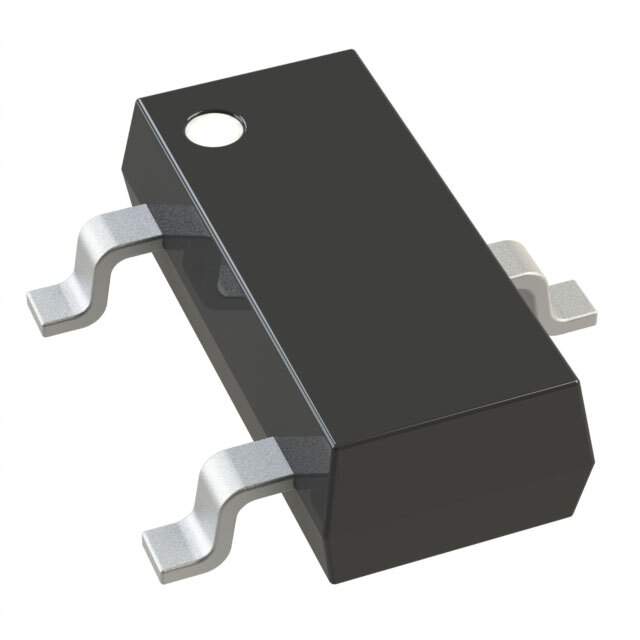
24V standoff, 44V max clamp, 8A peak pulse, 350W peak pulse in SOT-23-3
Quick Engineering Summary
| Field | Value |
|---|---|
| Manufacturer | Diodes Incorporated |
| Category | TVS - Diodes |
| Package | TO-236-3, SC-59, SOT-23-3 |
| Core function | TVS DIODE 24VWM 44VC SOT233 |
| Key electrical range | Capacitance @ Frequency: 60pF @ 1MHz (Max); Current - Peak Pulse (10/1000µs): 8A; Power - Peak Pulse: 350W; Power Line Protection: No |
| Reported stock | 1 pcs reported — confirm on RFQ |
The clamp window is the whole decision
The constraint is the protection window itself: 24V reverse standoff, 25.7V minimum breakdown, and 44V maximum clamping. Those numbers decide whether DUP1105SOQ-7 belongs on your line at all. They are thresholds and ceilings, not a target operating point during abuse. If the protected node cannot survive up to 44V during the specified pulse event, this device is out before package or sourcing even enter the discussion.
That window also narrows the fit. DUP1105SOQ-7 is a unidirectional 2-channel TVS in SOT-23-3, so it suits compact board-level protection around 24V-class nodes where two lines need the same behavior. The listing also says power line protection is No.
Small package, real pulse rating, but still a ceiling
And that is why the 8A peak pulse and 350W peak pulse need to be read carefully. Both are tied to transient stress, with current specified on a 10/1000µs waveform, so they are survival ceilings for that event rather than a working current or a general power budget for a tiny SOT-23-3 body.
Package context matters here. This is a surface-mount TVS in TO-236-3, SC-59, SOT-23-3, which points to placement close to the victim node on dense boards rather than duty at a cable entry where repeated high-energy hits and thermal buildup get ugly fast. The operating range of -65°C to 150°C (TJ) answers one question and leaves another open: the junction can exist there, but without thermal resistance or a derating curve, ambient headroom still depends on layout and stress conditions.
Capacitance can also decide the fit. The 60pF @ 1MHz maximum will be acceptable on some interfaces and intrusive on others, so DUP1105SOQ-7 belongs on lines that can tolerate that loading, not on nodes where capacitance is already the signal-integrity limit.
Buy it for builds, not for a line launch
1 piece is the immediate issue. Lifecycle is Active, MSL is 1 (Unlimited), and packaging is reel - TR, but availability is too thin to anchor a fresh release.
44V is not the last word on protection behavior
44V is the worst listed clamp point at Ipp, not the whole protection story. The missing items are concrete: DUP1105SOQ-7 still needs a pinout and package drawing before layout is real, and it needs IFSM, thermal resistance, and a derating curve before repetitive surge margin or ambient stress margin can be judged.
There is another gap for faster lines. The listing gives 60pF @ 1MHz, but no dynamic curve beyond that single point. For a TVS, that missing behavior often decides whether the protector stays quiet on the signal path or becomes the signal-quality problem.
View the Win-Source product page for DUP1105SOQ-7.
Key Takeaways for Engineers & Buyers
- Keep DUP1105SOQ-7 on rails that stay below 24V in normal operation.
- Check the protected node can tolerate as much as 44V at the listed 8A pulse condition.
- Do not count on immediate volume build; stock shows 1 while the packing format is reel - TR.