
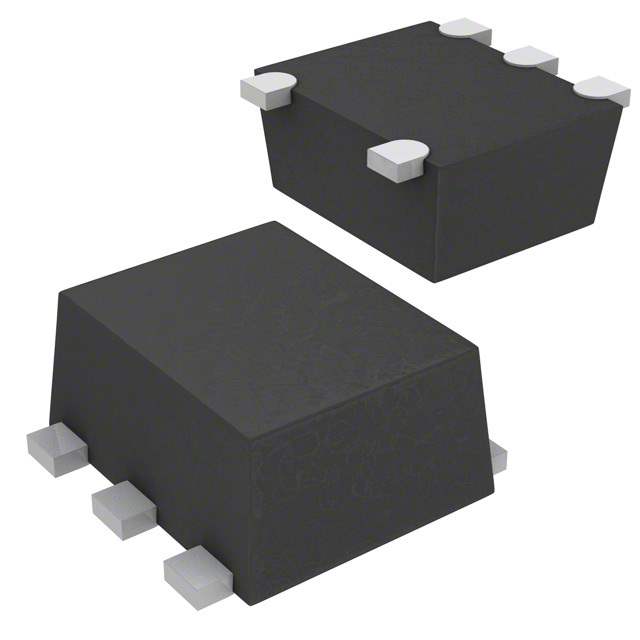
9V stand-off, 11.4V minimum breakdown, 18W ceiling, SOT-953, -55°C to 150°C TJ
Quick Engineering Summary
| Field | Value |
|---|---|
| Manufacturer | Diodes Incorporated |
| Category | TVS - Diodes |
| Package | SOT-953 |
| Core function | TVS DIODE 9VWM SOT953 |
| Key electrical range | Minimum Breakdown Voltage: 11.4V; Power Dissipation - Pd: 18W; STAND-OFF Voltage (Vwm): 9V; Supply and Demand Status: Sufficient |
| Reported stock | 30000 pcs reported — confirm on RFQ |
Still usable on a running line, not for a fresh schematic
And that is really the decision: keep DUP412VP5-7 only where it is already qualified, because the lifecycle is EOL and the explicit lifecycle signals agree. The one stray Status field that says Active does not outweigh the dedicated lifecycle fields, so this is not a part to introduce into a new protection network when the exit is already clear.
The electrical limits narrow the fit quickly. A 9V stand-off voltage is a ceiling on the normal rail across the device. It does not say how much surge it will clamp. The 11.4V minimum breakdown voltage shows where conduction begins above the stand-off region, but without a listed clamp voltage at Ipp, the actual surge let-through remains unresolved. Then there is the 18W power dissipation figure: a ceiling, not a promise about pulse survival in your waveform, and in a SOT-953 body it points to compact, low-energy protection work rather than locations where the transient budget is still unsettled.
Fit is specific. This is a 4-channel unidirectional TVS in SOT-953, surface mount, so it suits dense board-level protection on several low-voltage lines when the rail stays inside that 9V window. The listing also carries Automotive and AEC-Q101, which matters if the program already needs that qualification trail. EU RoHS is compliant. What this page still does not answer is the hard protection question, because clamp voltage, peak pulse current, and capacitance are all absent, leaving residual stress on the downstream silicon and signal loading unanswered here.
Can you still buy enough to cover a build?
Can you cover a build with it? Maybe, for a sustaining order. The listed quantity is 30000 and packaging is Reel - TR, but with EOL status the right move is to reserve what you need for existing production and keep it out of new assemblies.
30000 pieces do not fix the missing surge numbers
30000 pieces sound reassuring until the real review gap shows up: the surge numbers that decide whether DUP412VP5-7 actually protects the downstream device are missing.
Clamp voltage at Ipp is the biggest hole, because the 9V stand-off and 11.4V minimum breakdown only show when the device stays off and when it starts to turn on; they do not tell you the voltage the protected node will actually see during a surge. Peak pulse current is also absent, so the 18W figure cannot be tied to a standard surge severity from this page. Junction capacitance is missing too, and with 4 unidirectional channels that matters on lines sensitive to loading. A package drawing or pinout is not included either, so even the board escape for SOT-953 still depends on the full datasheet.
Not for new design-in
Not for new design-in.
DUP412VP5-7 is an EOL TVS with enough stock to support existing production, but the lifecycle call decides it, not the reel count.
View the Win-Source product page for DUP412VP5-7.
Key Takeaways for Engineers & Buyers
- Block DUP412VP5-7 from new BOMs; lifecycle is EOL.
- Check the protected rail against the 9V stand-off ceiling before reuse.
- Pull the full datasheet for clamp voltage and peak pulse current; both are missing here.