
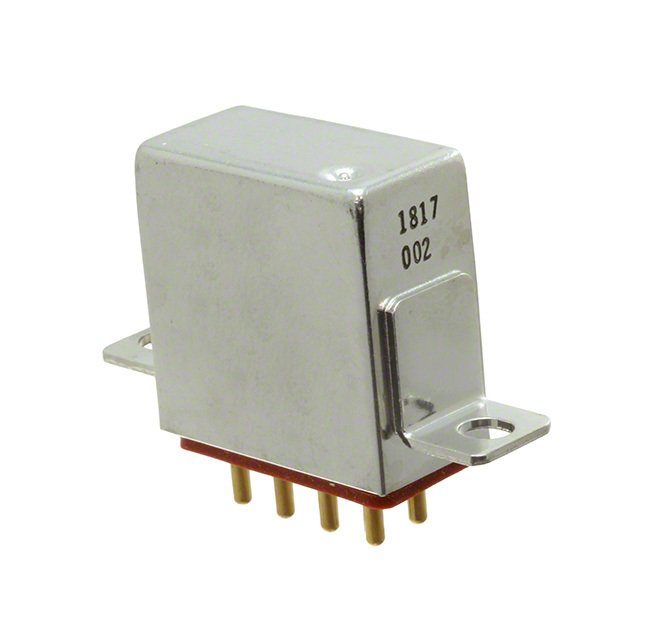
24VAC supply, 0.1 ~ 400V AC/DC trip range, SPDT relay output, DIN Rail mount
Quick Engineering Summary
| Field | Value |
|---|---|
| Manufacturer | Crouzet USA |
| Category | Monitor - Current/Voltage - Relay Output |
| Package | Box |
| Core function | VLTGE CTRL RLY, DIN RAIL, 24VAC |
| Key electrical range | Contact Rating @ Voltage: 10A @ 250VAC; Output Type: Relay; Supply and Demand Status: Shortage; Voltage - Supply: 24VAC |
| Reported stock | 3 pcs reported — confirm on RFQ |
Use it only to keep a line running
Do not design this in.
The lifecycle picture is clear. One field says EOL, while Lifecycle Status and Product Status both say Discontinued, and that closes the new-design question. In an existing panel already built around DUR24A, the case is narrower but still real: if the logic expects a 24VAC-powered monitor with relay output, DIN Rail mounting, and Energized High trip behavior, a sustaining buy can still be justified. EU RoHS is compliant, so compliance is not the blocker.
Continuity is. Stock is listed at 3 and supply status is Shortage, so this is not a part to spread across new builds or service kits that need depth.
The numbers narrow the job more than they expand it
The constraint is functional fit. A 24VAC supply puts this relay in panels where the control power is already 24VAC; it says nothing about tolerance to other control rails because no operating range around that supply is shown. The 0.1 ~ 400V AC/DC trip range sets the other ceiling on applicability: broad enough to cover low and high sensing points, but still only a listed range, not evidence of accuracy, hysteresis, or noise immunity anywhere inside it.
On the output side, SPDT (1 Form C) with 10A @ 250VAC defines the contact ceiling, and that matters because it decides whether the monitored event can switch the intended load directly or needs an interposing stage. Treat 10A @ 250VAC as a contact limit, not a comfortable operating point. No Delay matters too, but in a specific way: this is for immediate trip response, not nuisance-trip filtering in unstable mains or brownout-prone control cabinets.
That leaves a narrow but real sustaining fit
So the fit is narrow: DIN Rail industrial control panels already using a 24VAC control supply and needing a voltage-sensing relay with immediate action and a single SPDT output. It does not belong in new platforms that need lifecycle headroom or in builds that require timed dropout or pickup shaping.
The missing details are exactly the ones that close risk
The weak point is documentation depth, but the listed fields still show where the risk sits. DUR24A gives the broad outline of function, not the details that decide whether a sustaining purchase drops into an existing assembly cleanly or turns into bench work and panel rework after arrival.
The first gap is pinout or terminal assignment. For a DIN Rail monitor relay, that is not cosmetic; it determines wiring labor and whether an installed base can accept DUR24A without moving field conductors. The second gap is mechanical data. DIN Rail mounting alone does not settle enclosure fit, spacing to adjacent modules, or door clearance because no dimensional drawing is shown.
The third gap sits in the sensing behavior itself. The trip range is listed as 0.1 ~ 400V AC/DC, yet there is no threshold accuracy, repeatability, or hysteresis figure. Those are the numbers that decide whether DUR24A can sit near a tight undervoltage or overvoltage boundary without chattering around the setpoint and turning a clean control scheme into a service call.
The fourth gap is contact durability. A 10A @ 250VAC rating is useful, but no contact life or electrical endurance data is shown, so switching duty remains unresolved even when the load stays inside that stated ceiling.
View the Win-Source product page for DUR24A.
Key Takeaways for Engineers & Buyers
- Block DUR24A from new BOM releases; lifecycle is Discontinued.
- Match the control rail to 24VAC only before using DUR24A in an existing panel.
- Check the load against 10A @ 250VAC and the SPDT (1 Form C) contact arrangement.