
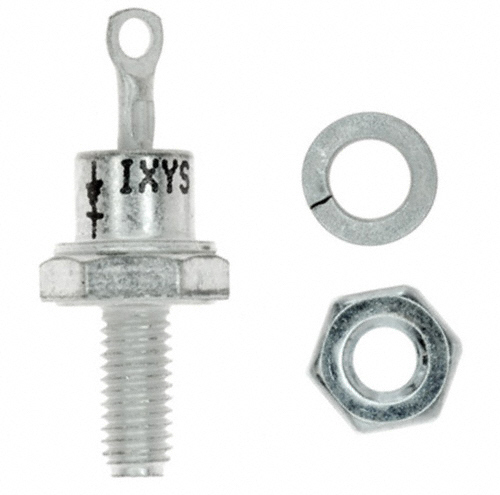
400 V reverse ceiling, 8 A per diode ceiling, TO-263 common-cathode array, -55°C to 150°C junction
Quick Engineering Summary
| Field | Value |
|---|---|
| Manufacturer | Littelfuse Inc. |
| Category | Diodes, Rectifiers - Arrays |
| Package | TO-263-3, D²Pak (2 Leads + Tab), TO-263AB |
| Core function | DIODE ARRAY GP 400V 8A TO263 |
| Key electrical range | Current - Average Rectified (Io) (per Diode): 8A; Current - Reverse Leakage @ Vr: 10 µA @ 400 V; Operating Temperature - Junction: -55°C ~ 150°C; Supply and Demand Status: Shortage |
| Reported stock | 2 pcs reported — confirm on RFQ |
Use it only with a supply plan
Proceed carefully.
Active status keeps this part in consideration, but the supply picture is the real story. Supply is marked Shortage, stock is shown as 2 in one place and 762 in another, and that mismatch matters more than a small electrical distinction because a rectifier you can't keep on the line doesn't help a production build. If an existing design already depends on this exact common-cathode array in TO-263, secure quantity first. For a new design, don't treat the Active flag as proof of easy continuity.
On the electrical side, the fit is clear enough. The 400 V DC reverse rating is a ceiling on reverse stress, so it decides whether the rail belongs in range and says nothing about transient survival beyond that listed limit. The 8 A average rectified current is also a ceiling per diode, not a normal operating point, and it still leaves the thermal outcome to board conditions that are not given here. Pair that with the listed 1.3 V at 8 A and the conduction budget starts to define copper demand and junction headroom in a TO-263 layout long before package convenience enters the discussion. EU RoHS compliance is straightforward here. Supply isn't.
The real ceiling is heat, not recovery speed
Heat is the constraint.
At 8 A per diode with 1.3 V at 8 A, dissipation pressure arrives before 45 ns reverse recovery becomes the deciding factor.
Can you actually get DURB1640CT now?
Can you buy it in volume now?
Probably not with much confidence. The shortage flag is the first thing a buyer will look at, and the visible quantity of 2 is too thin to support any assumption of a running line by itself, even with another field showing 762.
Treat DURB1640CT as a part that needs an immediate allocation check before release. If the build already depends on it, pull material in early rather than waiting for normal replenishment.
Wrong for low-voltage convenience rectification
Not for low-voltage convenience rectification.
If the rail does not need a 400 V reverse ceiling, this device is probably more diode than the job requires, and the TO-263 body is not the obvious choice when board area is available but thermal margin is tight. It fits better in a surface-mount rectifier stage that specifically wants a common-cathode pair, fast recovery behavior, and a package that moves heat into the PCB.
The -55°C to 150°C junction range leaves room for harsh ambient and hot silicon, but it remains a junction limit, not permission to run the board hot. The 10 µA reverse leakage at 400 V is a good sign for high-reverse-bias behavior, though it speaks only at that stated condition. DURB1640CT belongs in higher-voltage rectification where the common-cathode topology is intentional, not as a generic drop-in for any dual diode footprint.
The missing thermal numbers still decide the board
The weak point comes first: key thermal details are missing.
DURB1640CT gives you trr, Vf, leakage, and the main ceilings, but not thermal resistance, derating information, or a package drawing here.
Those are still the details that close the decision. Thermal resistance sets how hard the 1.3 V at 8 A condition drives junction rise, the derating curve sets ambient headroom, and the drawing and pinout confirm whether the common-cathode tab and leads land where your footprint expects.
View the Win-Source product page for DURB1640CT.
Key Takeaways for Engineers & Buyers
- Hold reverse stress below the 400 V ceiling; that number closes rail fit, not surge behavior.
- Budget conduction loss from 1.3 V at 8 A per diode before you commit TO-263 copper area.
- Lock supply early if DURB1640CT is mandatory; shortage status and stock shown as 2 can stall a build.