
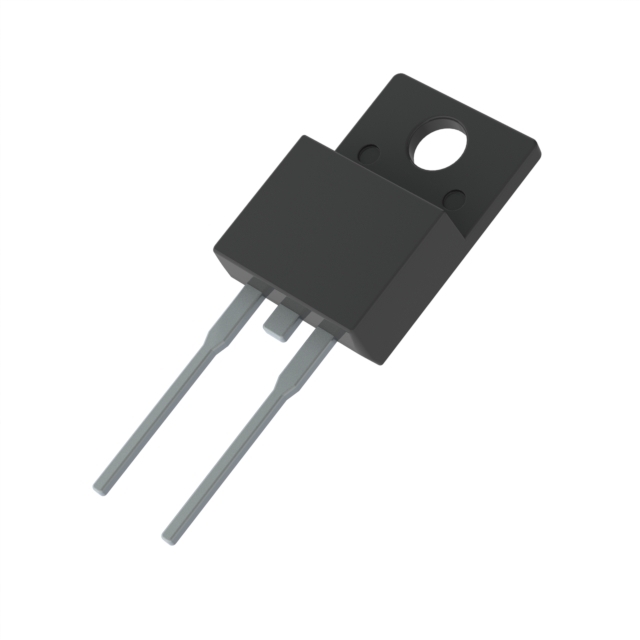
600 V reverse ceiling, 5 A per diode, 1.55 V at 5 A, isolated-tab ITO-220AB, 150°C junction
Quick Engineering Summary
| Field | Value |
|---|---|
| Manufacturer | Littelfuse Inc. |
| Category | Diodes, Rectifiers - Arrays |
| Package | TO-220-3 Full Pack, Isolated Tab |
| Core function | DIODE ARRAY GP 600V 5A ITO220AB |
| Key electrical range | Current - Average Rectified (Io) (per Diode): 5A; Current - Reverse Leakage @ Vr: 5 µA @ 600 V; Operating Temperature - Junction: -55°C ~ 150°C; Supply and Demand Status: Shortage |
| Reported stock | 2 pcs reported — confirm on RFQ |
Still a valid design-in, but only with real rail margin
And that remains the core call on DURF1060CT: it is still a valid new design-in because lifecycle is Active, but the electrical fit is narrower than the package style suggests. The first number that matters is 600 V DC reverse maximum. That's a ceiling, not a rail target, so designs that need the rectifier to live near that limit without extra margin from a fuller datasheet are out.
The next decision point is 5 A average rectified per diode. Also a ceiling. That places this common-cathode pair in moderate-current mains-side or high-voltage secondary rectification, not in a design that treats the TO-220 body as permission to keep pushing current until the leads or tab become the real limit. EU RoHS is straightforward here and does not change the call.
The package helps, but it doesn’t rescue the budget
Use it carefully.
The isolated-tab TO-220-3 Full Pack package helps where tab isolation matters, and the through-hole format suits power boards that still want mechanical stiffness. The listed forward drop is 1.55 V at 5 A, so conduction loss is not trivial, and the listing still does not say how quickly the package can move that heat out.
Can you actually buy DURF1060CT for production?
Can you actually get parts when the build starts? That is the first buyer question here because the supply constraint is plain: shortage status is flagged, and available stock is 2. DURF1060CT is not a bad part on that basis. It is a bad last-minute release choice if your plan depends on open-market replenishment after approval.
Packaging matters too. Tube is normal for a through-hole rectifier, but it also points to conventional insertion flow rather than high-volume reel-fed automation, so the practical move is to reserve parts against a known build instead of assuming casual availability.
There is still a real electrical case for buying it when the application specifically needs a common-cathode pair in ITO-220AB, because the listing also gives 50 ns reverse recovery and 5 µA leakage at 600 V, and those numbers are enough to separate it from a slower rectifier while keeping reverse leakage from becoming the first objection in a high-voltage standby path. For sustaining designs, secure line coverage first, then decide whether the electrical fit is still worth keeping.
The missing thermal picture is the real review gap
The constraint is thermal confidence. DURF1060CT gives you enough to screen for topology, but not enough to close board-level heat risk from the listing alone.
What is still missing is thermal resistance, surge current, and pinout detail beyond ITO-220AB and isolated tab. Thermal resistance is the big one because 1.55 V at 5 A points straight at dissipation, yet the junction-to-case path is not stated. Surge current matters because rectifiers often fail on startup or fault pulses, not on average current. The reverse-recovery number is present at 50 ns, so that gap is closed; the thermal path is not.
View the Win-Source product page for DURF1060CT.
Key Takeaways for Engineers & Buyers
- Treat 600 V as the reverse ceiling; don't park DURF1060CT on a rail that needs surge headroom from the listing alone.
- Budget conduction loss from 1.55 V @ 5 A per diode before you commit the isolated-tab TO-220-3 footprint.
- Lock supply early if DURF1060CT is approved; shortage status and stock of 2 can stall a running line.