
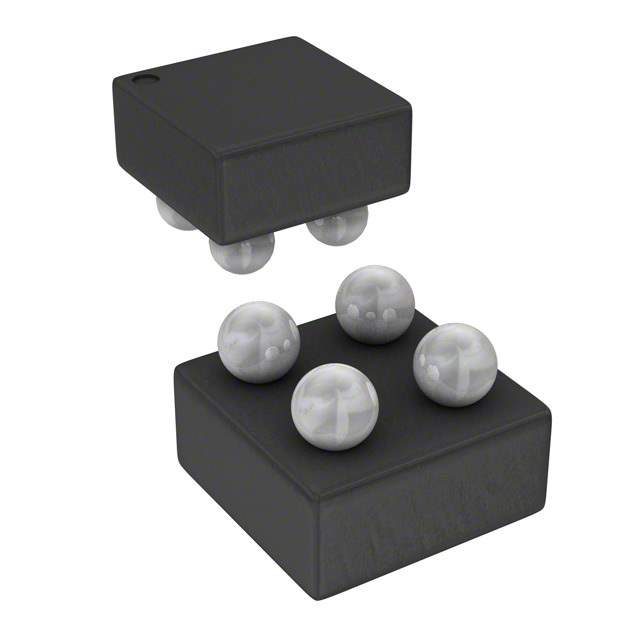
3V reverse standoff, 6V breakdown minimum, 70W peak pulse, U-WLB0808-4: useful limits, not for new builds
Quick Engineering Summary
| Field | Value |
|---|---|
| Manufacturer | Diodes Incorporated |
| Category | TVS - Diodes |
| Package | 4-UFBGA, WLBGA |
| Core function | TVS DIODE 3VWM U-WLB0808-4 |
| Key electrical range | Capacitance at Frequency: 1.2pF at 1MHz; Power - Peak Pulse: 70W; Power Line Protection: Yes; Supply and Demand Status: Sufficient |
| Reported stock | 60000 pcs reported — confirm on RFQ |
3V decides the rail, and EOL decides the program
3V is the first number that matters. That reverse standoff is a ceiling, so it places DUSBULC6-CSP4-7 on low-voltage signal protection and ends the discussion for higher-voltage rails.
The harder call is lifecycle. This part is EOL, and the listing also marks it Obsolete, which rules it out for new design-in even with 60000 pieces in stock and supply status shown as Sufficient. For an existing HDMI product, that inventory can support a bridge build while a migration is worked through. RoHS compliance and MSL 1 (Unlimited) help on the line, but they do not soften the lifecycle decision.
The missing surge numbers are the real stop sign
Don’t start here.
The listed limits are enough to place DUSBULC6-CSP4-7 in the right category, but not enough to sign off protection performance. The 6V breakdown minimum is a trigger threshold, not a normal operating point, so it only tells you when the device begins to turn on under stress. It does not tell you what voltage the protected node will actually see during a strike, and that missing clamp-voltage figure is the first gap that matters because it determines whether the downstream HDMI silicon survives the event.
The 70W peak pulse rating is also a ceiling, not a working condition. It points to transient-energy handling, but the listing does not give the peak pulse current condition or the clamping voltage at that condition, and those numbers have to be read together before the power figure means much in a real surge case. The 1.2pF at 1MHz capacitance is more immediately useful because it does answer one practical question: the part is aimed at fast data lines where loading matters. Even so, low capacitance does not rescue an EOL device with key surge details still missing.
So the fit is narrow and temporary
And that leaves a narrow fit. It covers two unidirectional channels of low-capacitance HDMI protection in an SMD U-WLB0808-4 footprint, but the missing pinout and package drawing matter most when the package is this small. DUSBULC6-CSP4-7 may suit an existing board spin that already knows the land pattern. It is the wrong place to begin a new layout.
Weak lifecycle, usable bridge stock
EOL is the weak point, and 60000 pieces is only useful after that is accepted.
Buy DUSBULC6-CSP4-7 only for sustaining designs, and buy to a dated consumption plan rather than broad coverage. Reel packaging works for line loading, and manufacturer pack quantity is 1, but lifecycle is the real constraint. The concrete gaps that still matter are clamp voltage, peak pulse current condition, pinout, and package drawing.
View the Win-Source product page for DUSBULC6-CSP4-7.
Key Takeaways for Engineers & Buyers
- Block new BOM releases: DUSBULC6-CSP4-7 is EOL.
- Match the protected rail to the 3V reverse standoff ceiling before using it on HDMI lines.
- Pull the full datasheet for clamp voltage and peak pulse current; the 70W figure alone does not size surge headroom.