
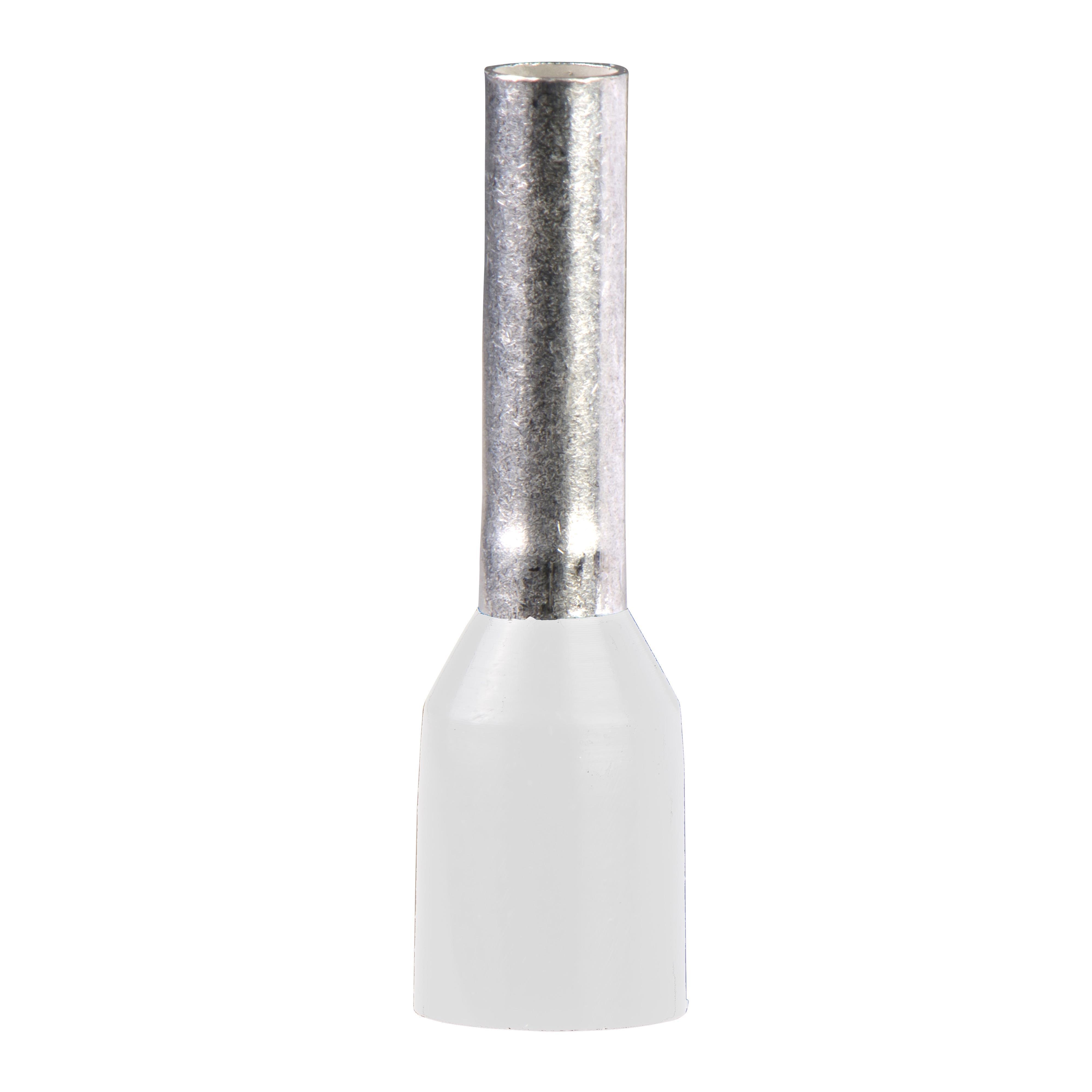
0.250" (6.35mm) female quick-connect, 0.032" (0.81mm) tab thickness, 18-22 AWG crimp, free-hanging
Quick Engineering Summary
| Field | Value |
|---|---|
| Manufacturer | Panduit Corp |
| Category | Terminals - Quick Connects, Quick Disconnect Connectors |
| Package | Bulk |
| Core function | CONN QC RCPT 18-22AWG 0. |
| Key electrical range | Supply and Demand Status: Shortage |
| Reported stock | 1 pcs reported — confirm on RFQ |
Wrong for custom tab sizes; right for standard 0.250 quick-connects
Don’t use this where the mating blade is anything other than 0.250" (6.35mm) wide and 0.032" (0.81mm) thick, or where the wire falls outside 18-22 AWG. Those numbers decide the fit, and they set hard limits on interchange with the rest of the harness hardware.
Where it does fit is plain enough: a free-hanging female quick-connect receptacle, standard terminal type, crimp termination, with non-mating-end insulation. The butted seam and serrated termination point to wire-harness crimp use rather than a board connection or a custom housing, and the 0.810" (20.57mm) overall length keeps it in ordinary inline harness work where serviceable disconnects matter more than density. Active lifecycle supports new design-in, and EU RoHS is already checked, but neither one fixes a bad tab match.
0.250 inch is the number that decides the mating side
0.250" (6.35mm) is the decisive figure here. It settles the mating interface size, but not insertion force, retention force, or vibration tolerance.
The paired ceiling is 0.032" (0.81mm) tab thickness. Treat that as a fit limit because a receptacle built for that blade thickness can go loose or refuse to seat when the male tab drifts. The 18-22 AWG wire range makes the same decision on the cable side: it tells you which conductors the crimp barrel is meant to accept, but not pull-out performance or the crimp-height window. Brass with tin finish places it in common low-voltage harness practice; it does not establish corrosion life, current capacity, or temperature rise.
The constraint is supply, not lifecycle
The constraint is supply. DV18-250B-MY is marked Active, yet the buy signal is messy: shortage status is explicit, stock quantity is 1, and another quantity field shows 1096. That conflict can stall a line long before lifecycle does.
So the decision is narrow. If this terminal is already qualified in an existing production harness, secure the quantity you need only after reconciling those counts. If you’re starting a fresh program, don’t assume DV18-250B-MY is continuously available just because lifecycle is healthy; the shortage flag says otherwise in the near term.
The missing crimp details are the real review gap
The weak point is documentation depth. The listing gives the interface size and wire range, but not the concrete release details a harness build needs: no drawing, no insulation dimensions beyond overall length, no crimp-tool callout, and no retention or insertion-force data.
View the Win-Source product page for DV18-250B-MY.
Key Takeaways for Engineers & Buyers
- Match the mating blade to 0.250" (6.35mm) width and 0.032" (0.81mm) thickness before releasing the harness.
- Keep the wire spec inside 18-22 AWG; this crimp barrel does not close the decision for heavier conductors.
- Resolve the shortage flag against the listed quantities of 1 and 1096 before putting DV18-250B-MY on a buildable BOM.