
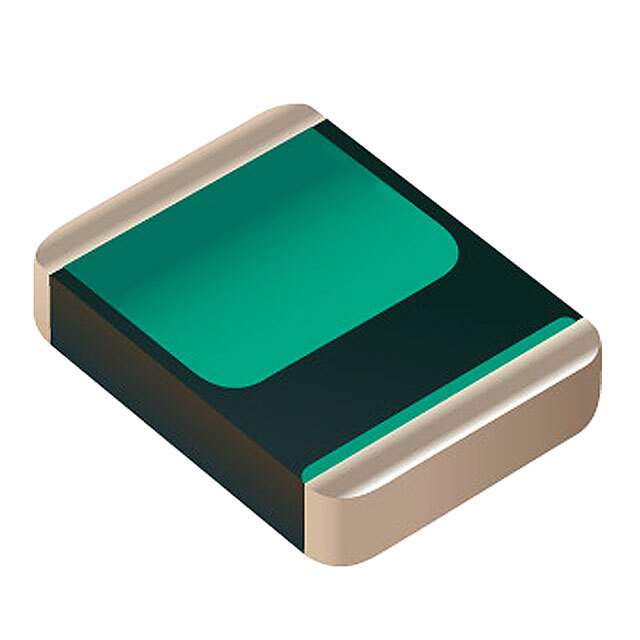
300 V AC, 385 V DC, 1.2 kA surge, 30J, 4032 surface-mount MOV for high-voltage clamp duty
Quick Engineering Summary
| Field | Value |
|---|---|
| Manufacturer | Bourns Inc. |
| Category | TVS - Varistors, MOVs |
| Package | Tape & Reel |
| Core function | VARISTOR 470V 1. |
| Key electrical range | Capacitance @ Frequency: 140 pF @ 1 kHz; Current - Surge: 1.2 kA; Temperature Range - Operating: -40°C ~ 125°C (TA); Varistor Voltage (Max): 517 V |
| Reported stock | 1 pcs reported — confirm on RFQ |
Can you design DV300K4032R2 in today?
Need an active 4032 MOV for a 300 V AC or 385 V DC ceiling? Yes. It is Active and EU RoHS compliant.
Supply is the catch: stock is listed as 1, while the standard package is 2,000.
Not for low-voltage rails; built for mains-side transients
Low-voltage DC protection, signal lines, and nodes where 140 pF @ 1 kHz is already too much shunt capacitance are poor fits here. The varistor voltage runs from 423 V to 517 V, with 470 V typical, so this part does not start from a low clamp point and will not act like a fine-grained protector on modest rails.
It belongs on higher-voltage transient suppression for a single circuit when the board wants a surface-mount MOV instead of a leaded part. The 300 V AC maximum and 385 V DC maximum are compatibility ceilings, not operating targets. Get that wrong and the part either rides too close to the normal line or never protects the event you care about.
The weak point is availability, not the electrical envelope
Availability is the weak point. Only 1 unit is listed in stock, so this is not the part to assume for an immediate build.
The electrical envelope is easier to like. A 1.2 kA surge rating and 30J energy rating put it in real transient territory, but both numbers are ceilings, and they say nothing about repetitive pulse life, spacing between hits, or remaining margin once your waveform departs from the test condition behind the listing.
The -40°C to 125°C (TA) range answers the ambient question for ordinary industrial boards. The thermal question under surge loading stays open because no derating curve or thermal resistance is shown. MSL 1 (Unlimited) helps assembly planning, and Tape & Reel suits volume placement, but neither changes the one-unit stock position.
View the Win-Source product page for DV300K4032R2.
What the numbers settle, and what the datasheet still must answer
1.2 kA is the decisive figure. It puts this MOV in scope for serious surge events, but only as a surge ceiling; it does not tell you the waveform, repetition, or how closely you can run to that limit without shortening life.
Pair that with 30J and you have the absorption budget the listing is willing to claim. No more.
The 423 V minimum, 470 V typical, and 517 V maximum varistor voltage window settles the other big question because it defines where protection begins to turn on. A design that looks comfortable at 470 V typical can still see a higher actual turn-on point at 517 V maximum, while a design that sits too near 423 V minimum risks nuisance stress.
What remains unanswered is concrete: clamping voltage, peak pulse current waveform detail, derating curve, and package drawing or pinout orientation. For a MOV in this footprint, those details decide whether it merely fits the BOM line or survives the board's surge profile.
View the Win-Source product page for DV300K4032R2.
Key Takeaways for Engineers & Buyers
- Match the protected rail to the 300 V AC and 385 V DC ceilings before placing DV300K4032R2.
- Budget surge exposure against the 1.2 kA and 30J limits; those are ceilings, not repetitive operating points.
- Do not count on immediate line build from stock; listed quantity is 1 and standard package is 2,000.