
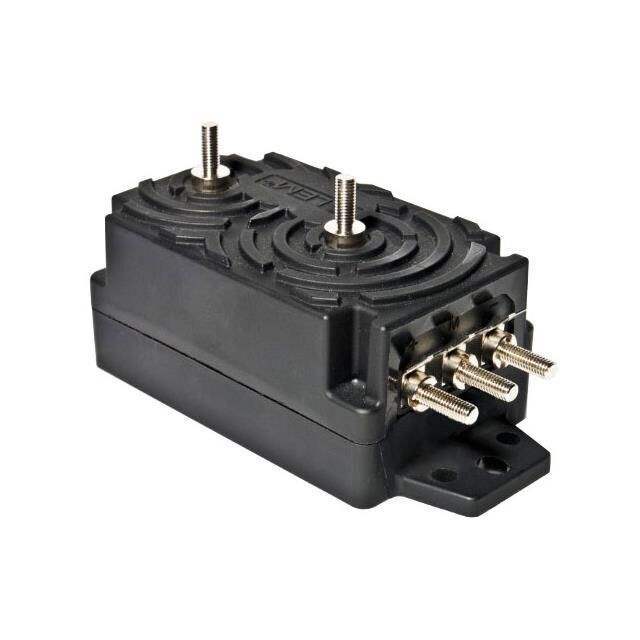
3.135 V to 3.465 V supply limits, differential output, 70 °C max, 0.50' length
Quick Engineering Summary
| Field | Value |
|---|---|
| Manufacturer | LEM |
| Category | Specialized Sensors |
| Package | Not listed for this part |
| Core function | SENSOR DVL VOLTAGE CURRENT |
| Key electrical range | Input Type: Standard; Maximum Operating Temperature: 70 °C; Minimum Operating Temperature: - 65 C; Output Type: Differential |
| Reported stock | 1 pcs reported — confirm on RFQ |
Sustaining only, until the identity clears
Use it cautiously.
This is not a clean new design-in call. The lifecycle is Unknown, the risk level is medium, and the record splits the manufacturer identity between LEM at the top level and TE Connectivity in the Brand field. That matters more than the category label because it can break traceability, approved-vendor matching, and the search for the right mechanical or electrical document set before release.
The electrical limits are tight enough to shape the decision right away. Supply voltage is listed from 3.135 V to 3.465 V, so DVL 1000 belongs on a tightly controlled low-voltage rail, not on a board where the sensor supply drifts or where startup and brownout behavior are loose. The maximum operating temperature of 70 °C is a ceiling, not an expected operating point, and it rules the part out for hotter enclosures unless the thermal picture is documented elsewhere. EU RoHS compliance is listed, but it doesn't resolve the identity conflict.
Can you actually buy against this record?
Can you buy it now?
Only as a stopgap. Stock is listed at 1, so availability is the immediate constraint. If DVL 1000 is for an existing production build, reserve that unit and reconcile the manufacturer fields before purchasing proceeds.
Thin data, but the rail requirement is real
The listing is thin, but the few numbers here still matter.
A 3.135 V minimum supply and 3.465 V maximum supply set a narrow window for DVL 1000. Those are limits, not a nominal rail suggestion, and they decide whether the sensor power tree is compatible at all. Differential output is the other useful clue: it points to a signal chain built for paired measurement handling rather than single-ended readout. The 0.50' (152.4mm) length also says this is not a tiny board-edge device; cable reach or physical lead length is part of integration.
70 °C is the ceiling; the missing details decide the rest
70 °C is the ceiling.
That one number shuts down a lot of casual assumptions about enclosure heat, nearby power parts, and field ambient.
The gaps are just as important for DVL 1000. There is no package entry, no pinout, no drawing, and no stated mechanical outline beyond the 0.50' (152.4mm) length, so footprint and harness fit cannot be locked from this page. There is also no transfer characteristic, no accuracy figure, no bandwidth, and no output scaling for the voltage and current sensing function, so the core measurement behavior is still undocumented here. Those points need answers before the part moves beyond sustaining use.
View the Win-Source product page for DVL 1000.
Key Takeaways for Engineers & Buyers
- Hold the rail inside 3.135 V to 3.465 V; this part does not give you much supply headroom.
- Resolve the LEM versus TE Connectivity manufacturer conflict before releasing DVL 1000 on a new BOM.
- Book the available quantity now if DVL 1000 is for an existing build; stock is listed at 1.