
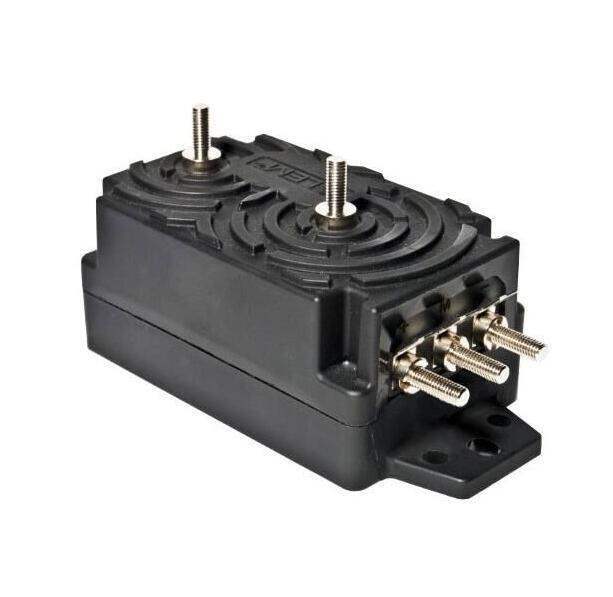
-40°C to 85°C operating range, voltage sensor with current output, bulk packaging, stock listed at 1
Quick Engineering Summary
| Field | Value |
|---|---|
| Manufacturer | LEM |
| Category | Specialized Sensors |
| Package | Not listed for this part |
| Core function | SENSOR DVL VOLTAGE CURRENT |
| Key electrical range | SENSOR DVL VOLTAGE CURRENT |
| Reported stock | 1 pcs reported — confirm on RFQ |
Can you design DVL 500 into a new build?
Can this go into a new build? Yes, with caution.
DVL 500 is marked Active with no lifecycle conflict, so there is no status-based reason to rule it out. The listed operating temperature is -40°C to 85°C, broad enough for many industrial ambient targets, but it says nothing about margin outside that window or about performance at the ends.
The real brake is missing detail, not lifecycle. The listing identifies DVL 500 as a specialized sensor, specifically a voltage sensor with current output, which is enough to place it in an isolated measurement chain or control input path. It does not finish the electrical design: there is no stated supply requirement, output range, accuracy, response behavior, or package drawing beyond bulk packaging.
The temperature range helps, but it doesn't finish the fit
It helps.
The one hard operating number here is -40°C to 85°C. That tells you whether DVL 500 belongs in equipment expected to start cold and run in warm enclosures; it does not tell you self-heating, drift, or calibration stability across that span because those figures are not listed. Treat the range as the operating window.
The other fit-defining line is functional: voltage sensing in, current output out. That matters because DVL 500 does not drop neatly into a voltage-output signal chain or a digital sensor input without extra interface work, and getting that wrong shows up fast as a board-level mismatch rather than a subtle field issue. Bulk packaging also tells you this listing is not presenting it as a pick-and-place reel part, so assembly planning may need a manual or alternate handling path.
The real problem is what the listing leaves out
The public spec is thin. Still, what is there tells you where DVL 500 belongs.
It is a specialized sensor from LEM, described as a voltage sensor with current output, and that combination shifts the review away from generic sensor questions and toward interface and installation details. Those are the points that decide whether the part fits the circuit and the build, especially when the listing gives you category and temperature range but stops short of the transfer details that actually close the design.
For DVL 500, the missing items are concrete: the output current range, the required supply or excitation, and the mechanical drawing or pinout. Without them, you cannot finish input scaling, connector choice, or board entry. Accuracy, linearity, and isolation details are also absent, and those are not optional on a voltage transducer because they determine whether the part is acceptable for protection, monitoring, or closed-loop control.
So the part is designable, but not placeable yet. The listing gives enough to identify the class of job; the absent electrical and mechanical details decide the circuit, the interface, and the installation.
Don't plan a line around one piece
Wrong for an immediate volume build.
Fine for evaluation, a spare, or a controlled sustaining need. Stock is listed at 1, and that is too thin to support a fresh production release by itself.
View the Win-Source product page for DVL 500.
Key Takeaways for Engineers & Buyers
- Treat -40°C to 85°C as the operating window; don't assume wider ambient headroom.
- Match the interface to a current-reading front end; DVL 500 is listed as voltage sensing with current output.
- Secure supply now if this is for a running build; available quantity is 1.