
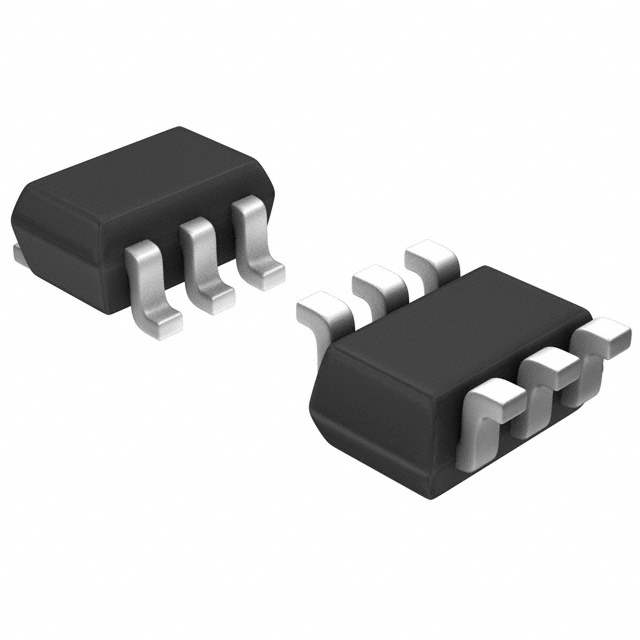
18V VCEO, 1A collector ceiling, 200mW dissipation ceiling, SOT-363 package, -55°C to 150°C TJ
Quick Engineering Summary
| Field | Value |
|---|---|
| Manufacturer | Diodes Incorporated |
| Category | Transistors (BJT) - Single |
| Package | SOT-363 |
| Core function | TRANS NPN 18V 1A SOT-363 |
| Key electrical range | Collector Cut-off Current(Max): 1μA (ICBO); Frequency - Transition: 100MHz; Maximum Current Collector: 1A; Maximum Power Dissipation: 200mW |
| Reported stock | 1 pcs reported — confirm on RFQ |
200mW is the number that kills new use
200mW is the decisive limit here. DVR3V3W-7 may read like a 1A, 18V NPN in SOT-363, but the dissipation ceiling is what ends most practical discussions first, because package loss decides survivability long before a headline current rating does.
The other limits still matter. The 18V VCEO ceiling keeps it on low-voltage rails, and the 1A maximum collector current is only a ceiling, not a usable operating point. In a 200mW SOT-363 device, that current number alone says very little about what the part can do in a real switching or linear role. Even the listed 500mV max VCE(sat) at 30mA, 300mA only fills in one corner of the loss picture.
So the conclusion is direct: don't design DVR3V3W-7 into anything new. It is EOL, EU RoHS compliant, and best treated as a sustaining-only device for an existing board that already proved it out.
Wrong for rail margin and heat; fine for tiny low-voltage stages
Not for anything that needs voltage headroom, thermal slack, or a comfortable production future. An 18V collector-emitter breakdown ceiling rules out higher-voltage rails quickly, and the 200mW dissipation ceiling makes this a poor fit where saturation loss or continuous conduction is more than incidental.
It still fits a very compact SMT stage that already expects SOT-363 and stays modest on both voltage and heat. The 150 minimum hFE at 100mA, 1V points to useful gain at moderate current, while the 1µA ICBO maximum helps where leakage matters in bias networks. The 100MHz transition frequency reads like a small-signal transistor, not a power switch to use casually because 1A appears in the listing.
And the buy decision is already made
And that leaves the supply picture. One unit is listed, and with EOL status that makes DVR3V3W-7 a line-support purchase only, not a part to qualify for fresh production.
The missing curves are the real review gap
500mV @ 30mA, 300mA is useful, but it does not close the loss story. What is still missing is thermal resistance, the derating curve, and the pinout or package drawing needed to judge board heat flow and layout fit in SOT-363.
Switching detail is missing too: no storage time, no rise or fall time, and no capacitance figure. For a compact transistor with a 100MHz transition frequency, those omissions matter more than another pass through the headline ratings. ECAD is listed only as contact-to-download, so the mechanical and symbol flow is not self-serve either.
View the Win-Source product page for DVR3V3W-7.
Key Takeaways for Engineers & Buyers
- Block DVR3V3W-7 on new BOMs; lifecycle is EOL.
- Treat 200mW as the thermal ceiling in SOT-363 before leaning on the 1A collector rating.
- Reserve the listed 1 unit only for an existing production stopgap.