
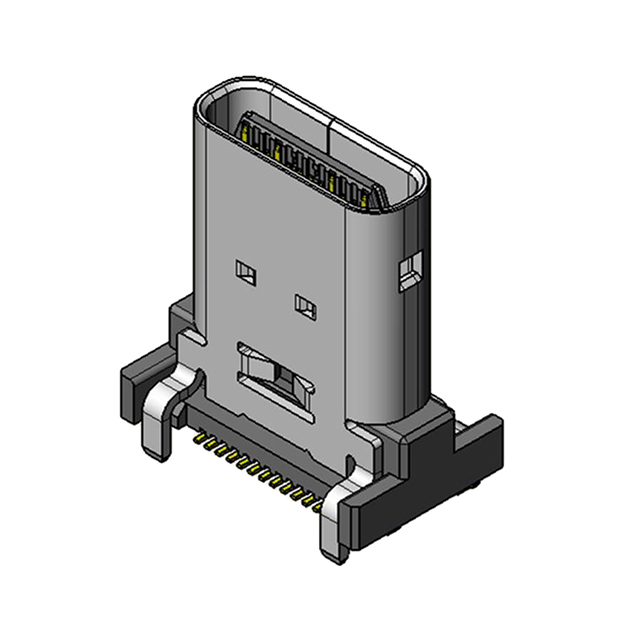
48V rated, 5A ceiling, vertical 24-contact USB-C receptacle, -30°C to 80°C operating range
Quick Engineering Summary
| Field | Value |
|---|---|
| Manufacturer | JAE Electronics |
| Category | USB, DVI, HDMI Connectors —USB, DVI, HDMI Connector Assemblies |
| Package | Not listed for this part |
| Core function | CONN RCPT USB3. |
| Key electrical range | Current Rating (Amps): 5A; Operating Temperature: -30°C ~ 80°C; Voltage - Rated: 48V |
| Reported stock | 6804 pcs reported — confirm on RFQ |
Active part, but the fit is mechanical first
It fits new designs. The real gate is mechanical: a vertical USB-C receptacle with 24 contacts and mixed surface-mount, through-hole attachment. Active status and EU RoHS compliance remove lifecycle doubt, but they do not answer footprint fit.
Wrong for cable abuse, right for dense vertical USB-C ports
Not for loose mechanical assumptions. This is a receptacle with vertical mounting and a Surface Mount, Through Hole scheme with a Board Guide feature, so it belongs on boards that need connector alignment and shell retention designed in from the start, not on layouts hoping a generic USB-C footprint will sort itself out later.
The important numbers are ceilings and life limits. The 5A current rating is a current ceiling, so it can sit in higher-current USB-C power paths, but it does not settle contact heating, trace heating, or cable temperature on its own. The 48V rated voltage is also a ceiling, which keeps it in play for higher-voltage USB-C use cases while saying nothing about surge behavior or creepage details, because those are not listed here.
Then there is the 10000 mating cycle figure. That is the wear budget, and it decides whether this belongs in a frequently accessed user port or a lightly used service connection. Get that call wrong and the field return is mechanical, not electrical.
The operating temperature range of -30°C to 80°C is an operating limit, and it narrows the ambient envelope for outdoor or hot-enclosure gear faster than the USB 3.2 Gen 2 label does. That speed grade still matters for interface intent, but the connector has to survive the enclosure and handling first.
So the missing details are the ones that close the layout
And that is where the listing stops short. It tells you this is a 24-position USB-C receptacle and gives the mount style, but it does not include the pinout, the mechanical drawing, or the footprint dimensions that decide keepout, shell anchoring, and escape routing on a real board.
The other gap is shielding detail in practice. It is marked Unshielded, with shell material listed as Steel, Stainless, but there is no insertion-loss, EMI, or shell-ground implementation detail here. For a USB 3.2 Gen 2 connector, that omission matters more than the gold contact finish because signal integrity and enclosure grounding live in the connector geometry, and that geometry is not shown.
Stock is the only buying constraint here
The constraint is quantity. With 6804 pieces available, a planned build is supportable, but this is not stock to ignore if demand is lumpy or the line burns through connectors quickly. Packaging is tape and reel, which suits automated assembly and points to SMT flow rather than hand loading.
Reserve the quantity against the build that needs this exact vertical form factor. If your program is small, that stock is comfortable. If it is not, secure the reel count before the mechanical release locks the footprint.
View the Win-Source product page for DX07S024WJ1R350.
Key Takeaways for Engineers & Buyers
- Check the 48V rated ceiling against your USB-C power path and insulation spacing.
- Use DX07S024WJ1R350 only where 10000 mating cycles covers the service life.
- Book tape-and-reel supply early if 6804 pieces is near your next build.