
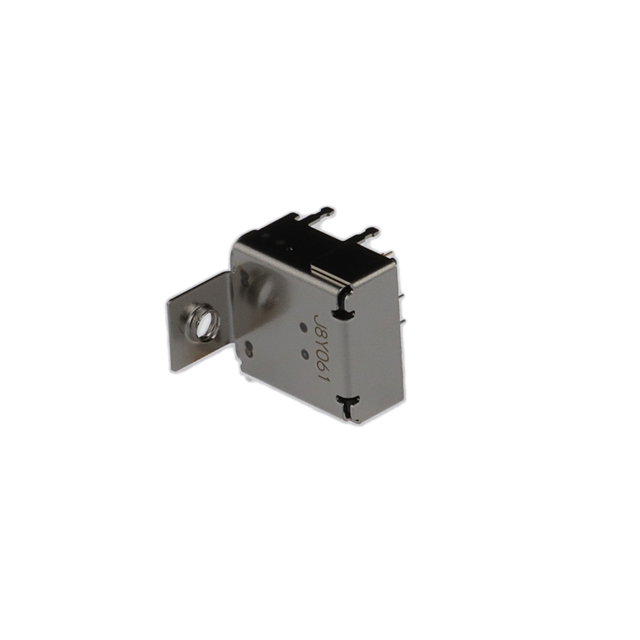
48V rated ceiling, 5A current ceiling, 24 contacts, right-angle SMT plus through-hole USB-C receptacle
Quick Engineering Summary
| Field | Value |
|---|---|
| Manufacturer | JAE Electronics |
| Category | USB, DVI, HDMI Connectors —USB, DVI, HDMI Connector Assemblies |
| Package | Not listed for this part |
| Core function | CONN RCP USB4. |
| Key electrical range | Current Rating (Amps): 5A; Operating Temperature: -30°C ~ 80°C; Voltage - Rated: 48V |
| Reported stock | 13500 pcs reported — confirm on RFQ |
13500 pieces makes this a live design-in option
13500 pieces puts this in the category of a real production option. Active lifecycle status and EU RoHS compliance remove two common reasons to stop early.
What decides the buy here first: electrical ceiling or footprint?
What gets this approved first: can the board and enclosure actually take it? The footprint decides first.
This is a right-angle receptacle with surface-mount plus through-hole attachment, flange horizontal mounting, and board guide plus board lock features. That points to a board-edge connector with retention designed into the PCB rather than left to solder joints alone.
The electrical numbers still matter, but they do not rescue a bad mechanical fit. The 24-contact count and USB-C receptacle format place it in full-featured USB-C ports, while the single-port construction keeps it out of dense stacked I/O where shell geometry becomes the real limit.
Those 48V and 5A numbers are ceilings, not permission slips
And that is where misuse starts. The 48V rated value is a ceiling on insulation and connector rating; it rules out rails above that number, but it does not answer signal integrity, hot-plug behavior, or arcing margin under your load case. The 5A current rating is a ceiling too. It tells you low-power USB-C current levels are in range, but not whether temperature rise stays acceptable in the board, cable, or enclosure.
The 10000 mating-cycle figure matters just as much. It marks this as a connector for repeated user access, not a one-time service port, while still leaving wear behavior to missing mechanical detail. Get that wrong and the first field problem is often shell looseness, intermittent contact, or pad damage around the port.
48V is generous, but the datasheet gaps are still the stop points
48V is generous for a USB-C receptacle, and the -30°C to 80°C operating range covers a lot of indoor and light industrial hardware, but the release constraint is still missing detail.
There is no drawing here, no pinout, and no footprint detail, so you cannot place DX07S024XJ4R250 into layout from this page alone.
The listing also stops short on the mechanical numbers that usually settle connector risk: no contact resistance, no insertion or withdrawal force, and no dimensional stack for the shell and flange. For a USB 4.0 Gen 3 connector, that absence matters more than another marketing line would, because high-speed compliance lives or dies on geometry and assignment detail, and this page does not carry either.
Use it where you need a shielded, board-mounted USB-C receptacle with retention features and repeated mating. Keep it out of any program that still has open questions on enclosure cutout, pad pattern, or port durability under side load, because those answers are not here.
View the Win-Source product page for DX07S024XJ4R250.
Key Takeaways for Engineers & Buyers
- Check the 48V rating against your rail and isolation scheme; it is a ceiling, not a working target.
- Use the 5A current rating as the connector current ceiling when assigning cable and board power paths.
- Confirm the enclosure and PCB stack for the right-angle, surface-mount plus through-hole footprint before release.