
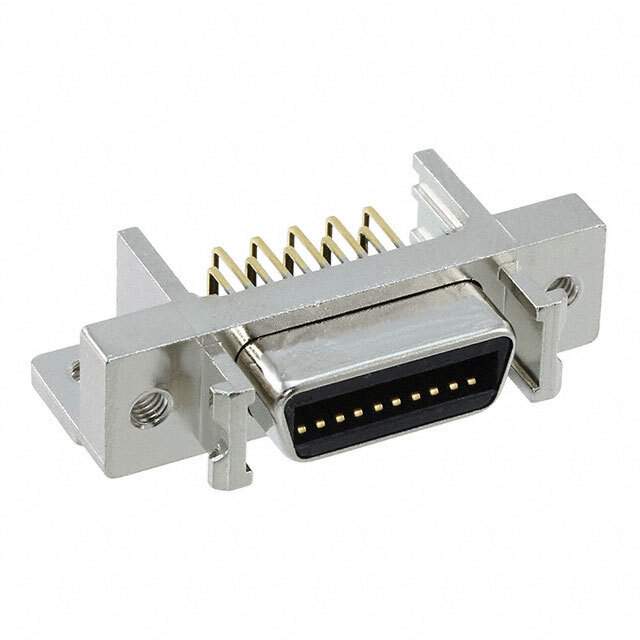
20 positions, 2 rows, right-angle panel mount, through-hole solder termination, M2.6 shell hardware
Quick Engineering Summary
| Field | Value |
|---|---|
| Manufacturer | Hirose Electric Co Ltd |
| Category | D - SUB, D - SHAPED connectors |
| Package | Tray |
| Core function | CONN MINI HD RCPT 20P R/A SOLDER |
| Key electrical range | Not listed for this part |
| Reported stock | 28 pcs reported — confirm on RFQ |
20 positions decide the fit faster than anything else
20 positions in 2 rows settles the first question fast. DX10M-20S(50) fits a compact I/O or board-edge interface where the contact count is fixed and the enclosure already expects a miniature high-density D-shaped receptacle.
The rest of the construction tightens the fit. Right-angle, panel-mount, through-hole geometry points to a board that meets a panel, not a free-cable harness and not a vertical backplane scheme.
That makes the call simple: DX10M-20S(50) is a sound new design-in when that exact mechanical format is required. Active status removes the usual sustaining-only concern, and EU RoHS compliance plus MSL 1 (Unlimited) keeps handling straightforward.
11.8µin gold is the number that needs context
11.8µin (0.30µm) is the decisive figure here. It identifies a gold-finished contact system, so this is not a bare-tin interface, but it does not answer mating-cycle life, fretting tolerance, or contact resistance drift because those limits are not listed.
The next numbers are mechanical, and they carry more weight than they first appear to. The M2.6 housing/shell feature determines whether the connector can be secured with the panel hardware already in the product, and if that detail is wrong, the board may fit while final assembly still fails. The 20-position, 2-row format also locks the mating pattern early, and miniature high-density D-sub footprints leave little room for casual substitution once the panel cutout and PCB are released.
Mounting style closes off several paths at once. Panel Mount, Through Hole, Right Angle means the connector is meant to bridge enclosure and PCB in one move, useful when shell retention and soldered tails both matter, while ruling out designs that need surface-mount assembly flow or a straight cable exit from the board. Termination is solder. That is a process constraint, not a minor detail.
What is still missing is the electrical ceiling that usually finishes a connector review. No current rating is listed, no voltage rating, no insulation resistance, and no dielectric-withstanding figure. So DX10M-20S(50) can be placed mechanically, but it cannot be fully signed off for the rail set or load per contact from this listing alone.
The real constraint is stock, not lifecycle
Quantity is the constraint. Stock is shown as 28, the standard package is 60, and the package format is tray.
For DX10M-20S(50), that points to a plausible pilot build but not a comfortable assumption of full-package pulls for production. Plan receiving and kitting around tray handling rather than tape-and-reel expectations.
The missing data is exactly what closes the review
Weak point first: the listing is thin where connector qualification usually gets decided.
For DX10M-20S(50), the missing items are the current rating, voltage rating, contact resistance, and the mechanical drawing or pinout.
View the Win-Source product page for DX10M-20S(50).
Key Takeaways for Engineers & Buyers
- Match the footprint to a 20-position, 2-row right-angle receptacle before releasing the PCB.
- Reserve tray handling for DX10M-20S(50); the standard package is 60 while stock shown is 28.
- Check the mating hardware against the M2.6 housing/shell feature before freezing the panel.