
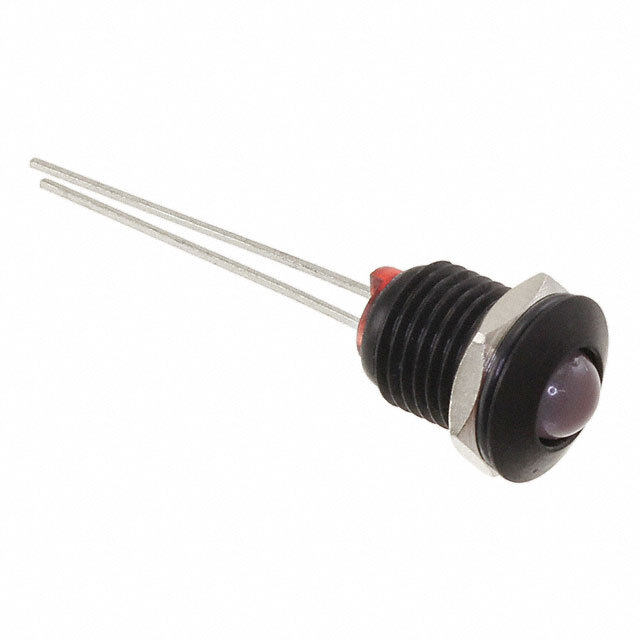
2V, 30mA ceiling, 4.00mm lens, 0.24" round cutout, PC pin termination
Quick Engineering Summary
| Field | Value |
|---|---|
| Manufacturer | Bulgin |
| Category | Panel Indicators, Pilot Lights |
| Package | Bulk |
| Core function | LED PNL IND RED 4MM PC PIN |
| Key electrical range | Current: 30mA; Supply and Demand Status: Shortage; Voltage: 2V |
| Reported stock | 1 pcs reported — confirm on RFQ |
Sustaining only unless the panel is already fixed
Not for open design-in.
This part makes sense when the mechanical envelope is already locked and the red indication level is acceptable. The deciding numbers are mostly fit numbers, not electrical headroom: a 0.24" (6.10mm) round panel cutout and PC pin termination point to a board-connected panel lamp, not a loose bezel-and-wire assembly, so the panel and PCB relationship has to be settled early or the part drops out on fit alone.
The electrical listing is thin, but it still draws clear boundaries. The 2V entry is tied to Vf (Typ), while the 30mA entry is tied to If (Max), so 2V is not a worst-case drop and 30mA is a ceiling, not the current to design around. The 2.5mcd rating is the other filter. It places DX1118/RD in the low-intensity red indicator class, suitable for nearby status annunciation rather than a bright daylight-facing telltale. Bulgin lists DX1118/RD as EU RoHS compliant, but lifecycle remains Unknown, so the safer read is sustaining use or tightly controlled new builds where the cutout is already committed.
The weak point is supply, not the LED
The weak point is supply. Stock is 1, and status is Shortage.
That matters more than the 2V LED drop in any near-term buy decision. On a running line, buy only against known demand; if the part is still optional, don't let a single-unit listing hold up the panel release.
30mA is a ceiling, while 2.5mcd sets expectations
30mA is the hard stop.
For DX1118/RD, that number closes one decision: the drive circuit cannot ask for more than 30mA. It does not tell you what current gives acceptable brightness, because the listing gives no intensity curve and the 2V figure is tied only to Vf (Typ), not a maximum condition.
Then 2.5mcd sorts the application. With a 4.00mm diameter red lens and a round domed top, this reads as a modest panel-present indicator rather than a high-visibility alarm point, and that distinction matters because brightness complaints show up long before an LED reaches its absolute current ceiling.
What is still missing before you trust DX1118/RD
What do you need first to trust the fit?
A drawing with panel hardware detail. The cutout is listed as 0.24" (6.10mm), but body depth, retention method, and front-panel stack tolerance are absent, and those are the details that decide whether DX1118/RD actually fits the enclosure.
The pinout and polarity marking are also not listed. Beyond that, there is no forward-voltage range beyond 2V typical, so resistor selection still lacks a worst-case drop, and there is no temperature rating at all, neither ambient nor junction, which leaves environmental fit open.
View the Win-Source product page for DX1118/RD.
Key Takeaways for Engineers & Buyers
- Match the panel to the 0.24" round cutout before releasing DX1118/RD.
- Hold LED current at or below the listed 30mA ceiling; it is not a target.
- Do not count on spot availability when stock is 1 and status is Shortage.