
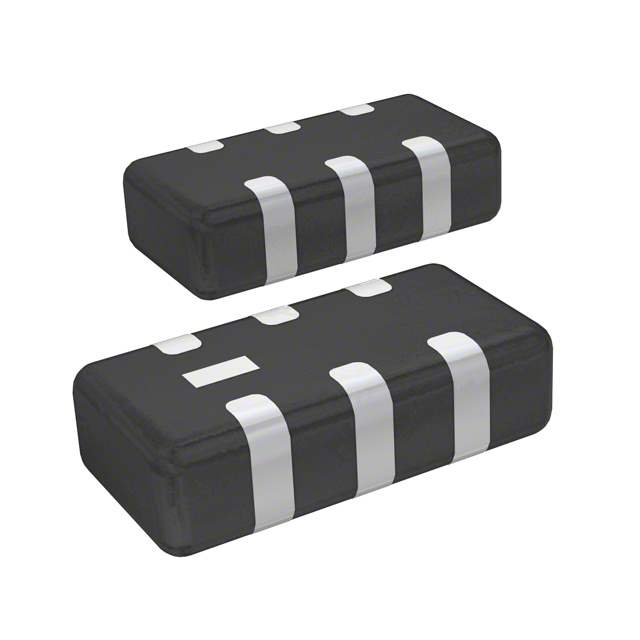
50MHz to 870MHz, 2.3dB insertion loss, 20dBm ceiling, 0603 package, and EOL status decide it.
Quick Engineering Summary
| Field | Value |
|---|---|
| Manufacturer | Murata Electronics North America |
| Category | RF Directional Coupler |
| Package | 0603 (1608 Metric) |
| Core function | RF DIR COUPLER 50MHZ-870MHZ 0603 |
| Key electrical range | Frequency: 50MHz to 870MHz; Maximum Power Dissipation: 20dBm; Supply and Demand Status: Balance |
| Reported stock | 2 pcs reported — confirm on RFQ |
EOL is the real spec here
The real constraint is lifecycle. DXP18CN7510TL is EOL, and that shuts down new design-in before the 50MHz to 870MHz range or the 0603 footprint even enters the discussion.
For a running line, the case is narrower. If your build already uses DXP18CN7510TL and the RF path is qualified around its 2.3dB insertion loss, the remaining stock may still matter. There are only 2 pieces listed, packaged on reel - TR, so this is sustaining-only territory. RoHS compliance removes one objection, but it does nothing about the lifecycle stop sign.
Not for fresh RF layouts that need supply depth
This part is wrong for any new board that needs a dependable running line, and it is wrong for designs that still need basic RF closure data before layout freeze. It fits only a specific repair or existing production case where the 0603 (1608 Metric) body and the 50MHz to 870MHz span already match a released design.
That range is broad enough for low-band RF work, but it does not settle the harder fit questions. The 2.3dB insertion loss is a real system penalty, so DXP18CN7510TL belongs only in signal chains that can absorb it. If your link margin is already thin, this part makes it thinner. The listed isolation is 18dB, and even taken at face value, that is a selection number, not proof that every coupling problem is solved.
20dBm is a ceiling, not headroom
20dBm is the limit. It is the maximum power dissipation, so it marks where DXP18CN7510TL stops being safe to apply, not where it should normally run.
2 pieces means buy only against a known need
2 pieces changes the conversation from sourcing to triage. If DXP18CN7510TL is on an existing BOM, allocate those units to the highest-value repair or the build that cannot ship without them, then stop.
One conflict needs a plain reading. The lifecycle block says EOL, the Lifecycle Status spec says EOL, and a separate Status field says Active. When the lifecycle-specific fields agree and the generic status disagrees, treat DXP18CN7510TL as EOL until a formal manufacturer update says otherwise. Dry storage cabinet and humidity protection package are useful handling notes, but they do not change the buy decision.
The missing RF details are what would close the call
What would a buyer ask first? Whether the remaining stock covers a real need and whether the missing electrical detail hides a redesign.
On quantity, the answer is no. Two pieces are not a bridge for anything beyond a very small repair event.
The technical gaps are the bigger issue. DXP18CN7510TL is listed as a standard RF directional coupler with 50MHz to 870MHz coverage, 2.3dB insertion loss, 18dB isolation, and a 20dBm maximum power dissipation ceiling, but the coupling factor is absent, return loss is absent, and there is no pinout or package drawing here. Those omissions matter because the coupling value decides whether the sampled port level is usable in your detector or feedback path, return loss sets how much mismatch you are buying into the line, and the missing drawing and pinout keep layout from moving with confidence.
ECAD models are available only through a separate request, another sign that this page is not enough to release a board around DXP18CN7510TL. For existing production, that may be tolerable if your design files are already frozen. For anything new, it isn't.
View the Win-Source product page for DXP18CN7510TL.
Key Takeaways for Engineers & Buyers
- Block DXP18CN7510TL from new BOMs; lifecycle is EOL.
- Reserve the 2 pieces on hand only for existing production or failure repair.
- Check whether 2.3dB insertion loss is acceptable across 50MHz to 870MHz before consuming stock.